
| | English | | Devanagari | | Telugu | | Tamil | | Kannada | | Malayalam | | Gujarati | | Odia | | Bengali | | |
| | Marathi | | Assamese | | Punjabi | | Hindi | | Samskritam | | Konkani | | Nepali | | Sinhala | | Grantha | | |
|
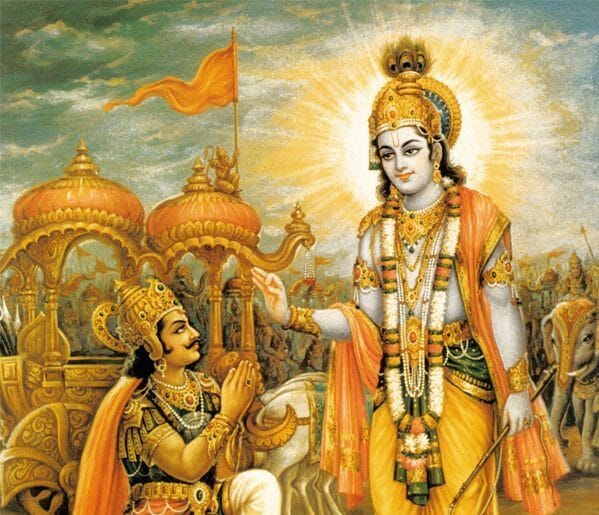
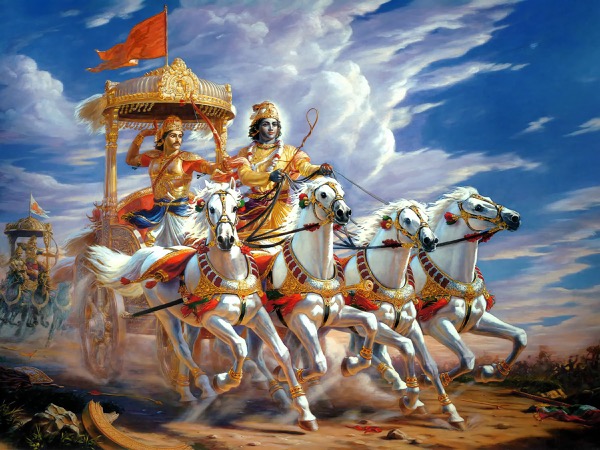
श्रीमद्भगवद्गीता पारायण - पञ्चमोऽध्यायः The fifth chapter of the Bhagavad Gita, called कर्मसन्न्यासयोगः or कर्म-Sannyasa योग, opens on the battlefield of कुरुक्षेत्र. Here, in the heart of the महाभारत epic, two cousins-अर्जुन of the पाण्डवाः and श्रीकृष्ण, his charioteer and guide-continue their profound dialogue. The tension of war hangs heavy, but the real battle is within: अर्जुन is torn between his duty as a warrior and his longing for inner peace. In the previous chapter, श्रीकृष्ण introduced the path of ज्ञान-योग, the योग of knowledge, and contrasted it with कर्म-योग, the योग of selfless action. अर्जुन is left wondering: is it better to renounce action entirely, or to act without attachment? The fourth chapter ended with the promise that knowledge and action, when rightly understood, lead to freedom. But for अर्जुन, the lines still seem blurred. This chapter dives into the heart of that confusion. अर्जुन asks श्रीकृष्ण to clarify: should he embrace renunciation (सन्न्यास) or continue to act in the world? श्रीकृष्ण responds with warmth and clarity, explaining that both paths-renunciation and selfless action-can lead to liberation, but acting with detachment is often more practical and effective for most people. Through vivid examples, he shows that true renunciation is not about escaping life, but about letting go of selfish motives while still fulfilling one's responsibilities. The chapter's key theme is the harmony between action and renunciation. श्रीकृष्ण urges अर्जुन to see that it is not the outward act that binds or frees us, but the attitude with which we act. When we act without craving for results, dedicating all actions to the divine, we remain untouched by the world's turmoil-like a lotus leaf that stays dry in muddy water. This is the spirit of कर्म-योग. As the chapter closes, श्रीकृष्ण paints a picture of the liberated soul-one who is at peace, seeing the same Self (आत्मा) in all beings, beyond likes and dislikes, beyond pride and possessiveness. This sets the stage for the next chapter, where श्रीकृष्ण will introduce the path of meditation and inner discipline, showing how the mind can be trained to rest in this deep peace. The journey continues, but with each step, अर्जुन is invited to discover a freedom that is not found in running away from life, but in living it with wisdom and love. ॐ श्री परमात्मने नमः Meaning (पदार्थ): Translation (भावार्थ): Commentary (अनुसन्धान): The revered Acharyas आदि शङ्कराचार्य and श्री मध्वाचार्य offer profound insights into the interplay of कर्म, सन्न्यास, and योग introduced in this chapter. आदि शङ्कराचार्य clarifies that true सन्न्यास transcends mere external renunciation; it is an inner state of detachment where one performs duties without attachment to results, aligning with the teaching that the path is as much mental as physical. Complementing this, श्री मध्वाचार्य emphasizes that dedicated action performed with devotion to the Supreme integrates कर्म and सन्न्यास through योग, the disciplined union of effort and surrender. This synthesis is echoed in the Upanishadic prayer असतो मा सद्गमय (Lead me from the unreal to the real), which reminds us that the spiritual journey involves moving beyond superficial appearances of action and renunciation toward their true essence. Thus, the invocation and chapter title together prepare us to explore how inner renunciation harmonizes with active engagement, setting the stage for practical application in daily life. In modern life, the idea of renouncing attachment while still acting can be seen in situations like working diligently at a job without being obsessed with promotions or recognition, or volunteering for a cause without expecting gratitude. Another example is a student preparing for exams with full effort, yet remaining calm regardless of the outcome. As a reflection exercise, consider an area where you feel overly attached to results-ask yourself how you might approach it with the spirit of सन्न्यास, focusing on the action itself rather than the outcome. This mindset can bring greater peace and clarity, echoing the teachings that will unfold in this chapter. अर्जुन उवाच Meaning (पदार्थ): Translation (भावार्थ): Commentary (अनुसन्धान): The question posed by Arjuna encapsulates a profound spiritual inquiry that has been thoughtfully examined by revered Acharyas. आदि शङ्कराचार्य interprets this doubt as arising from Krishna's praise of both सन्न्यास and कर्म योग in different contexts, which naturally leads Arjuna to seek clarity on the superior path. Meanwhile, श्री रामानुजाचार्य stresses that Arjuna's inquiry is practical, focusing on which path is more accessible and effective for attaining liberation. This tension between renunciation and action reflects the deeper spiritual principle expressed in the कठोपनिषद् (1.2.18): न जायते म्रियते वा विपश्चित्, meaning the true Self is unborn, eternal, and beyond death, thus underscoring that the choice of path must align with realizing this unchanging reality. This verse thus sets the stage for Krishna to elucidate how both paths, though seemingly opposed, can lead to the same ultimate goal depending on the aspirant's nature and readiness, preparing the seeker to reflect on their own spiritual journey and decisions. This verse is highly relevant for anyone facing a crossroads in life, especially when choosing between two seemingly opposite paths-such as dedicating oneself to contemplative study versus engaging in active service. For example, a person might wonder whether to focus on meditation and personal growth or to devote time to helping others through social work. Another might struggle between pursuing a career that promises personal fulfillment and one that serves the greater good. As a reflection exercise, consider a current decision in your life where you feel pulled in two directions. Ask yourself: What are the deeper values behind each option? What guidance would you seek if you could ask a wise mentor for clarity, just as Arjuna does here? This process can help reveal which path aligns more closely with your own sense of purpose and well-being. श्री भगवानुवाच Meaning (पदार्थ): Translation (भावार्थ): Commentary (अनुसन्धान): आदि शङ्कराचार्य explains that while both सन्न्यास and कर्मयोग ultimately lead to liberation, कर्मयोग is superior because it engages the aspirant in active duty, purifying the mind and preparing it for true knowledge. Similarly, श्री रामानुजाचार्य highlights that कर्मयोग is more accessible and beneficial for most practitioners, as it cultivates detachment through selfless action, whereas renunciation suits only those firmly established in wisdom. This preference is supported by the Upanishadic injunction उत्तिष्ठत जाग्रत प्राप्य वरान्निबोधत from the कठोपनिषद् (1.3.14), which urges one to 'Arise, awake, and learn the excellent knowledge,' emphasizing active engagement rather than passive withdrawal. Thus, the verse encourages seekers to embrace selfless action as a practical and effective path, setting the stage for the application of these teachings in daily life. In modern life, this teaching can be seen in the choice between withdrawing from responsibilities versus engaging in work with a selfless attitude. For example, a person might consider quitting their job to meditate full-time, thinking this is the only way to progress spiritually. However, this verse suggests that continuing to work with dedication and without selfish motives can be just as, if not more, effective. Another example is volunteering for a cause without expecting recognition or reward, which embodies कर्म योग. As a reflection exercise, consider an area of your life where you are tempted to avoid responsibility for the sake of peace. Ask yourself: can you approach this duty with a spirit of selfless service instead, and observe how this changes your inner experience? ज्ञेयः स नित्यसन्न्यासी यो न द्वेष्टि न काङ्क्षति । Meaning (पदार्थ): Translation (भावार्थ): Commentary (अनुसन्धान): आदि शङ्कराचार्य explains that the essence of true renunciation lies in the inner state of being free from hatred and craving, even while actively engaged in the world. He teaches that such a person embodies नित्य-सन्न्यास-constant renunciation-not by external withdrawal but by maintaining equanimity amid dualities. Similarly, श्री रामानुजाचार्य emphasizes that satisfaction in the self, attained through dedicated कर्म योग, enables one to endure opposites without attachment or aversion, thus harmonizing कर्म योग and ज्ञान योग as complementary paths. This inner detachment aligns with the Upanishadic injunction न जायते म्रियते वा विपश्चित् from the कठोपनिषद् (1.2.18), meaning the true Self neither is born nor dies, nor is it subject to sorrow. This teaching reinforces that renunciation is not about renouncing action but about transcending the pairs of opposites within the mind. Understanding this prepares us to apply such equanimity practically, as discussed in the following paragraph. In modern life, this teaching applies to situations like workplace competition, where one might feel jealousy or resentment towards a colleague's success, or crave recognition. Practicing non-hatred and non-craving, as described here, means maintaining composure and goodwill regardless of outcomes. Another example is in relationships, where letting go of grudges and not being overly attached to praise or blame leads to healthier interactions. A practical reflection: recall a recent event where you felt strong aversion or desire. Ask yourself how you might have responded if you were free from both, and what effect that would have had on your peace of mind. This verse invites us to experiment with inner neutrality, noticing how it can bring a sense of ease and freedom even in challenging circumstances. साङ्ख्ययोगौ पृथग्बालाः प्रवदन्ति न पण्डिताः । Meaning (पदार्थ): Translation (भावार्थ): Commentary (अनुसन्धान): The profound unity of साङ्ख्य and योग is emphasized by आदि शङ्कराचार्य, who explains that साङ्ख्य represents the path of renunciation and knowledge, while योग denotes the path of selfless action; both, when pursued with true understanding, lead to the same ultimate liberation. Similarly, श्री रामानुजाचार्य highlights that those who perceive a difference in their fruits lack full knowledge, since the final fruit of both paths is the direct vision of the Self. This convergence is supported by the Upanishadic injunction न जायते म्रियते वा विपश्चित् from the कठोपनिषद् (1.2.18), meaning the Self is unborn, eternal, and beyond decay, which both paths ultimately reveal. Thus, the verse's teaching that the wise do not see a real separation between these paths prepares us to apply this integrated understanding practically, as discussed in the following paragraph. In modern life, this teaching can be applied by recognizing that intellectual pursuits (like deep study or contemplation) and active engagement (such as service or ethical work) are not mutually exclusive in leading to personal growth or fulfillment. For example, a person dedicated to social service who acts selflessly may reach the same inner peace as someone who spends time in meditation and self-inquiry. Similarly, a professional who approaches work with mindfulness and integrity can experience the same sense of purpose as a philosopher seeking truth. As a reflection exercise, consider a current challenge and ask yourself: Am I favoring only thinking or only doing? How might integrating both approaches help me move forward with greater wisdom and effectiveness? यत्साङ्ख्यैः प्राप्यते स्थानं तद्योगैरपि गम्यते । Meaning (पदार्थ): Translation (भावार्थ): Commentary (अनुसन्धान): The great Acharyas आदि शङ्कराचार्य and श्री मध्वाचार्य elucidate that this verse affirms the essential unity of the paths of साङ्ख्य and योग by showing that both lead to the same ultimate state of liberation. आदि शङ्कराचार्य explains that the renunciate who attains knowledge and the yogi who performs selfless action both reach the same स्थानं, the supreme state beyond duality. Similarly, श्री मध्वाचार्य highlights that the apparent difference between knowledge and action dissolves upon realization, as both culminate in the vision of the true Self. This teaching is beautifully supported by the Upanishadic prayer from the बृहदारण्यक उपनिषद्: मृत्योर्मा अमृतं गमय, which means 'From death lead me to immortality,' emphasizing the shared goal of transcending the cycle of birth and death through either path. Thus, the verse encourages us to recognize the complementary nature of knowledge and action, preparing us to apply this insight practically in daily life. In modern life, this teaching encourages us not to get caught up in debates about which spiritual or ethical path is superior. For example, someone who pursues contemplative study and meditation (akin to साङ्ख्य) and another who dedicates themselves to selfless service and ethical action (akin to योग) are both moving toward the same inner realization, as long as their motivation is pure and their understanding is clear. A professional who balances deep reflection with meaningful work, or a volunteer who serves without attachment to results, both embody this unity. As a reflection exercise, consider your own approach to growth: do you lean more toward contemplation or action? How might you integrate both, recognizing their shared goal of inner freedom? सन्न्यासस्तु महाबाहो दुःखमाप्तुमयोगतः । Meaning (पदार्थ): Translation (भावार्थ): Commentary (अनुसन्धान): आदि शङ्कराचार्य explains that true सन्न्यास cannot be attained without the steady practice of कर्म योग, as the restless mind clings to attachments unless purified by selfless action. He interprets योग-युक्तः as one united with disciplined action, which prepares the aspirant for the direct realization of ब्रह्म. Similarly, श्री मध्वाचार्य emphasizes that renunciation is difficult without the maturity and mental control gained through योग, highlighting that mere withdrawal from duties is insufficient. This is supported by the कठोपनिषद् injunction, उत्तिष्ठत जाग्रत प्राप्य वरान्निबोधत, meaning 'Arise, awake, and learn from the best,' which underscores the necessity of active effort and disciplined practice before one can attain higher knowledge. Thus, the verse teaches that the path of renunciation is integrally linked to the preparatory discipline of योग, setting the foundation for the practical applications discussed next. In modern life, this teaching is relevant for anyone seeking inner peace or self-mastery. For example, someone trying to quit a harmful habit may struggle if they simply try to stop without first cultivating discipline and positive routines. Similarly, a professional aiming for work-life balance cannot just withdraw from responsibilities but must learn to act with detachment and purpose. Another example is a student who wants to meditate deeply; without first establishing focus and discipline through regular study and self-control, meditation remains difficult. As a reflection exercise, consider an area where you want to 'renounce' or let go. Ask yourself: Have you built the necessary discipline and positive habits to support this change, or are you trying to leap ahead without preparation? योगयुक्तो विशुद्धात्मा विजितात्मा जितेन्द्रियः । Meaning (पदार्थ): Translation (भावार्थ): Commentary (अनुसन्धान): The profound meaning of this verse is illuminated by आदि शङ्कराचार्य, who explains that the योग-युक्त individual is one whose mind is purified and senses conquered, so that even while performing actions, the self remains unattached and untainted, embodying the universal Self as described by सर्व-भुतत्म-भुतत्म. श्री मध्वाचार्य complements this by emphasizing that such purity and mastery arise through disciplined practice and divine grace, enabling the yogi to act without accruing karmic bondage. This transformation of consciousness aligns with the teaching in the कठोपनिषद् (1.2.18): न जायते म्रियते वा विपश्चित्, meaning the true Self neither takes birth nor dies, underscoring the eternal nature of the realized being who transcends the cycle of action and reaction. Thus, the verse reveals that true योग is not mere external action but an inner state of freedom, setting the foundation for applying these principles in daily life. In modern life, this teaching is relevant for anyone juggling responsibilities while seeking inner peace. For example, a healthcare worker who serves patients with compassion but does not become overwhelmed by outcomes, or a parent who cares for their family without clinging to expectations, can embody this spirit. Similarly, a leader who makes decisions for the benefit of all, rather than personal gain, acts without being tainted by ego. As a reflection exercise, consider a recent action you performed-did you act with selfless intent, or was there attachment to results? Notice how your mindset affected your sense of peace. Practicing awareness and self-mastery in daily tasks can gradually lead to the freedom described in this verse. नैव किञ्चित्करोमीति युक्तो मन्येत तत्त्ववित् । Meaning (पदार्थ): Translation (भावार्थ): Commentary (अनुसन्धान): The profound insight of this verse is further illuminated by आदि शङ्कराचार्य, who explains that the realized individual, discerning the true self as distinct from the body and senses, perceives all actions as merely the functioning of the senses and not as deeds of the self. Similarly, श्री मध्वाचार्य teaches that the sense of doership arises solely from the self's association with the body and mind, which are transient and active, whereas the self itself remains untouched and inactive. This detachment from doership aligns with the Upanishadic injunction न जायते म्रियते वा विपश्चित् from the कठोपनिषद् (1.2.18), meaning the self is not born, nor does it die, nor does it undergo change, reinforcing its immutable nature beyond all actions. These teachings collectively emphasize that while the body and senses engage with the world, the wise person maintains an inner freedom by recognizing that their true self is the eternal witness, not the agent. This understanding naturally leads to the practical application of performing duties without egoistic attachment, as will be discussed next. In modern life, this teaching can be applied by recognizing that many of our daily actions-driving, eating, working-are carried out by our bodies and minds, but our deeper self remains unchanged. For example, a surgeon performing a complex operation, a parent caring for a child, or an athlete in motion can all practice this attitude by seeing themselves as instruments through which action happens, rather than as the ultimate doers. As a reflection exercise, try observing your actions for a day and notice moments when you feel a strong sense of 'I am doing this.' Pause and ask yourself: is this action arising from my true self, or is it simply the body and mind at work? This shift in perspective can bring greater peace and reduce anxiety about outcomes. प्रलपन्विसृजन्गृह्णन् उन्मिषन्निमिषन्नपि । Meaning (पदार्थ): Translation (भावार्थ): Commentary (अनुसन्धान): The profound insight of this verse is further illuminated by आदि शङ्कराचार्य, who explains that the enlightened individual perceives all bodily and sensory activities as mere functions of the senses, not as actions of the true Self. This understanding dissolves the false sense of doership, aligning with the teaching that the Self is untouched by these movements. श्री रामानुजाचार्य complements this by emphasizing that the sense of agency arises solely from the Self's association with the senses and vital energies, which are bound by कर्म, whereas the Self itself is pure, unchanging knowledge. This distinction is crucial for liberation, as it helps one remain detached from the fruits of action. The Upanishadic prayer from the बृहदारण्यक उपनिषद्, असतो मा सद्गमय, meaning 'Lead me from the unreal to the real,' beautifully encapsulates this journey from identifying with transient sensory activities to abiding in the eternal Self. This teaching prepares the seeker to observe daily actions without attachment, setting the stage for practical application in everyday life. In modern life, this teaching can be applied when you find yourself caught up in routine tasks-typing emails, driving, or even just blinking and speaking. Instead of identifying with every action, try to observe that these are simply functions of your body and mind, not your deepest identity. For example, when you feel frustrated during a long meeting, remind yourself that your reactions are just mental processes, not the essence of who you are. Or, while multitasking at work, notice how your hands, eyes, and speech operate almost automatically. Reflection exercise: For one hour today, periodically pause and remind yourself, 'These actions are happening through my senses; my true Self is the witness.' Notice how this perspective shifts your sense of involvement and stress. ब्रह्मण्याधाय कर्माणि सङ्गं त्यक्त्वा करोति यः । Meaning (पदार्थ): Translation (भावार्थ): Commentary (अनुसन्धान): आदि शङ्कराचार्य explains that by dedicating all actions to भ्रह्मन् and renouncing attachment, the practitioner's mind is purified and the false sense of doership is dissolved, preventing karmic bondage. Similarly, श्री रामानुजाचार्य interprets भ्रह्मन् here as प्रकृति, the material cause, emphasizing that understanding all actions as manifestations of nature rather than the self leads to freedom from sin. This aligns with the Upanishadic injunction न जायते म्रियते वा विपश्चित् from the कठोपनिषद् (1.2.18), which teaches that the true Self neither takes birth nor dies, highlighting the distinction between the eternal witness and transient actions. Both Acharyas stress that the key to remaining untouched by sin is the inner attitude of surrender and detachment, which dissolves egoistic identification and allows one to act without binding consequences. This understanding naturally leads to practical application, as discussed in the following paragraph. In modern life, this teaching can be applied by professionals who dedicate their work to a greater good rather than just personal gain, such as a doctor serving patients with compassion without being attached to praise or criticism. A parent caring for their child without expecting gratitude or specific outcomes also embodies this spirit. For a reflection exercise, consider an area of your life where you feel overly attached to results. Ask yourself: How would it feel to perform this action wholeheartedly, but let go of the need for a particular outcome? Try dedicating your next important task to a higher principle or value, and observe if it changes your sense of stress or involvement. कायेन मनसा बुद्ध्या केवलैरिन्द्रियैरपि । Meaning (पदार्थ): Translation (भावार्थ): Commentary (अनुसन्धान): आदि शङ्कराचार्य elucidates that the yogi, by renouncing सङ्ग or attachment, performs actions through the body, mind, intellect, and senses without claiming doership, thus offering all deeds to the divine. This detachment ensures that the yogi's actions are free from egoistic ownership, aligning with the verse's emphasis on acting solely through these faculties. श्री मध्वाचार्य further clarifies that such renunciation is indispensable for true योग, as actions done without attachment do not bind the soul, facilitating purification and liberation. This understanding resonates with the Upanishadic injunction from the कठोपनिषद् (1.2.18): न जायते म्रियते वा विपश्चित्, meaning the wise soul is neither born nor dies, highlighting the eternal self beyond transient actions. Together, these insights deepen the verse's teaching that disciplined, detached action purifies the self, preparing the seeker to apply this wisdom practically in daily life. In modern life, this teaching can be applied by performing daily responsibilities-such as work, family care, or community service-without obsessing over recognition or results. For example, a teacher can focus on imparting knowledge sincerely, regardless of whether every student excels, or a volunteer can serve without expecting praise. Another example is practicing mindfulness while doing routine chores, treating them as opportunities for self-discipline rather than burdens. As a reflection exercise, consider one area of your life where you feel attached to outcomes. For a week, consciously perform those actions with full attention but without worrying about the result, noticing how this shift affects your peace of mind. युक्तः कर्मफलं त्यक्त्वा शान्तिमाप्नोति नैष्ठिकीम् । Meaning (पदार्थ): Translation (भावार्थ): Commentary (अनुसन्धान): आदि शङ्कराचार्य explains that the युक्तः attains peace by renouncing attachment to the fruits of action, performing duties as an offering to the Divine, which purifies the mind and leads to liberation. Similarly, श्री रामानुजाचार्य highlights that such a yogin acts without desire for personal gain, focusing instead on self-purification and devotion, thereby escaping the cycle of bondage caused by attachment. This teaching aligns with the Upanishadic injunction असतो मा सद्गमय from the बृहदारण्यक उपनिषद्, meaning 'Lead me from the unreal to the real,' emphasizing the transition from delusion and desire to steadfast peace through dispassion. These insights deepen the verse's message that true peace arises from inner steadiness and detachment, preparing us to apply this wisdom practically in daily life. In modern life, this teaching applies to anyone who feels stressed by the outcomes of their efforts-whether in career, relationships, or personal goals. For example, a student who studies purely for grades may feel constant anxiety, but one who learns for the sake of growth finds satisfaction regardless of results. Similarly, a professional who works only for promotions may experience disappointment, while someone focused on doing their best work finds peace in the process. As a reflection exercise, consider an area where you feel anxious about results. Ask yourself: What would change if you focused on the action itself, letting go of the outcome? Notice how your sense of peace shifts when you release attachment to results. सर्वकर्माणि मनसा सन्न्यस्यास्ते सुखं वशी । Meaning (पदार्थ): Translation (भावार्थ): Commentary (अनुसन्धान): The verse's depiction of the embodied soul who mentally renounces all actions while dwelling in the 'city of nine gates' is deeply elucidated by आदि शङ्कराचार्य and श्री रामानुजाचार्य. आदि शङ्कराचार्य explains that the wise one, through discriminative knowledge, perceives the Self as distinct from the body and its activities, thus remaining unaffected by them. This inner renunciation is not physical withdrawal but a mental disengagement from the sense of doership, aligning with the teaching of भज गोविन्दम् where कालः क्रीडति गच्छत्यायुः reminds us of the fleeting nature of life and the importance of focusing on the eternal Self. श्री रामानुजाचार्य complements this by emphasizing that all bodily actions arise from past कर्म binding the soul to the body, and the true Self merely abides as the witness without identification. This understanding bridges the verse's metaphor of the nine-gated city with the practical realization that true freedom comes from self-mastery and knowledge, preparing us to apply this insight in daily life as discussed next. In modern life, this teaching can be applied by recognizing that while we engage in daily tasks-working, caring for family, or managing responsibilities-we can maintain an inner detachment from the results and the sense of personal doership. For example, a manager can lead a team without being consumed by pride or anxiety over outcomes, or a parent can care for children without feeling that their identity is defined solely by their parental role. Another example is a student preparing for exams, focusing on effort rather than obsessing over results. As a reflection exercise, consider a recent situation where you felt overly identified with your actions or their outcomes. Ask yourself: Could you have performed the same actions with a sense of inner freedom, seeing yourself as the witness rather than the doer? This shift in perspective can bring greater peace and happiness, even amidst activity. न कर्तृत्वं न कर्माणि लोकस्य सृजति प्रभुः । Meaning (पदार्थ): Translation (भावार्थ): Commentary (अनुसन्धान): आदि शङ्कराचार्य explains that the प्रभुः, or Self, is beyond all actions, agency, and their results, which arise solely due to माया and ignorance. He clarifies that the Self neither commands nor performs actions; rather, it is the स्वभावः-the natural tendencies and impressions-that propels the mind and senses, creating the illusion of doership. श्री मध्वाचार्य similarly emphasizes that the embodied soul, in its pure essence, does not originate agency or action; these emerge only through its conjunction with प्रकृति and the accumulated karmic impressions. This distinction aligns with the Upanishadic teaching न जायते म्रियते वा विपश्चित् from the कठोपनिषद् (1.2.18), meaning the true Self is unborn, eternal, and beyond decay or death. Recognizing this helps clarify that doership and its fruits belong to the realm of nature and habit, not the pure Self. This understanding prepares us to observe how, in daily life, we often misidentify with these tendencies, leading to misplaced pride or guilt, which the next paragraph will explore. In modern life, this teaching can be seen when someone blames themselves harshly for outcomes beyond their control, forgetting the role of habits, upbringing, and environment in shaping their actions. For example, a student might feel entirely responsible for exam stress, overlooking how their study habits and social pressures contribute. Similarly, a manager may take full credit or blame for a team's performance, ignoring the collective dynamics at play. As a reflection exercise, consider a recent situation where you felt strong pride or guilt about an outcome. Pause and ask: What natural tendencies, habits, or circumstances influenced this event? This can help cultivate humility and reduce unnecessary self-blame or egoism. नादत्ते कस्यचित्पापं न चैव सुकृतं विभुः । Meaning (पदार्थ): Translation (भावार्थ): Commentary (अनुसन्धान): आदि शङ्कराचार्य explains that the all-pervading विभुः neither accepts nor rejects the fruits of actions, emphasizing that it is the individual's own अज्ञान or ignorance that causes the illusion of doership and the experience of merit and demerit. Similarly, श्री रामानुजाचार्य clarifies that the Self is impartial and unaffected by the dualities of virtue and sin; these arise solely from the accumulated impressions and कर्म of the individual, not from any partiality of the divine. This aligns with the Upanishadic teaching तमसो मा ज्योतिर्गमय from the चक्षुशोपनिषद्, which means 'Lead me from darkness to light,' symbolizing the journey from ignorance to true knowledge. Together, these insights reinforce that ignorance, not the will of the Lord, is the root cause of delusion and bondage, preparing us to recognize how this misunderstanding manifests in daily life and personal experience. In modern life, this teaching can be seen when people blame external forces or fate for their successes and failures, rather than recognizing their own misunderstandings or lack of self-awareness. For example, someone may feel unfairly punished for a mistake, believing that life or God is against them, when in reality, it is their own ignorance of the bigger picture that causes suffering. Similarly, a person might take excessive pride in their achievements, attributing them to personal merit alone, without seeing the deeper, impartial reality. As a reflection exercise, consider a recent situation where you felt wronged or overly proud. Ask yourself: was my perception clouded by limited understanding? How might greater self-knowledge change my response? ज्ञानेन तु तदज्ञानं येषां नाशितमात्मनः । Meaning (पदार्थ): Translation (भावार्थ): Commentary (अनुसन्धान): आदि शङ्कराचार्य elucidates that the eradication of अज्ञान by discriminative ज्ञान leads to the direct, self-luminous realization of the आत्मन्, which reveals the supreme truth effortlessly, like the sun illuminating all without obstruction. Similarly, श्री मध्वाचार्य highlights the essential distinctness of individual souls and stresses that true knowledge, which dispels ignorance, is both a divine grace and the fruit of dedicated effort. This aligns with the Upanishadic invocation तमसो मा ज्योतिर्गमय from the चक्षुशोपनिषद् (Brihadaranyaka Upanishad), meaning 'Lead me from darkness to light,' which poetically captures the transformative journey from ignorance to supreme knowledge. Together, these insights deepen the verse's message that when ignorance is destroyed, knowledge shines forth as the ultimate illumination, setting the stage for practical application in daily life. In modern life, this teaching can be seen when someone overcomes deep-seated misconceptions about themselves, leading to a profound shift in how they see the world and their place in it. For example, a person who lets go of limiting beliefs about their abilities may suddenly find new opportunities and confidence, as if a light has been switched on. Another example is when someone who has struggled with self-doubt gains clarity through self-inquiry or therapy, and their whole outlook becomes brighter and more positive. As a reflection exercise, consider an area of your life where you feel 'in the dark' or confused. Ask yourself: What belief or assumption might be clouding your understanding? Imagine what it would feel like if that confusion was cleared away, and what new possibilities might become visible to you. तद्बुद्धयस्तदात्मानः तन्निष्ठास्तत्परायणाः । Meaning (पदार्थ): Translation (भावार्थ): Commentary (अनुसन्धान): आदि शङ्कराचार्य interprets this verse by emphasizing the complete absorption of the intellect, self, and steadfastness in Brahman, which leads to the destruction of ignorance and guarantees liberation. He explains that such unwavering focus on the Supreme purifies the mind of all impurities. Similarly, श्री रामानुजाचार्य highlights the disciplined pursuit of self-realization, where knowledge combined with dedicated practice and devotion culminates in a state of no return to worldly existence. This aligns with the Upanishadic prayer from the बृहदारण्यक ऊपनिषद्, मृत्योर्मा अमृतं गमय, meaning 'lead me from death to immortality,' which encapsulates the transformative journey from ignorance to eternal freedom. Together, these teachings deepen the understanding that steadfast absorption in the Supreme is not merely intellectual but a transformative process that eradicates inner impurities, preparing the seeker for the ultimate liberation described in the following practical reflections. In modern life, this teaching can be seen in someone who dedicates their thoughts, identity, and actions to a higher purpose-whether that is spiritual growth, selfless service, or pursuit of truth. For example, a scientist who is wholly committed to uncovering deeper realities, or a social worker who sees their own well-being as tied to the welfare of others, both reflect this absorption. Another example is a meditator who makes inner peace their highest goal, letting go of distractions and past regrets. As a reflection exercise, consider what your mind is most often absorbed in, and whether your daily choices align with your deepest values. Ask yourself: What would it look like to make your highest ideal the center of your life, and what impurities or distractions would need to be let go for that to happen? विद्याविनयसम्पन्ने ब्राह्मणे गवि हस्तिनि । Meaning (पदार्थ): Translation (भावार्थ): Commentary (अनुसन्धान): आदि शङ्कराचार्य interprets सम-दर्शिनः as one who perceives the same आत्मा underlying all beings, recognizing that apparent differences arise only from उपाधि or limiting adjuncts, not from the Self itself. Similarly, श्री रामानुजाचार्य emphasizes that while embodied forms differ, the essential nature of all souls is identical, and true knowledge naturally leads to humility rather than pride. This teaching is echoed in the कठोपनिषद् (1.2.18): न जायते म्रियते वा विपश्चित् - the wise one is not born and does not die, highlighting the eternal, unchanging Self present in all. Such insight fosters an equal vision that transcends external distinctions, preparing the ground for the practical application of सम-दर्शन in daily life, as discussed in the following paragraph. In modern life, सम-दर्शन is a daily discipline, not a slogan. It means speaking respectfully to the people we usually ignore (security guards, housekeeping staff, delivery workers), not performing kindness only when there is social reward. It means noticing how quickly we categorize others online - by language, politics, caste, class, race, education, or "my kind of people" - and then choosing to respond from dignity rather than contempt. Try a practical exercise for one week: when you meet someone you instinctively look down on or fear, silently remember, "The same life seeks happiness here too." Then ask one sincere question and listen without preparing your counter-argument. This does not erase differences or deny injustice; it trains the heart to see the person first, so that even when you must oppose harmful actions, you do it without hatred. Over time, such practice makes relationships lighter and conscience clearer - the real sign that knowledge is becoming wisdom. इहैव तैर्जितः सर्गः येषां साम्ये स्थितं मनः । Meaning (पदार्थ): Translation (भावार्थ): Commentary (अनुसन्धान): The profound insight of this verse is illuminated by आदि शङ्कराचार्य, who explains that the mind established in साम्य perceives Brahman as निर्दोश-free from all faults and distinctions-thus recognizing the essential oneness underlying apparent diversity. श्री रामानुजाचार्य further clarifies that this sameness is the realization of the pure Self, uncontaminated by material nature, which leads to liberation even amidst action. This teaching aligns with the Upanishadic invocation असतो मा सद्गमय from the बृहदारण्यक उपनिषद्, meaning "Lead me from the unreal to the real," emphasizing the transition from seeing multiplicity to perceiving the unchanging Brahman. Together, these perspectives affirm that unwavering mental equipoise on this unity is the key to overcoming worldly bondage, preparing the seeker to embody this vision in daily life and relationships. In modern life, this teaching can be applied when we treat colleagues, family, and strangers with the same respect and compassion, regardless of their background or status. For example, a manager who values every team member equally fosters a harmonious and productive environment. Similarly, someone who volunteers for both the privileged and the underprivileged without bias embodies this principle of sameness. As a reflection exercise, consider a recent situation where you felt partiality or judgment toward someone. Ask yourself: how might your response have changed if you had seen the same divine essence in them as in yourself? Practicing this mindset gradually dissolves inner barriers and brings a sense of peace and unity, echoing the state described in this verse. न प्रहृष्येत्प्रियं प्राप्य नोद्विजेत्प्राप्य चाप्रियम् । Meaning (पदार्थ): Translation (भावार्थ): Commentary (अनुसन्धान): आदि शङ्कराचार्य explains that the one established in Brahman transcends the dualities of pleasure and pain by realizing the self as distinct from the body and mind, thus remaining undisturbed by external changes. Similarly, श्री मध्वाचार्य highlights that this steadiness of intellect is the natural outcome of true knowledge of Brahman, where the knower neither rejoices at gaining the pleasant nor grieves at the unpleasant, because such experiences do not affect the immutable self. This teaching aligns with the Upanishadic truth expressed in कठोपनिषद् (1.2.18): न जायते म्रियते वा विपश्चित्, meaning the self is never born nor does it die, nor is it subject to grief. Thus, the verse continues the theme from paragraph one by emphasizing that emotional equanimity arises from the firm conviction in the eternal nature of the self, and it prepares the ground for practical application in daily life, as discussed in the next paragraph. In modern life, this teaching is especially relevant when facing everyday successes and setbacks. For example, someone who receives a job promotion might feel elated, while another who faces criticism at work may feel dejected. The verse suggests developing an inner steadiness that is not dependent on such external events. Another example is in personal relationships: praise or blame from others can easily disturb our peace, but a person grounded in self-knowledge remains calm and centered. As a reflection exercise, consider a recent situation where you felt either very happy or upset due to external circumstances. Ask yourself: was my reaction rooted in my true self, or was it a response to something temporary? This awareness can help cultivate the balanced mind described in the verse. बाह्यस्पर्शेष्वसक्तात्मा विन्दत्यात्मनि यत्सुखम् । Meaning (पदार्थ): Translation (भावार्थ): Commentary (अनुसन्धान): आदि शङ्कराचार्य explains that the bliss mentioned here is the innate joy of the अत्मन्, which becomes manifest when the mind is detached from external sensory objects. He interprets ब्रह्म-योग as the meditative absorption in Brahman, through which one attains this imperishable happiness. Similarly, श्री मध्वाचार्य underscores the contrast between the transient pleasures derived from the senses and the eternal joy that arises from union with the divine self. This aligns with the Upanishadic teaching न जायते म्रियते वा विपश्चित् from the कठोपनिषद् (1.2.18), meaning the self is unborn, eternal, and wise, thus beyond birth and death. This verse reinforces the idea that true happiness is found not in fleeting external experiences but in the steady realization of the self's eternal nature. By cultivating detachment and focusing inward, as the verse advises, one prepares the ground for lasting contentment, which is further explored in the following paragraph's practical reflections. In modern life, this teaching is relevant for anyone caught in the cycle of chasing external achievements or sensory pleasures, such as constantly seeking validation on social media or relying on material possessions for happiness. Someone who practices mindfulness or meditation, turning their attention inward, may find a more lasting sense of contentment. Another example is a person who, despite professional success, feels unfulfilled until they connect with a deeper purpose or inner peace. As a reflection exercise, consider moments when external pleasures have faded quickly and compare them to times when inner calm or satisfaction lasted longer. What practices help you shift your focus from external gratification to inner well-being? ये हि संस्पर्शजा भोगाः दुःखयोनय एव ते । Meaning (पदार्थ): Translation (भावार्थ): Commentary (अनुसन्धान): आदि शङ्कराचार्य elucidates that sensory pleasures, being born of contact, are not only transient but also rooted in अविद्या (ignorance), which veils the true Self and binds one to the cycle of suffering. He stresses that the wise withdraw their senses from these fleeting enjoyments, recognizing their illusory and sorrowful nature as emphasized in the verse. Similarly, श्री मध्वाचार्य highlights that such pleasures inevitably lead to pain and distraction from spiritual progress, urging aspirants to cultivate detachment and focus on the eternal Self. This understanding aligns with the Upanishadic injunction from the कठोपनिषद् (1.2.18): न जायते म्रियते वा विपश्चित्, meaning the Self is unborn, eternal, and beyond decay or death. By discerning the impermanence and pain inherent in sensory pleasures, the wise turn away from them, preparing the ground for practical detachment and deeper fulfillment, which is explored in the following paragraph. In modern life, this teaching is relevant when we chase after new gadgets, social media likes, or luxury experiences, expecting them to bring lasting happiness. The initial excitement quickly fades, often leaving us wanting more or feeling empty. Another example is emotional eating or shopping to cope with stress, which may provide brief relief but eventually leads to regret or dissatisfaction. As a reflection exercise, consider a recent pleasure you pursued-did it bring lasting contentment, or did it leave you wanting something else? Notice how recognizing the temporary nature of such experiences can help shift your focus toward more enduring sources of fulfillment, such as meaningful relationships or personal growth. शक्नोतीहैव यः सोढुं प्राक्शरीरविमोक्षणात् । Meaning (पदार्थ): Translation (भावार्थ): Commentary (अनुसन्धान): The profound insight of this verse is further illuminated by आदि शङ्कराचार्य and श्री रामानुजाचार्य, who both underscore the necessity of enduring the impulses of कम and क्रॊध throughout one's embodied existence. आदि शङ्कराचार्य explains that since these impulses arise from countless sources and are inevitable for the living, true spiritual strength lies in steadfastly withstanding them until death. In contrast, श्री रामानुजाचार्य highlights that this endurance is born from an intense yearning for the realization of the true self, enabling one to attain a state of steady wisdom and inner peace even before liberation. This teaching resonates with the Upanishadic injunction न जायते म्रियते वा विपश्चित् from the कठोपनिषद् (1.2.18), which affirms the immortal nature of the self beyond birth and death, encouraging the aspirant to rise above transient impulses. Together, these perspectives deepen the verse's call to confront and master emotional turbulence in daily life, setting the stage for practical application and mindful resilience. In modern life, this teaching is especially relevant when dealing with situations that provoke strong emotional reactions. For example, someone might feel intense anger when criticized at work, or overwhelming desire when tempted by unhealthy habits. The verse suggests that happiness comes not from suppressing these feelings, but from developing the resilience to endure and process them without acting impulsively. Another example is in relationships, where misunderstandings can trigger both desire for validation and anger at perceived slights. Practicing mindful awareness and self-restraint in these moments leads to greater harmony and satisfaction. As a reflection exercise, try to notice the next time you feel a surge of desire or anger. Pause, acknowledge the feeling, and see if you can let it pass without immediately reacting. Over time, this practice builds the inner strength described in the verse, leading to a deeper sense of happiness and self-mastery. योऽन्तःसुखोऽन्तरारामः तथान्तर्ज्योतिरेव यः । Meaning (पदार्थ): Translation (भावार्थ): Commentary (अनुसन्धान): The profound inner state described in this verse is elucidated by आदि शङ्कराचार्य, who explains that the yogi transcends all external dependencies, resting solely in the Self as the source of unchanging joy and illumination. Similarly, श्री रामानुजाचार्य highlights that this inner delight and light are not borrowed from outside but are intrinsic qualities of the Self, which the realized soul experiences directly. This aligns with the Upanishadic invocation तमसो मा ज्योतिर्गमय from the बृहदारण्यक उपनिषद्, meaning 'lead me from darkness to light,' symbolizing the yogi's journey from ignorance to the inner illumination of Self-knowledge. Thus, the verse not only portrays the yogi's inner transformation but also points toward the practical possibility of abiding in this luminous state, preparing the seeker to apply these insights in daily life. In modern life, this teaching is especially relevant for those who feel pressured by constant external achievements or social validation. For example, someone who finds joy in creative expression, regardless of recognition, is embodying inner happiness. Another example is a person who, despite facing setbacks, maintains a sense of peace by connecting with their core values and inner strengths. A third scenario might be someone who meditates regularly and feels a quiet contentment that is not shaken by daily ups and downs. As a reflection exercise, consider where you currently seek happiness and fulfillment. Are these sources mostly external, or do you nurture an inner sense of joy and clarity? Try spending a few minutes each day in silence, simply observing your thoughts and feelings, and notice if you can touch that inner light described in this verse. लभन्ते ब्रह्मनिर्वाणम् ऋषयः क्षीणकल्मषाः । Meaning (पदार्थ): Translation (भावार्थ): Commentary (अनुसन्धान): आदि शङ्कराचार्य explains that the cleansing of impurities (क्षीण-कल्माषाः) and the removal of doubt (चिन्न-द्वैधाः) arise through the cultivation of ज्ञान (knowledge) and वैरग्य (renunciation), which together purify the mind and prepare it for union with Brahman. He supports this by referencing the Upanishadic prayer तमसो मा ज्योतिर्गमय from the बृहदारण्यक उपनिषद्, which means 'Lead me from darkness to light,' symbolizing the journey from ignorance to spiritual illumination. Meanwhile, श्री रामानुजाचार्य highlights the importance of selfless devotion expressed in सर्वभूतहिते रताः, emphasizing that true liberation includes an active commitment to the welfare of all beings, reflecting the highest spiritual maturity. This integration of inner purification and outward compassion, as taught by these Acharyas, connects the verse's focus on personal transformation with the practical expression of universal care, setting the stage for applying these principles in daily life. In modern life, this teaching can be seen in the actions of individuals who, after overcoming personal struggles or doubts, dedicate themselves to the service of others-such as a recovered addict helping others find sobriety, or a person who has resolved inner conflicts working for social justice. Another example is someone who practices mindfulness and self-discipline, yet also volunteers regularly for community welfare. To reflect: consider an area where you have overcome a personal limitation or doubt. How might you use that growth to benefit others around you? Take a moment to identify one concrete way you can contribute to the well-being of your community, linking your inner progress with outward action. कामक्रोधवियुक्तानां यतीनां यतचेतसाम् । Meaning (पदार्थ): Translation (भावार्थ): Commentary (अनुसन्धान): The profound insight of this verse is further illuminated by आदि शङ्कराचार्य, who teaches that liberation is immediate for those who have transcended desire and anger and have realized the Self, whether in life or after death. He underscores the importance of mental control as the foundation for this freedom. Similarly, श्री रामानुजाचार्य stresses that the bliss of Brahman is not a distant attainment but is accessible to those who have disciplined their minds and subdued their senses, highlighting the necessity of self-mastery and inner purification. This aligns with the Upanishadic injunction from the कठोपनिषद् (1.2.18): न जायते म्रियते वा विपश्चित्, meaning the Self is unborn, eternal, and beyond death, reinforcing that realization of this truth brings liberation here and now. Together, these teachings emphasize that by overcoming desire and anger through disciplined effort and self-knowledge, one dwells in the ever-present state of spiritual freedom, thus preparing the seeker to apply these principles in daily life. In modern life, this teaching can be applied by observing how often our peace is disturbed by desires or anger-such as craving recognition at work or reacting harshly to criticism. A person who practices mindfulness and self-control, for example by pausing before responding in a heated conversation, is already moving toward the state described here. Similarly, someone who regularly reflects on their deeper values and identity, rather than being swept up by passing emotions, is aligning with the path of self-realization. As a reflection exercise, try to notice one situation today where you feel desire or anger arise, and consciously choose to respond with calm awareness. Over time, this practice can help reveal the inner freedom that is always available, regardless of external circumstances. स्पर्शान्कृत्वा बहिर्बाह्यान् चक्षुश्चैवान्तरे भ्रुवोः Meaning (पदार्थ): Translation (भावार्थ): Commentary (अनुसन्धान): आदि शङ्कराचार्य explains that the deliberate withdrawal from external sense contacts (स्पर्शान्) and fixing the gaze at the space between the eyebrows (चक्शुः अन्तरॆ भ्रुवोः) are vital steps for turning the mind inward and quieting distractions. He further highlights balancing the outgoing and incoming breaths (प्राण-आपानौ समौ कृत्वा) as essential for calming the mind and senses, enabling deeper concentration. श्री रामानुजाचार्य interprets these practices as preparatory disciplines that align the senses, mind, and intellect toward the vision of the self, making liberation the exclusive goal. This inner focus is supported by the Upanishadic injunction तमसो मा ज्योतिर्गमय from the चक्षुशोपनिषद्, which means 'lead me from darkness to light,' symbolizing the movement from ignorance to spiritual illumination through such disciplined meditation. These teachings collectively emphasize that controlling the senses and breath is not merely physical exercise but a profound method to steady the mind, setting the stage for the practical applications of meditation and mindful living discussed next. In modern life, this verse's guidance can be applied through practices like mindful breathing, योग, or simply taking a few moments to close your eyes and withdraw from digital and sensory overload. For example, before a stressful meeting, you might focus your attention on your breath and gently bring your gaze to a neutral point, helping to calm your mind. Another example is using breath regulation to manage anxiety or emotional reactivity, allowing you to respond more thoughtfully rather than impulsively. As a reflection exercise, try sitting quietly for five minutes, closing your eyes, and observing your breath as it moves in and out through your nostrils, noticing how your mind settles when you let go of external distractions. Consider how this simple withdrawal can create space for clarity and inner peace, even amidst a busy day. यतेन्द्रियमनोबुद्धिः मुनिर्मोक्षपरायणः । Meaning (पदार्थ): Translation (भावार्थ): Commentary (अनुसन्धान): आदि शङ्कराचार्य explains that the sage's liberation is a present and continuous reality, achieved through steadfast withdrawal from external distractions and unwavering focus on the Self, aligning with the verse's emphasis on constant freedom (सदा मुक्तः एव सः). Meanwhile, श्री मध्वाचार्य stresses that mastery over the senses, mind, and intellect is essential for this liberation, as only then can one transcend desire, fear, and anger. This inner transformation is echoed in the Upanishadic prayer मृत्योर्मा अमृतं गमय from the बृहदारण्यक उपनिषद्, which means "lead me from death to immortality," symbolizing the movement from bondage to eternal freedom. Together, these insights deepen our understanding of the verse's portrayal of liberation as an ever-present state attained through disciplined self-control and singular devotion to मोक्ष, preparing us to apply these principles practically in daily life. In modern life, this teaching can be applied by observing how often our actions are driven by desire, fear, or anger, and by practicing techniques to regain composure and clarity. For example, a professional facing workplace stress can use mindfulness to notice and release anger before it shapes their response. Someone striving for a major goal can reflect on whether their motivation is rooted in genuine aspiration or in restless desire. A student preparing for exams might notice fear arising and choose to focus on steady effort instead. As a reflection exercise, consider a recent situation where you felt strong desire, fear, or anger. What would it look like to respond with the calm self-mastery described in this verse? Try to recall that state of mind and imagine acting from a place of inner freedom. भोक्तारं यज्ञतपसां सर्वलोकमहेश्वरम् । Meaning (पदार्थ): Translation (भावार्थ): Commentary (अनुसन्धान): The profound significance of this verse is illuminated by the insights of revered Acharyas. आदि शङ्कराचार्य teaches that recognizing Krishna as the impartial भोक्तार-the enjoyer and witness of all sacrifices and austerities-enables one to transcend the cycle of birth and death, attaining ultimate peace. Meanwhile, श्री रामानुजाचार्य emphasizes the transformation that occurs when the Lord is seen as the supreme महेश्वरम् and the intimate सुहृदं of all beings; this realization inspires a heartfelt devotion that turns every action into loving service, dissolving egoistic motives. This aligns with the Upanishadic wisdom from the कठोपनिषद् (1.2.18): न जायते म्रियते वा विपश्चित्, meaning the true Self neither is born nor dies, highlighting the eternal nature of the Divine who is the friend and benefactor of all. Such understanding bridges the knowledge of the Divine's all-encompassing presence with practical living, preparing the seeker to embody this peace in daily actions and relationships. In modern life, this teaching can be applied by seeing our work and daily efforts as offerings, not just to personal gain or recognition, but as contributions to a greater good. For example, a teacher who dedicates their efforts to the growth of students, or a healthcare worker who serves with compassion, can find peace by viewing their actions as service to the Divine in all. Similarly, when facing conflict, remembering that the same Divine is the friend of all can help us approach others with empathy and reduce hostility. As a reflection exercise, consider a recent situation where you felt disturbed or competitive. Pause and ask: How would my response change if I truly saw the Divine as the friend and well-wisher of everyone involved, including myself? This shift in perspective can open the door to deeper peace and connection. ॥ ॐ तत्सदिति श्रीमद्भगवद्गीतासु उपनिषत्सु ब्रह्मविद्यायां Meaning (पदार्थ): Translation (भावार्थ): Commentary (अनुसन्धान): आदि शङ्कराचार्य elucidates तत्सत् as the supreme reality that guides the seeker beyond illusion, aligning the Gita's teaching with the Upanishadic quest for Brahman. He often references the Upanishadic prayer असतो मा सद्गमय, meaning 'lead me from the unreal to the real,' to emphasize the transformative knowledge imparted here. Meanwhile, श्री मध्वाचार्य highlights the dialogic form (संवादॆ) between Krishna and Arjuna as essential for resolving doubts and deepening understanding, which is crucial for true renunciation. This synthesis of renunciation and action (कर्म-सन्न्यास-यॊगः) prepares the aspirant to integrate wisdom into daily life, setting the stage for practical application and mindful engagement, as discussed in the following paragraph. In modern life, this colophon reminds us to approach our studies and actions with a sense of sacredness and purpose, much like beginning a project with a mindful intention. For example, before starting a new job or major life transition, one might pause to reflect on their deeper motivations and the values guiding their choices. Similarly, students can dedicate their learning to a higher ideal, not just personal gain. As a reflection exercise, consider what 'truth' or 'higher purpose' you invoke at the start or end of your daily activities. How might you bring a sense of sacredness or intentionality to even routine tasks, seeing them as part of a larger journey toward wisdom and fulfillment?
|