
| | English | | Devanagari | | Telugu | | Tamil | | Kannada | | Malayalam | | Gujarati | | Odia | | Bengali | | |
| | Marathi | | Assamese | | Punjabi | | Hindi | | Samskritam | | Konkani | | Nepali | | Sinhala | | Grantha | | |
|
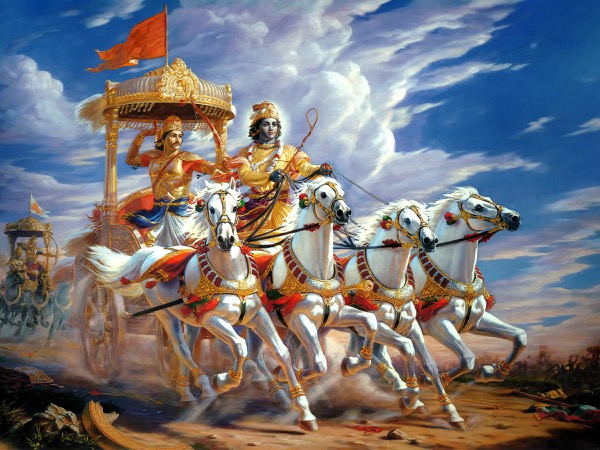
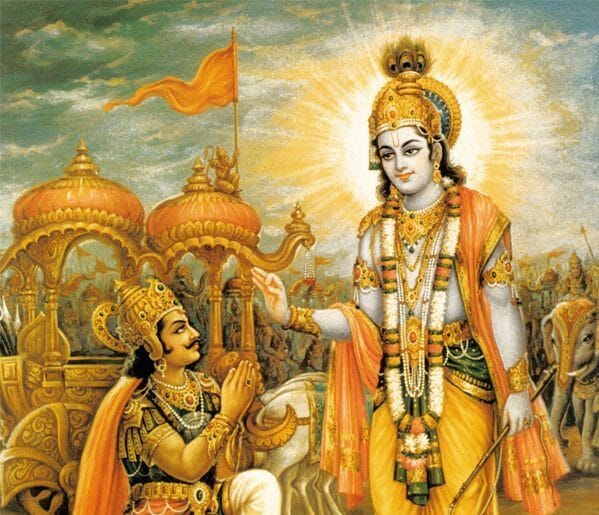
श्रीमद्भगवद्गीता मूलम् - नवमोऽध्यायः The ninth chapter of the Bhagavad Gita, titled राजविद्याराजगुह्ययोगः - the योग of Royal Knowledge and Royal Secret - unfolds on the battlefield of कुरुक्षेत्र, where the fate of the पांडवाः and कौरवाः hangs in the balance. Here, amidst the roar of conch shells and the tension of impending war, श्रीकृष्ण continues his profound dialogue with अर्जुन. The world around them is bracing for chaos, but within their chariot, a different kind of battle is taking place: the struggle for understanding, faith, and inner clarity. In the previous chapter, श्रीकृष्ण revealed the mystery of his cosmic form and the vastness of his divine manifestations. He spoke of the imperishable आत्मा, the importance of selfless action (कर्म-योग), and the transformative power of knowledge (ज्ञान-योग). अर्जुन listened, awed and humbled, but still searching for something deeper - a way to bridge the gap between intellectual understanding and heartfelt conviction. Now, in Chapter 9, श्रीकृष्ण offers what he calls the highest knowledge and the most profound secret. He explains that this wisdom is both simple and supreme: it is accessible to anyone who approaches with sincerity, regardless of background or status. The heart of this teaching is भक्ति-योग - the path of loving devotion. Through vivid examples, श्रीकृष्ण assures अर्जुन that even the smallest act of devotion, like offering a leaf, a flower, or a drop of water, is cherished when given with love. This chapter is a call to see the divine in all things and to trust that sincere devotion can dissolve even the deepest doubts and fears. श्रीकृष्ण also addresses the universal nature of the divine, emphasizing that he is present in every being and every action. He encourages अर्जुन to move beyond rituals and dogma, and to embrace a relationship with the divine that is personal, direct, and rooted in love. The message is clear: no one is excluded from grace, and the path to freedom is open to all who seek it with an open heart. Looking ahead, the next chapter will take these teachings further, exploring the different types of devotion and the qualities that make a devotee truly dear to the divine. But here, in Chapter 9, the focus is on the transformative power of faith and the promise that, no matter how lost or broken one may feel, turning toward the divine with sincerity can lead to peace and fulfillment. This is the royal road - the secret at the heart of all wisdom - that श्रीकृष्ण invites अर्जुन (and all of us) to walk. ॐ श्रीपरमात्मने नमः Meaning (पदार्थ): Translation (भावार्थ): Commentary (अनुसंधान): आदि शंकराचार्य explains that the designation राजविद्या as 'king of knowledge' signifies the supreme and most exalted wisdom that transcends all other forms of learning, revealing the ultimate truth behind existence. Meanwhile, श्री मध्वाचार्य interprets राजगुह्य as the 'king of secrets', emphasizing that this knowledge is profoundly hidden and accessible only to those who approach it with sincere devotion and proper guidance. This aligns with the Upanishadic invocation असतो मा सद्गमय from the Bhadrayaka Upanishad, which means 'lead me from the unreal to the real', highlighting the transformative journey from ignorance to enlightenment that this chapter initiates. Thus, the title not only underscores the supreme value of the teachings but also prepares the seeker to receive this confidential wisdom with reverence and readiness, setting the foundation for practical application in life as discussed next. In modern life, this invocation reminds us to approach important learning moments with respect and openness, whether starting a new project, entering a significant conversation, or beginning a period of self-reflection. For example, a student might pause to set an intention before studying, or a professional could take a moment of mindfulness before a crucial meeting. The idea of 'royal knowledge' and 'royal secret' can inspire us to value wisdom that is not just factual but transformative. As a reflection exercise, consider what knowledge in your own life you treat as most precious, and how you prepare yourself to receive or share it. श्रीभगवानुवाच Meaning (पदार्थ): Translation (भावार्थ): Commentary (अनुसंधान): आदि शंकराचार्य elucidates that the ज्ञानं mentioned here is the direct, non-dual knowledge of Brahman, while विज्ञान signifies the experiential realization of that truth, transcending mere intellectual grasp. Similarly, श्री रामानुजाचार्य interprets this secret as the path of devoted भक्ति combined with meditative उपसन, which is revealed only to those whose minds are free from doubt and malice, thus aligning with the term अनसूयवॆ. This teaching is not simply theoretical knowledge but a transformative wisdom that, when internalized and practiced, leads to liberation. The Upanishadic prayer मृत्योर्मा अमृतं गमय (from the Bhadrayaka Upanishad) beautifully complements this by invoking the journey from death to immortality, symbolizing the soul's transition from ignorance to enlightened freedom. This understanding bridges the profound knowledge described in the first paragraph with the practical application emphasized later, encouraging sincere seekers to embody this wisdom in their lives. In modern life, this verse encourages us to approach spiritual teachings with an open, non-judgmental mind, setting aside cynicism and skepticism. For example, a student who listens to a mentor with respect and trust is more likely to benefit than one who constantly doubts or criticizes. Similarly, someone who not only learns about healthy living but also puts it into practice experiences real transformation. Another example is in relationships: understanding and empathy, when combined with genuine action, can heal and uplift. As a reflection exercise, consider an area where you have received advice or knowledge-ask yourself if you have truly applied it, and whether any inner resistance or criticism has held you back from experiencing its full benefit. राजविद्या राजगुह्यं पवित्रमिदमुत्तमम् । Meaning (पदार्थ): Translation (भावार्थ): Commentary (अनुसंधान): The profound nature of this knowledge is further illuminated by आदि शंकराचार्य, who underscores its supreme power to purify and liberate by destroying the accumulated results of countless actions, making it directly accessible to sincere seekers. श्री रामानुजाचार्य complements this by emphasizing the joyous and effortless practice of this path, highlighting its inseparable connection to धर्म and its role in leading the devotee toward the ultimate good through direct perception of the divine. This aligns with the Upanishadic invocation मृत्योर्मा अमृतं गमय from the बृहदारण्यक उपनिषद्, which means 'lead me from death to immortality,' illustrating the transformative and imperishable nature of this wisdom. Together, these insights bridge the verse's emphasis on the knowledge's purity, direct experience, and enduring benefit, setting the stage for practical application in daily life. In modern life, this verse can be related to the pursuit of self-knowledge or a spiritual path that brings lasting fulfillment rather than temporary satisfaction. For example, someone might find that meditation or selfless service brings a sense of clarity and peace that no material achievement can match. Another person might discover that living according to their highest values brings a joy and ease that is sustainable, unlike fleeting pleasures. A reflection exercise: Consider an area of your life where you seek lasting happiness. Ask yourself if your current approach is bringing you direct, sustainable fulfillment or if it is dependent on external circumstances. How might you incorporate practices or knowledge that are both uplifting and enduring, as described in this verse? अश्रद्दधानाः पुरुषा धर्मस्यास्य परंतप । Meaning (पदार्थ): Translation (भावार्थ): Commentary (अनुसंधान): आदि शंकराचार्य explains that the absence of अश्रद्ध-faith or trust-in the spiritual धर्म leads one to remain attached to the transient body and sensory pleasures, thus continuing in the cycle of मृत्यु-संसार. Similarly, श्री रामानुजाचार्य highlights that even those qualified for spiritual practice may fail to attain the Supreme if they lack sincere eagerness and conviction, which are essential expressions of faith; this failure is often due to the binding effects of negative कर्म. This aligns with the Upanishadic injunction मृत्योर्मा अमृतं गमय from the बृहदारण्यक ऊपनिषद्, meaning "Lead me from death to immortality," emphasizing that faith is the vital force that guides one beyond the mortal path. Without such faith, the aspirant remains caught in संसार, unable to progress toward liberation. This understanding deepens the verse's warning about the consequences of disbelief and prepares us to consider how this manifests in practical life. In modern life, this teaching can be seen when someone learns about meditation or ethical living but dismisses it as ineffective or irrelevant, never giving it a sincere try. Another example is a person who intellectually agrees with spiritual principles but never applies them, remaining stuck in old habits and anxieties. Consider reflecting on an area of your life where you have heard wise advice but have not truly trusted or acted upon it. What holds you back from taking that step? Try identifying one belief or practice you are skeptical about, and experiment with engaging it sincerely for a set period, observing any changes in your experience. मया ततमिदं सर्वं जगदव्यक्तमूर्तिना । Meaning (पदार्थ): Translation (भावार्थ): Commentary (अनुसंधान): The profound insight of this verse is further illuminated by the teachings of आदि शंकराचार्य and श्री रामानुजाचार्य. आदि शंकराचार्य interprets the अव्यक्त-मूर्तिना-the unmanifest form of the divine-as the ultimate non-dual reality that pervades all existence yet remains untouched and transcendent beyond all forms. In contrast, श्री रामानुजाचार्य emphasizes the divine as the inner controller (अंतर्यामिन्), who sustains and governs all beings from within, while not being dependent on them for His existence. This distinction is echoed in the Upanishadic teaching from the कठोपनिषद् (1.2.18): न जायते म्रियते वा विपश्चित्, meaning the Self is unborn, eternal, and beyond death. This supports the verse's assertion that although all beings exist in the divine, the divine itself is not confined or conditioned by them. Together, these perspectives deepen our understanding of the divine's immanence and transcendence, preparing us to reflect on how this truth applies in our daily lives. In modern life, this teaching can be seen in the way a leader or mentor influences an organization: their vision pervades the group, shaping its direction, yet their identity is not limited to the organization itself. Similarly, the internet pervades our daily activities, connecting and supporting countless interactions, but it is not contained within any single device or user. As a reflection exercise, consider moments when you feel overwhelmed by your responsibilities or relationships. Remind yourself that your core self is not defined or limited by these roles, just as the divine is not confined by the world it sustains. This perspective can help cultivate a sense of inner freedom and resilience, even while fully engaging with the world around you. न च मत्स्थानि भूतानि पश्य मे योगमैश्वरम् । Meaning (पदार्थ): Translation (भावार्थ): Commentary (अनुसंधान): आदि शंकराचार्य elucidates that the Lord's Self is entirely free from any association with beings, underscoring His transcendence as the immutable substratum who sustains all without being contained by them. Similarly, श्री रामानुजाचार्य explains that beings do not reside in God as water resides in a pot; rather, their existence is solely dependent on His divine will, which alone projects and maintains them. This profound truth is echoed in the Upanishadic prayer असतो मा सद्गमय from the बृहदारण्यक उपनिषद्, meaning "Lead me from the unreal to the real," highlighting the distinction between the transient beings and the eternal Self. Together, these insights deepen our understanding of the Lord's divine योग as a wondrous power that supports all creation while remaining untouched, setting the stage for reflecting on how this truth applies to our own lives and relationships. In modern life, this teaching can be seen in the way a leader or mentor supports a team: they provide guidance and resources, but do not lose their own identity or become entangled in every detail. Similarly, a parent nurtures a child but is not defined solely by that role. Another example is the sun, which enables all life on earth but is not diminished or altered by what happens here. Reflect for a moment: where in your life do you support others or projects without being dependent on them for your sense of self? How can you cultivate the ability to care deeply while remaining inwardly free and undisturbed? यथाकाशस्थितो नित्यं वायुः सर्वत्रगो महान् । Meaning (पदार्थ): Translation (भावार्थ): Commentary (अनुसंधान): आदि शंकराचार्य elucidates that just as the wind moves freely yet remains inseparable from space, all beings exist within the Divine without direct contact, highlighting the non-dual reality where the Divine is the subtle, all-pervading support. श्री रामानुजाचार्य emphasizes the Lord's sustaining power, explaining that although the Divine remains unseen, all beings are continuously upheld by His will, much like the wind is supported by space. This is reinforced by the Upanishadic prayer असतो मा सद्गमय from the बृहदारण्यक उपनिषद्, which means "Lead me from the unreal to the real," underscoring the movement from apparent separateness to the recognition of the Divine as the true substratum. This understanding bridges the subtle metaphysical truth of the Divine's immanence with practical awareness, preparing us to recognize the unseen supports in our own lives, as discussed in the following paragraph. In modern life, this teaching can be seen in how we rely on invisible systems for our daily existence, such as the internet or electricity, which support countless activities without being noticed directly. Similarly, just as air is everywhere but rarely considered unless absent, we often overlook the deeper presence that sustains us. Another example is how a city operates within the infrastructure of roads and utilities, which are essential but not always visible. For reflection: Consider what unseen supports are present in your life-physical, emotional, or spiritual-and how your actions and existence depend on them. Take a moment to acknowledge and appreciate these subtle foundations, and reflect on how recognizing this interconnectedness might influence your sense of security and gratitude. सर्वभूतानि कौंतेय प्रकृतिं यांति मामिकाम् । Meaning (पदार्थ): Translation (भावार्थ): Commentary (अनुसंधान): The cyclical process described in this verse is deeply explored by आदि शंकराचार्य, who emphasizes the non-dual reality where all beings merge back into the supreme Self, illustrating that the apparent distinction between creator and creation is ultimately illusory. In contrast, श्री रामानुजाचार्य interprets प्रकृति as the Lord's own body, highlighting that dissolution is a conscious withdrawal into the divine substance, and creation is a deliberate re-manifestation by His will. This understanding aligns with the Upanishadic prayer मृत्योर्मा अमृतं गमय from the Bhadrayaka Upanishad, which means 'lead me from death to immortality,' underscoring the soul's journey through cycles of birth and dissolution under divine guidance. Together, these perspectives deepen the insight from the previous paragraph by showing that the return and projection of beings are not random but governed by the supreme will, preparing us to reflect on how such cosmic rhythms resonate within our personal experiences. In modern life, this teaching can be seen in the cycles we experience-such as the end and beginning of relationships, careers, or personal transformations. Just as all beings return to a source and emerge again, we too go through phases of withdrawal and renewal. For example, after a period of intense work, we may need rest and reflection before starting new projects. Similarly, communities may dissolve and re-form in new ways over time. As a reflection exercise, consider an area of your life that has recently ended or paused. How might you view this as a return to your own 'source' or potential, preparing for a new beginning? This perspective can foster patience and trust in the process of change. प्रकृतिं स्वामवष्टभ्य विसृजामि पुनः पुनः । Meaning (पदार्थ): Translation (भावार्थ): Commentary (अनुसंधान): The profound insight of this verse is further illuminated by आदि शंकराचार्य, who explains that the Lord, by controlling His own प्रकृति, remains unaffected by the creation process, thus transcending the cycle of birth and death. This is echoed in the Upanishadic teaching न जायते म्रियते वा विपश्चित् from the कठोपनिषद् (1.2.18), meaning the wise soul is neither born nor dies, highlighting the Lord's immutable nature beyond material flux. Meanwhile, श्री मध्वाचार्य emphasizes the absolute dependence of all beings on the Lord's will, underscoring their helplessness under the sway of the three गुणs of nature, which bind them to repeated cycles of existence. Together, these perspectives deepen our understanding of the verse's message: while the Lord orchestrates creation through His प्रकृति, the beings themselves remain powerless, setting the stage for practical reflection on our own conditioned responses and the possibility of transcending them. In modern life, this teaching can be seen in how people often feel swept along by circumstances-such as being caught in the demands of work, family, or society-without realizing the deeper forces at play. For example, someone might find themselves repeating the same patterns in relationships or career choices, feeling powerless to change. Another example is the way natural disasters or sudden life changes can remind us of our limited control. As a reflection exercise, consider a situation where you felt powerless or acted out of habit. Ask yourself: What underlying 'nature' or conditioning was influencing you? How might recognizing a higher order at work change your perspective or response? न च मां तानि कर्माणि निबध्नंति धनंजय । Meaning (पदार्थ): Translation (भावार्थ): Commentary (अनुसंधान): आदि शंकराचार्य elucidates that the Lord remains unaffected by actions because He is free from ego and attachment, embodying the role of a detached witness as described in the first paragraph. Complementing this, श्री रामानुजाचार्य emphasizes that the Lord's transcendence over karmic results arises from His impartial governance of the cosmic order, where individual beings' past actions manifest without implicating Him. This divine detachment is further illuminated by the Upanishadic prayer from the बृहदारण्यक उपनिषद्, असतो मा सद्गमय, which means "lead me from the unreal to the real," highlighting the movement from bondage in action to the freedom exemplified by the Lord. Together, these perspectives deepen the understanding that the Lord's freedom from binding actions is not mere indifference but a profound state of transcendental detachment, preparing us to reflect on how we might cultivate similar equanimity in our own lives. In modern life, this teaching can be seen in the role of a judge who, while presiding over cases, must remain impartial and not personally involved in the outcomes. Similarly, a teacher may guide students without becoming attached to their individual successes or failures. For personal reflection, consider a situation where you are responsible for a group project or a family decision. Ask yourself: Can you act with full commitment while letting go of personal attachment to the results? Try observing your actions this week and notice when you feel bound by outcomes, and when you can act with the freedom of an impartial witness. मयाध्यक्षेण प्रकृतिः सूयते सचराचरम् । Meaning (पदार्थ): Translation (भावार्थ): Commentary (अनुसंधान): The profound insight of this verse is further illuminated by the interpretations of आदि शंकराचार्य and श्री रामानुजाचार्य. आदि शंकराचार्य highlights the Lord's role as the changeless overseer who remains unaffected by the transformations of प्रकृति, emphasizing the Supreme as the conscious witness behind all phenomena. In contrast, श्री रामानुजाचार्य stresses the Lord's active sovereignty and compassionate supervision, where the cosmic processes unfold in harmony with the karmic law governing individual souls, yet always under the divine will. This dual perspective reinforces the verse's message that while nature is the immediate cause of all manifestations, it is the Lord's conscious oversight that sustains and directs the universe's continuous revolutions. Supporting this understanding, the कठोपनिषद् (1.2.18) declares, न जायते म्रियते वा विपश्चित्, meaning the true Self neither takes birth nor dies, underscoring the eternal and unchanging nature of the divine witness who supervises the transient world. This sets the stage for practical reflection on how conscious awareness can guide our engagement with the ever-changing cycles of life. In modern life, this teaching can be seen in the way complex systems-like a business, a city, or even our own bodies-require both underlying processes and conscious oversight to function smoothly. For example, a company may have automated routines, but it still needs a manager to guide its direction. Similarly, the laws of nature operate consistently, but this verse reminds us of a deeper intelligence that guides the whole. Another example is in personal growth: while our habits and environment shape us, our conscious choices and intentions play a crucial role in how our lives unfold. As a reflection exercise, consider an area of your life where things seem to run on autopilot. Ask yourself: what would it mean to bring more conscious awareness or 'supervision' to this area, and how might that change the outcome? अवजानंति मां मूढा मानुषीं तनुमाश्रितम् । Meaning (पदार्थ): Translation (भावार्थ): Commentary (अनुसंधान): The profound insight of आदि शंकराचार्य clarifies that Krishna's supreme nature is subtler and more pervasive than even space, transcending all material limitations; thus, only those enveloped in ignorance fail to perceive His true essence. श्री रामानुजाचार्य further explains that Krishna's taking on a human form is a compassionate act, designed to be approachable and relatable, yet those blinded by their own negative karmas mistakenly regard Him as merely human. This misunderstanding is rooted in spiritual darkness, which the Upanishadic prayer असतो मा सद्गमय-"Lead me from the unreal to the real"-beautifully encapsulates, urging seekers to transcend superficial appearances and realize the ultimate truth. Together, these teachings emphasize that recognizing Krishna's divine identity beyond His human form is essential for overcoming ignorance and advancing on the spiritual path. In modern life, this teaching is relevant whenever we judge others solely by their outward appearance or social status, missing their deeper qualities or potential. For example, someone might dismiss a wise teacher because they do not fit a stereotypical image, or overlook the value in a humble colleague. Another example is failing to appreciate the profound impact of a parent or mentor simply because their actions seem ordinary on the surface. As a reflection exercise, consider a person or situation you have underestimated based on appearances. Ask yourself: what deeper qualities or intentions might I be missing? How can I cultivate the habit of looking beyond the surface to recognize the true value in people and experiences? मोघाशा मोघकर्माणो मोघज्ञाना विचेतसः । Meaning (पदार्थ): Translation (भावार्थ): Commentary (अनुसंधान): The root cause of the futility described in this verse lies in the failure to recognize the Supreme Lord as the innermost Self, a point emphasized by आदि शंकराचार्य. He explains that when one disregards the divine presence within, all actions, knowledge, and hopes become मॊघ-empty and fruitless. श्री रामानुजाचार्य further clarifies that such individuals act from a limited, materialistic perspective, failing to see the Lord's omnipresence in all beings, which leads them to adopt a deluding nature akin to राक्षस and आसुरी प्रकृति. This spiritual blindness causes their efforts to be misdirected and ultimately unfulfilling. The कठोपनिषद् (1.3.14) prayer, उत्तिष्ठत जाग्रत प्राप्य वरान्निबोधत, meaning 'Arise, awake, and learn by approaching the excellent ones,' underscores the necessity of awakening from this delusion through discernment and guidance. This insight bridges the understanding of wasted potential in paragraph one and leads naturally to the practical reflections on aligning one's actions with higher values in the following paragraph. In modern life, this teaching can be seen in people who chase after empty ambitions, pursue unethical careers, or accumulate knowledge only for personal gain without any sense of service or higher purpose. For example, someone might work tirelessly for wealth or status, only to find their achievements hollow and unsatisfying. Another example is when individuals use their intelligence to manipulate or harm others, rather than uplift themselves or society. A reflection exercise: Consider an area in your life where your efforts feel unfulfilling or disconnected from your deeper values. Ask yourself if your motivations are aligned with a sense of purpose, compassion, or truth, or if they are driven by confusion, ego, or societal pressure. This self-inquiry can help redirect your actions toward more meaningful and spiritually nourishing goals. महात्मानस्तु मां पार्थ दैवीं प्रकृतिमाश्रिताः । Meaning (पदार्थ): Translation (भावार्थ): Commentary (अनुसंधान): आदि शंकराचार्य explains that the महात्मानह् are those who, by cultivating divine qualities and steadfast knowledge, naturally engage in unwavering devotion, recognizing Krishna as the immutable source of all beings. This single-minded worship arises from a deep realization of the eternal truth, as reflected in the Upanishadic injunction न जायते म्रियते वा विपश्चित् from the कठोपनिषद् (1.2.18), meaning the Self is never born nor does it die, underscoring the imperishable nature of the Divine. श्री रामानुजाचार्य highlights that such great souls are granted divine grace enabling them to take refuge in Krishna's divine nature, worshipping Him with exclusive love and devotion because they find no other refuge or fulfillment. Both Acharyas emphasize that this devotion is not accidental but the fruit of conscious spiritual maturity and true knowledge, which transforms the worshipper's entire being and sets the foundation for living a focused, purposeful life as described in the next paragraph. In modern life, this teaching can be seen in those who dedicate themselves wholeheartedly to a higher purpose, such as individuals who serve others selflessly or pursue their spiritual path with sincerity and focus. For example, someone volunteering tirelessly for a humanitarian cause, or a person who maintains a daily meditation practice despite life's distractions, reflects the spirit of अनन्य-मनसह्. Another example is a leader who remains ethical and compassionate, guided by a sense of connection to something greater than personal gain. As a reflection exercise, consider what qualities in your own life help you stay focused on your highest values, and identify one area where you can cultivate greater single-mindedness or divine intention. सततं कीर्तयंतो मां यतंतश्च दृढव्रताः । Meaning (पदार्थ): Translation (भावार्थ): Commentary (अनुसंधान): The verse's emphasis on continuous devotion and steadfast effort is illuminated by आदि शंकराचार्य, who explains that such devotees cultivate self-discipline and control over the senses, embodying virtues like kindness and non-violence as they strive to remain ever connected with the Divine. This aligns with the yogic ideal of mental restraint, as expressed in पातंजलि योग सूत्राणि (1.2): योगश्चित्तवृत्ति निरोधः, meaning योग is the cessation of the fluctuations of the mind, enabling unwavering focus on God. Meanwhile, श्री रामानुजाचार्य highlights the emotional intensity of devotion, portraying the devotee's love as so profound that they cannot endure separation even momentarily, expressing their भक्ति through singing, service, and full prostration. Together, these perspectives deepen our understanding of the verse by showing how disciplined practice and heartfelt love combine to sustain constant worship, preparing us to consider how such qualities manifest in daily life. In modern life, this verse can be seen in those who dedicate time daily to spiritual practice, whether through prayer, meditation, or acts of kindness, regardless of their busy schedules. For example, someone might start each day with gratitude and reflection, or volunteer regularly out of a sense of service. Another example is a person who, despite facing setbacks, continues to pursue their goals with integrity and devotion, seeing their work as an offering. To reflect, consider what activities or attitudes help you feel most connected to your deeper values or sense of purpose. How might you bring more consistency and heartfelt intention into those areas, making them a steady part of your life rather than occasional efforts? ज्ञानयज्ञेन चाप्यन्ये यजंतो मामुपासते । Meaning (पदार्थ): Translation (भावार्थ): Commentary (अनुसंधान): आदि शंकराचार्य interprets ज्ञान-यज्ञ as the supreme sacrifice of knowledge that leads to the realization of non-duality, where the devotee perceives no distinction between the self and Brahman, embodying the unity expressed by एकत्वेन. In contrast, श्री रामानुजाचार्य emphasizes the Lord's simultaneous unity and multiplicity, explaining that the divine manifests as both the singular essence and the manifold forms in the cosmos, which devotees worship as the soul of all beings. This diversity in worship reflects the varied spiritual capacities and temperaments of devotees, as also noted by श्री मध्वाचार्य. The Upanishadic prayer मृत्योर्मा अमृतं गमय from the बृहदारण्यक उपनिषद् supports this understanding by invoking the journey from mortality to immortality, symbolizing the transformative power of knowledge and devotion alike. Together, these perspectives affirm that whether one approaches the divine through unity, multiplicity, or omnipresence, all sincere paths lead to the same ultimate reality, preparing us to appreciate the practical diversity of spiritual paths in daily life. In modern life, this teaching encourages respect for different spiritual paths and philosophies. For example, someone may find meaning in scientific inquiry and see the universe as a manifestation of the divine, while another person may practice rituals or prayer to specific deities, and yet another may feel a deep connection to all living beings as expressions of the same source. A practical reflection: consider how you relate to the idea of the divine-do you see unity, diversity, or an all-encompassing presence? Try observing your own spiritual inclinations and notice how they shape your worldview and interactions with others. This openness can foster greater harmony and understanding in a pluralistic society. अहं क्रतुरहं यज्ञः स्वधाहमहमौषधम् । Meaning (पदार्थ): Translation (भावार्थ): Commentary (अनुसंधान): The profound unity of the Divine with all ritual elements is further illuminated by आदि शंकराचार्य and श्री रामानुजाचार्य. आदि शंकराचार्य stresses the non-dual reality where the Lord is simultaneously the sacrificer, the sacrifice, and the sacred fire, dissolving any duality between the worshiper and the worshiped. In contrast, श्री रामानुजाचार्य highlights the Lord's intimate immanence, affirming that every component of the sacrifice-from the mantra to the oblation-is sustained and enlivened by His divine will. This comprehensive identification aligns with the Upanishadic invocation मृत्योर्मा अमृतं गमय from the Bhadrayaka Upanishad, which beseeches the transition from mortality to immortality, symbolizing the transformative power of recognizing the Divine in all aspects of ritual and life. Together, these insights deepen the understanding that the sacred and the mundane are inseparable, preparing us to perceive everyday actions as infused with divine presence. In modern life, this teaching can be applied by recognizing the sacredness in everyday actions, not just in formal religious rituals. For example, preparing a meal for one's family can be seen as an offering, with the food, the act of cooking, and the nourishment all being expressions of the Divine. Similarly, when we care for the sick or use medicine to heal, we can remember that both the healing process and the remedies themselves are part of a greater sacred order. As a reflection exercise, consider one routine activity you perform daily and try to see each component of it as infused with the presence of the Divine, just as the verse describes every part of the ritual as an aspect of the Lord. This perspective can transform ordinary tasks into acts of mindful reverence. पिताहमस्य जगतो माता धाता पितामहः । Meaning (पदार्थ): Translation (भावार्थ): Commentary (अनुसंधान): The profound unity of the Divine as the source and sustainer of all is deeply elucidated by आदि शंकराचार्य, who interprets this verse as affirming the non-dual Brahman that underlies all dualities and relationships, including the Vedas and sacred syllables. He emphasizes that the Divine is the ultimate substratum beyond all distinctions, embodying the roles of father, mother, creator, and grandfather as symbolic of the singular reality. श्री मध्वाचार्य complements this view by stressing the personal and active nature of the Lord, who maintains real, ongoing relationships with creation and manifests through the Vedas as expressions of His will. This dual perspective is beautifully harmonized by the Upanishadic prayer असतो मा सद्गमय from the बृहदारण्यक उपनिषद्, which means 'Lead me from the unreal to the real.' This invocation underscores the journey from multiplicity to the singular Divine reality described in the verse, linking the cosmic roles of the Divine to the spiritual aspiration for truth and purity. Thus, the verse not only reveals the all-encompassing nature of the Divine but also invites us to recognize this unity in our own spiritual quest, preparing us to see the Divine in everyday relationships and practices as explored in the following paragraph. In modern life, this verse invites us to see the Divine not as a distant or abstract force, but as present in every relationship and aspect of our lives. For example, when caring for a child or supporting a friend, one can reflect on the nurturing and sustaining qualities described here. In moments of learning or seeking truth, remembering that the ultimate knowledge is the Divine can bring purpose to our studies. Even in daily rituals or moments of quiet reflection, chanting Om or reading sacred texts can be seen as connecting directly with the source of all wisdom. As a reflection exercise, consider the different roles you play in your family and community, and contemplate how each of these roles can be seen as an expression of the same underlying unity and care described in this verse. गतिर्भर्ता प्रभुः साक्षी निवासः शरणं सुहृत् । Meaning (पदार्थ): Translation (भावार्थ): Commentary (अनुसंधान): The interpretations of this verse by आदि शंकराचार्य and श्री रामानुजाचार्य deepen our understanding of the Divine's multifaceted nature. आदि शंकराचार्य emphasizes the non-dual reality where the Divine is the material and efficient cause of all, pervading every role mentioned-goal, supporter, witness, and imperishable seed-thus affirming the unity behind all existence. In contrast, श्री रामानुजाचार्य highlights the personal and accessible aspect of the Divine, portraying the Lord as the refuge and friend who offers shelter and benevolence to the devotee. This dual perspective aligns with the Upanishadic teaching न जायते म्रियते वा विपश्चित् from the कठोपनिषद् (1.2.18), meaning the true Self neither is born nor dies, underscoring the eternal and unchanging nature of the Divine seed described in the verse. Recognizing these roles not only enriches philosophical insight but also prepares the seeker to relate personally to the Divine, bridging the conceptual with the practical. In modern life, these concepts can be seen in various ways. For example, when facing uncertainty, remembering the Divine as the 'refuge' or सरणम् can provide comfort and strength. When feeling isolated, reflecting on the Divine as the 'friend' or सुहृत् can remind us that we are never truly alone. In moments of success or failure, acknowledging the Divine as the 'witness' or साक्षी can help us maintain perspective and humility. As a reflection exercise, consider a current challenge in your life and identify which aspect of the Divine described in this verse resonates most with your situation. How might embracing that aspect shift your mindset or approach to the challenge? तपाम्यहमहं वर्षं निगृह्णाम्युत्सृजामि च । Meaning (पदार्थ): Translation (भावार्थ): Commentary (अनुसंधान): आदि शंकराचार्य elucidates that the terms सत् and असत् in this verse signify the manifest effect and its unmanifest cause, respectively, underscoring the Lord's immanence as both the visible universe and its underlying reality. He highlights that Krishna embodies all dualities-heat and rain, life and death-demonstrating the unity behind apparent opposites. Similarly, श्री रामानुजाचार्य interprets the verse as affirming the Lord's role as the inner controller who pervades all states of existence, past, present, and future, emphasizing that all beings and phenomena are modes of the Divine. This comprehensive presence is echoed in the Upanishadic prayer मृत्योर्मा अमृतं गमय from the बृहदारण्यक उपनिषद्, which means "lead me from death to immortality," illustrating the Lord's transcendence over the cycle of life and death. Together, these insights deepen the understanding that the Divine is the source and sustainer of all natural and existential processes, preparing us to reflect on how this truth manifests in our daily experiences. In modern life, this teaching can be seen in how we experience both abundance and scarcity, joy and loss. For example, a farmer depends on the rain and sun for crops, yet has no control over their arrival-reminding us of forces beyond human command. Similarly, in times of personal success or failure, recognizing a greater order at work can foster humility and resilience. Another example is in health and illness: both are part of the same cycle, and understanding this can help us accept change with equanimity. As a reflection exercise, consider a recent event-pleasant or unpleasant-and ask yourself: How might this be an expression of a larger, interconnected reality? What does it mean to see both the positive and negative as part of a single divine process? त्रैविद्या मां सोमपाः पूतपापा यज्ञैरिष्ट्वा स्वर्गतिं प्रार्थयंते। Meaning (पदार्थ): Translation (भावार्थ): Commentary (अनुसंधान): आदि शंकराचार्य explains that this verse describes those who are learned in the three Vedas and purified by Soma, yet their understanding remains limited to ritualistic worship aimed at attaining heavenly pleasures, not the ultimate liberation. श्री रामानुजाचार्य further clarifies that while these practitioners worship the Supreme through sacrifices, their goal is confined to reaching स्वर्ग, the celestial realm, without realizing the Supreme's indwelling presence in all deities. This temporary enjoyment in Indra's world, as श्री मध्वाचार्य notes, is the fruit of accumulated merit but is transient and inferior to the eternal bliss of devotion and knowledge. The Upanishadic injunction मृत्योर्मा अमृतं गमय (from the Brihadaranyaka Upanishad) meaning "lead me from death to immortality," highlights the deeper spiritual aspiration beyond mere heavenly rewards. Together, these teachings emphasize that while Vedic rituals yield meritorious results, their fruits are impermanent, urging seekers to transcend ritualistic aims and pursue lasting spiritual realization, thus preparing the ground for the practical reflections in the following paragraph. In modern life, this verse can be seen in the context of people who focus on external achievements, rewards, or pleasures-such as working solely for promotions, material gains, or social recognition-without seeking deeper fulfillment or purpose. For example, someone might dedicate themselves to charitable acts or community service primarily for praise or status, rather than genuine compassion. Another example is pursuing academic or career success only for the sake of accolades, not for the love of learning or meaningful contribution. A reflection exercise: Consider an area of your life where you are striving for a reward. Ask yourself whether your motivation is rooted in temporary pleasure or in a deeper sense of purpose and connection. How might your actions change if you shifted your focus from external rewards to inner growth or service? ते तं भुक्त्वा स्वर्गलोकं विशालं क्षीणे पुण्ये मर्त्यलोकं विशंति। Meaning (पदार्थ): Translation (भावार्थ): Commentary (अनुसंधान): आदि शंकराचार्य elucidates that the temporary enjoyment of स्वर्गलोकं merely perpetuates the cycle of गतागतं, as those attached to ritualistic merit remain bound by the exhaustion of पुण्य. He stresses that true liberation arises only through self-knowledge and realization beyond ritual fruits. Similarly, श्री मध्वाचार्य points out that the finite rewards of त्रयीधर्मम् cannot free one from संसार without devotion to the Supreme. This is supported by the Upanishadic prayer from the बृहदारण्यक उपनिषद्, मृत्योर्मा अमृतं गमय, which means 'Lead me from death to immortality,' emphasizing the need to transcend temporary gains and seek eternal liberation. Together, these teachings highlight that desire-driven ritualism leads only to transient results, preparing us to reflect on the deeper fulfillment beyond fleeting pleasures, as discussed in the following paragraph. In modern life, this teaching can be seen in the pursuit of temporary pleasures or achievements-such as chasing career success, wealth, or social status-without considering their lasting value. For example, someone might work tirelessly for a promotion, enjoy the benefits for a while, but soon find themselves seeking the next goal, never fully satisfied. Another example is indulging in short-term gratifications like luxury vacations or material purchases, which provide happiness only briefly before the cycle of wanting resumes. As a reflection exercise, consider an area where you repeatedly seek satisfaction but find it fleeting. Ask yourself: What motivates these pursuits, and is there a deeper fulfillment you might be overlooking? अनन्याश्चिंतयंतो मां ये जनाः पर्युपासते । Meaning (पदार्थ): Translation (भावार्थ): Commentary (अनुसंधान): The profound assurance in this verse has been elucidated by आदि शंकराचार्य and श्री रामानुजाचार्य with complementary insights. आदि शंकराचार्य interprets अनन्याः as the state of non-dual realization where the devotee's identity merges with the Supreme, so that the Lord Himself becomes the sole doer and caretaker, relieving the devotee from all personal effort. In this context, the Lord's promise to provide योग and क्शॆम means the spontaneous fulfillment and protection of all needs, both material and spiritual. श्री रामानुजाचार्य, while affirming the Lord's grace, highlights the loving dependence of the devotee who, by exclusive meditation and worship, is drawn closer to the Divine and preserved in that union eternally, thus escaping the cycle of rebirth. This dynamic relationship is beautifully echoed in the Upanishadic prayer from the बृहदारण्यक उपनिषद्: मृत्योर्मा अमृतं गमय, which means "Lead me from death to immortality," signifying the ultimate spiritual welfare assured by the Lord. Together, these teachings deepen the understanding of the verse's promise, linking the devotee's unwavering focus on the Divine with the Lord's active role in securing their highest welfare, thereby preparing us to reflect on how such trust manifests in everyday life. In modern life, this teaching can be seen in the experience of individuals who dedicate themselves wholeheartedly to a cause, a relationship, or a spiritual path, finding that support and resources often arrive unexpectedly when their commitment is total. For example, a person who leaves a lucrative job to serve in a humanitarian mission may find their basic needs met in unforeseen ways. Or someone who practices daily meditation and service, trusting in a higher purpose, may notice that challenges are resolved with surprising ease. As a reflection exercise, consider an area of your life where you feel anxious about outcomes. Imagine shifting your focus from worry to wholehearted dedication, trusting that what you truly need will be provided. How does this change your sense of security and motivation? येऽप्यन्यदेवता भक्ता यजंते श्रद्धयान्विताः । Meaning (पदार्थ): Translation (भावार्थ): Commentary (अनुसंधान): आदि शंकराचार्य explains that worship directed toward other deities, though performed with sincere faith, ultimately reaches the Supreme Self, but due to अविधि-ignorance of the true nature of the Supreme-the worshippers fail to attain the highest liberation. He highlights that this ignorance prevents the direct realization of the Supreme as the ultimate goal. Similarly, श्री मध्वाचार्य clarifies that while such worship yields genuine but limited and temporary results, it lacks the full spiritual efficacy because the worshippers do not recognize the Supreme as the ultimate recipient of all offerings. This aligns with the Upanishadic teaching from the कठोपनिषद् (1.3.14): उत्तिष्ठत जाग्रत प्राप्य वरान्निबोधत, which urges one to 'Arise, awake, and learn by approaching the excellent ones.' This injunction emphasizes the necessity of transcending partial understanding through proper guidance to realize the Supreme fully. Thus, the verse underscores that while faith and devotion are essential, they must be coupled with scriptural knowledge and direct focus on the Supreme to achieve complete spiritual fulfillment, a point that naturally leads us to consider how this teaching applies in practical life. In modern life, this teaching is relevant for anyone who seeks fulfillment through various forms of devotion, rituals, or even secular pursuits, believing them to be separate from the ultimate reality. For example, someone might dedicate themselves to their work, family, or community service with deep sincerity, not realizing that these actions can also be offerings to the Divine if performed with the right understanding. Another example is people who follow different spiritual paths or traditions, thinking they are entirely separate, when in fact all sincere efforts ultimately connect to the same source. As a reflection exercise, consider an area of your life where you invest energy and devotion. Ask yourself: Do I see this as connected to a higher purpose, or do I view it as separate from my spiritual life? How might my intention change if I recognized the underlying unity behind all my actions? अहं हि सर्वयज्ञानां भोक्ता च प्रभुरेव च । Meaning (पदार्थ): Translation (भावार्थ): Commentary (अनुसंधान): आदि शंकराचार्य explains that without realizing Krishna as the true भोक्ता and प्रभुः, sacrifices, though performed with external correctness, fail to yield the ultimate spiritual benefit and result only in temporary heavenly enjoyment before falling back to the cycle of birth and death. Similarly, श्री रामानुजाचार्य teaches that Krishna alone is the supreme dispenser of all fruits of action, and only those who know Him in essence receive the eternal, imperishable reward of union with the Divine. This aligns with the Upanishadic injunction मृत्योर्मा अमृतं गमय from the बृहदारण्यक उपनिषद्, which means 'Lead me from death to immortality,' emphasizing the need to transcend the limited fruits of sacrifice by knowing Krishna truly. Thus, the verse's key idea that ignorance of Krishna's reality causes one to च्यवंति (fall) is underscored by these teachings, highlighting that knowledge and devotion to Krishna as the ultimate enjoyer and Lord are indispensable for attaining lasting spiritual success. This understanding naturally leads to reflecting on how one's own actions align with this deeper purpose, preparing us to consider practical applications in daily life. In modern life, this teaching applies to any action done with a limited or mistaken understanding of its true purpose. For example, someone might donate to charity for social recognition rather than genuine compassion, or work diligently at a job solely for material gain without considering the broader impact. Both cases can lead to disappointment or a sense of emptiness. To reflect, consider an area in your life where you act out of habit or for external approval. Ask yourself: Do I understand the deeper purpose behind this action? How might my motivation shift if I recognized a higher principle guiding my efforts? This reflection can help align daily actions with a more meaningful and lasting sense of fulfillment. यांति देवव्रता देवान्पितॄन्यांति पितृव्रताः । Meaning (पदार्थ): Translation (भावार्थ): Commentary (अनुसंधान): आदि शंकराचार्य elucidates that although the external acts of worship may appear similar, the ultimate fruits differ fundamentally because of the worshipper's chosen व्रत-their resolve or intention. He stresses that worship directed toward finite deities or ancestors results in finite destinations, whereas devotion to the Supreme Being, Krishna, leads to liberation beyond all limitations. Complementing this, श्री रामानुजाचार्य highlights the significance of the worshipper's understanding and motive, explaining that those who worship Krishna as the source and essence of all divinities transcend the temporary abodes of gods and ancestors and reach Him alone. This teaching aligns with the Upanishadic injunction मृत्योर्मा अमृतं गमय from the बृहदारण्यक उपनिषद्, which means 'Lead me from death to immortality,' emphasizing the supreme goal of spiritual practice as liberation from the cycle of birth and death. Together, these insights deepen the verse's message that the object and intention of worship shape the ultimate outcome, preparing us to reflect on how our own commitments influence our life's direction and fulfillment. In modern life, this teaching can be seen in the way people dedicate themselves to different goals-career, relationships, or personal interests-and how those pursuits shape their experiences and outcomes. For example, someone who focuses solely on material success may achieve wealth but miss out on deeper fulfillment, while another who seeks spiritual growth may find lasting peace. Similarly, those who invest their energy in helping others may build strong communities but may not address their own inner needs. A useful reflection exercise is to ask yourself: What am I truly devoted to? Where is my energy and intention directed? Consider whether your current focus aligns with your highest values and whether it leads to temporary satisfaction or lasting fulfillment. पत्रं पुष्पं फलं तोयं यो मे भक्त्या प्रयच्छति । Meaning (पदार्थ): Translation (भावार्थ): Commentary (अनुसंधान): आदि शंकराचार्य emphasizes that the Lord accepts even the simplest offering when given with true भक्ति, reinforcing that the value lies in the purity and devotion of the heart rather than the material worth of the gift. श्री रामानुजाचार्य further explains that the devotee's spontaneous love compels them to offer whatever they can, and though the Lord is self-sufficient, He delights in such heartfelt offerings as if they were precious treasures. This aligns with the Upanishadic prayer तमसो मा ज्योतिर्गमय from the बृहदारण्यक उपनिषद्, which means "Lead me from darkness to light," symbolizing the transformative power of sincere devotion that dispels ignorance and elevates the soul. These teachings highlight that the Lord's acceptance is rooted in the devotee's pure intention and single-minded love, setting the foundation for practical application in daily life as discussed next. In modern life, this teaching encourages us to focus on the intention behind our actions rather than their outward appearance. For example, a child making a handmade card for a parent, or someone donating a small amount to charity with a full heart, can be as meaningful as grand gestures. Similarly, preparing a simple meal for a friend with care and love can be a profound act of service. As a reflection exercise, consider a recent act of giving-did it come from a place of genuine care, or was it motivated by expectation or obligation? Try offering something small today, whether a kind word or a simple gesture, with wholehearted sincerity, and notice how it feels both to give and to receive. यत्करोषि यदश्नासि यज्जुहोषि ददासि यत् । Meaning (पदार्थ): Translation (भावार्थ): Commentary (अनुसंधान): The profound teaching of offering all actions to the Divine is illuminated by आदि शंकराचार्य, who explains that even spontaneous, everyday activities-beyond formal rituals-should be consciously dedicated as मदर्पणम्. This expands the scope of devotion to include every moment of life. Complementing this, श्री रामानुजाचार्य teaches that the doer, the act, and the recipient are all manifestations dependent on the Supreme, and thus all actions, secular or sacred, are ultimately offerings to Him. This unity of agent, action, and object reflects the essence of surrender. The Upanishadic prayer न जायते म्रियते वा विपश्चित् from the कठोपनिषद् (1.2.18) reinforces this by affirming the immortal nature of the Self, encouraging one to act with detachment and devotion, transcending birth and death. Together, these insights deepen the verse's call to transform every deed into an act of worship, setting the foundation for practical application in daily life. In modern life, this teaching can be applied by dedicating your daily work, meals, and even small acts of kindness to a higher purpose. For example, a student can offer their studies as a service to the greater good, a professional can approach their job as a way to serve society, and someone preparing a meal can do so with gratitude and mindfulness, seeing it as an act of love. To reflect on this, try choosing one routine activity today-such as commuting, cooking, or helping a colleague-and consciously perform it as an offering, with a sense of gratitude and devotion. Notice how this changes your mindset and the quality of your action. Over time, this practice can help dissolve the boundary between spiritual and everyday life, fostering a deeper sense of connection and purpose. शुभाशुभफलैरेवं मोक्ष्यसे कर्मबंधनैः । Meaning (पदार्थ): Translation (भावार्थ): Commentary (अनुसंधान): The profound insight of this verse is further illuminated by the teachings of आदि शंकराचार्य and श्री रामानुजाचार्य. आदि शंकराचार्य explains that true renunciation arises from the wisdom that sees all actions as offerings to the Supreme, thus dissolving the karmic bonds of both auspicious and inauspicious results. This aligns with the Upanishadic invocation मृत्योर्मा अमृतं गमय from the बृहदारण्यक उपनिषद्, which means 'lead me from death to immortality,' symbolizing the soul's liberation from the cycle of birth and death through surrender and knowledge. Meanwhile, श्री रामानुजाचार्य stresses the importance of performing every duty as an act of loving service to the Lord, which purifies the heart and removes obstacles to liberation. Both Acharyas converge on the understanding that the योग of renunciation is not mere abandonment of action but a transformation in the attitude toward action and its fruits, cultivating freedom even while engaged in worldly duties. This sets the foundation for applying such spiritual discipline in daily life, as discussed next. In modern life, this teaching can be applied by consciously dedicating your daily work-whether it is professional tasks, family responsibilities, or community service-to a higher purpose, rather than seeking personal gain or recognition. For example, a teacher might focus on the growth of their students rather than on promotions, or a businessperson might prioritize ethical practices over short-term profits. Another example is volunteering without expecting praise or reward, simply for the joy of service. As a reflection exercise, consider an area of your life where you feel especially attached to outcomes. Ask yourself: How might your experience change if you performed those actions as an offering, letting go of anxiety about success or failure? Try this approach for a week and observe any shifts in your sense of freedom or peace. समोऽहं सर्वभूतेषु न मे द्वेष्योऽस्ति न प्रियः । Meaning (पदार्थ): Translation (भावार्थ): Commentary (अनुसंधान): आदि शंकराचार्य explains that the Lord's impartiality is like fire, which does not discriminate but warms those who come close, illustrating that divine favor is not partiality but the natural response to devotion. श्री रामानुजाचार्य emphasizes that Krishna's sameness to all beings remains absolute; distinctions arise solely from the devotee's own attitude and effort. The Lord's abiding in the devotee is not due to favoritism but because the devotee's purified mind becomes a fitting abode for the divine, as श्रीधर स्वामि also notes. This mutual indwelling reflects the transformative power of devotion, which aligns the devotee's heart with the divine presence. Supporting this, the कठोपनिषद् (1.2.18) states न जायते म्रियते वा विपश्चित्, meaning the true Self is beyond birth and death, underscoring that devotion connects one to this eternal reality. Thus, the Acharyas affirm that while the divine remains impartial, devotion opens a special channel for intimate union, preparing the ground for practical application in daily life. In modern life, this teaching can be seen in how a teacher treats all students fairly, but those who actively engage and seek guidance naturally develop a closer relationship with the teacher. Similarly, in a workplace, a manager may be impartial to all employees, but those who show initiative and dedication often receive more mentorship and opportunities. For personal reflection, consider whether you approach your relationships and responsibilities with impartiality, and notice how genuine effort and heartfelt engagement can transform your connections. Ask yourself: where in your life can you cultivate more devotion or sincere engagement, not for special treatment, but to deepen your own experience and growth? अपि चेत्सुदुराचारो भजते मामनन्यभाक् । Meaning (पदार्थ): Translation (भावार्थ): Commentary (अनुसंधान): The profound insight of this verse is further illuminated by आदि शंकराचार्य, who emphasizes that the quality of being सम्यक्-व्यवसितः-rightly resolved in exclusive devotion-is itself a defining mark of true virtue, transcending prior misdeeds. This aligns with the Upanishadic teaching मृत्योर्मा अमृतं गमय from the बृहदारण्यक उपनिषद्, which means 'lead me from death to immortality,' symbolizing the transformative journey from spiritual ignorance to enlightenment through sincere devotion. Similarly, श्री रामानुजाचार्य underscores that such unwavering focus on Krishna as the sole object of worship elevates even the most fallen devotee to the status of साधुः, worthy of honor and respect. Together, these perspectives affirm that the present resolve and exclusive dedication to the Divine are paramount, setting the stage for practical application in everyday life as discussed next. In modern life, this teaching can be seen when someone with a troubled past makes a genuine commitment to positive change, such as a former addict who dedicates themselves to helping others recover, or a person with a criminal record who turns their life around through service and faith. Society may be slow to accept their transformation, but this verse urges us to recognize the sincerity of their new direction. As a reflection exercise, consider someone you know who has made mistakes but is now striving to improve. Are you able to see them as 'righteous' in light of their current intentions and efforts? What would it take for you to honor their resolve rather than dwell on their past? क्षिप्रं भवति धर्मात्मा शश्वच्छांतिं निगच्छति । Meaning (पदार्थ): Translation (भावार्थ): Commentary (अनुसंधान): आदि शंकराचार्य elucidates that the swift transformation described in the verse arises from the devotee's firm internal resolve, which enables a rapid abandonment of past faults and a steady cultivation of धर्मात्मा-a virtuous and steadfast mind. Meanwhile, श्री रामानुजाचार्य highlights the eradication of the रजस् and तमस् gunas through pure devotion, resulting in a state of lasting peace from which the soul does not regress. This aligns with the assurance that the devotee never truly perishes, as Krishna promises. The Upanishadic prayer मृत्योर्मा अमृतं गमय (from the Brihadaranyaka Upanishad) beautifully complements this teaching by invoking the transition from death to immortality, symbolizing the spiritual rebirth and eternal safety granted to the sincere devotee. Together, these insights deepen our understanding of how Krishna's promise ensures a rapid and irreversible spiritual renewal, preparing us to apply this hope practically in our own lives. In modern life, this teaching is relevant for anyone struggling with guilt or a sense of unworthiness due to past mistakes. For example, someone recovering from addiction or a history of poor choices can find hope in the idea that sincere commitment to a higher purpose or value can bring about rapid and lasting change. Another example is a person who, after years of indifference or wrongdoing, decides to dedicate themselves to service or spiritual practice and finds their life quickly taking a positive turn. As a reflection exercise, consider an area of your life where you feel stuck or regretful. Imagine what it would mean to approach that area with wholehearted sincerity and trust that transformation is possible, no matter your history. मां हि पार्थ व्यपाश्रित्य येऽपि स्युः पापयोनयः । Meaning (पदार्थ): Translation (भावार्थ): Commentary (अनुसंधान): आदि शंकराचार्य explains that this verse powerfully affirms the Lord's grace transcends all social distinctions and past misdeeds, enabling even those traditionally marginalized to attain liberation through sincere surrender. Similarly, श्री मध्वाचार्य emphasizes the impartiality of divine refuge, showing that taking shelter in the Supreme removes all barriers imposed by birth or कर्म. This universal accessibility of spiritual attainment is echoed in the Upanishadic prayer मृत्योर्मा अमृतं गमय from the बृहदारण्यक उपनिषद्, which means 'lead me from death to immortality,' symbolizing the soul's journey beyond worldly limitations through divine guidance. Together, these teachings reinforce the verse's message that devotion, not birth or social status, is the true means to reach the highest goal, thus preparing us to reflect on how this assurance can transform our approach to spiritual practice and inclusion. In modern life, this teaching is relevant for anyone who feels marginalized or unworthy due to their background, education, or mistakes. For example, someone who has faced discrimination or has a troubled past can still pursue spiritual growth and fulfillment. A person working in a humble job or someone who feels excluded from traditional religious circles can find hope in this verse, knowing that sincere devotion is what truly matters. As a reflection exercise, consider a time when you or someone you know felt excluded or judged. How might the assurance of unconditional spiritual acceptance, as described here, change your perspective or actions toward yourself and others? किं पुनर्ब्राह्मणाः पुण्या भक्ता राजर्षयस्तथा । Meaning (पदार्थ): Translation (भावार्थ): Commentary (अनुसंधान): आदि शंकराचार्य explains that the verse reveals the universal accessibility of spiritual progress, emphasizing that even those born into esteemed classes like ब्राह्मणाह् or राजर्षयः must recognize the transient nature of the world and turn to devotion for true refuge. Similarly, श्री मध्वाचार्य highlights that worldly power and wisdom do not exempt one from the need to seek the Divine, reinforcing that human life is a rare opportunity to transcend impermanence. This is echoed by the Upanishadic prayer from the बृहदारण्यक उपनिषद्, मृत्योर्मा अमृतं गमय, which means 'Lead me from death to immortality,' underscoring the essential goal of spiritual practice amid life's fleeting nature. Together, these teachings build on the verse's call to see beyond temporary status and pleasures, preparing the seeker to apply this understanding practically in daily life. In modern life, this teaching is relevant for anyone feeling weighed down by the pressures of achievement, status, or the pursuit of fleeting happiness. For example, a successful professional may realize that despite career accomplishments, lasting contentment remains elusive. A student striving for top grades might find that even after reaching their goals, a sense of emptiness persists. A parent working tirelessly for their family's comfort may still feel something is missing. Krishna's message is to recognize the temporary nature of all these pursuits and to anchor oneself in a deeper purpose through devotion or selfless service. As a reflection exercise, consider: In what areas of your life are you seeking lasting happiness from impermanent sources? How might dedicating time to spiritual practice or acts of kindness shift your sense of fulfillment? मन्मना भव मद्भक्तो मद्याजी मां नमस्कुरु । Meaning (पदार्थ): Translation (भावार्थ): Commentary (अनुसंधान): The profound guidance of आदि शंकराचार्य illuminates this verse by emphasizing the realization of the Lord as the innermost आत्मनम्, the true Self, and the ultimate goal of all spiritual striving. This aligns with the verse's call to fix the mind and surrender wholly to the Divine, recognizing that the Self and the Supreme are one. श्री रामानुजाचार्य complements this by urging the devotee to meditate on the Lord's auspicious qualities and to cultivate loving devotion, seeing the Divine as supremely dear and worthy of exclusive worship. Together, their teachings reveal that the integrated devotion described in the verse-mental focus, heartfelt attachment, worship, and humility-is not merely ritualistic but a transformative path to union with the Divine. This is echoed in the Upanishadic prayer from the बृहदारण्यक उपनिषद्, असतो मा सद्गमय, which means "Lead me from the unreal to the real," highlighting the aspirant's journey from ignorance to the ultimate truth. Thus, the verse invites a holistic spiritual engagement that naturally leads to practical application in daily life, as explored in the following paragraph. In modern life, this teaching can be applied by consciously directing your thoughts toward a higher purpose throughout the day, whether through meditation, prayer, or simply pausing to remember what is truly meaningful. For example, a student might dedicate their studies to a sense of service, a professional might approach their work as an offering, and anyone can practice humility by acknowledging something greater than themselves. As a reflection exercise, consider: What does it mean for you to make something or someone your ultimate goal? How would your daily actions, thoughts, and priorities shift if you truly oriented your life around that aim? This verse invites you to experiment with integrating devotion into every aspect of your life, not just in moments of ritual but in the flow of ordinary activities. ॐ तत्सदिति श्रीमद्भगवद्गीतासूपनिषत्सु ब्रह्मविद्यायां योगशास्त्रे Meaning (पदार्थ): Translation (भावार्थ): Commentary (अनुसंधान): The invocation ॐ तत् सत् at the conclusion of this chapter is deeply significant, as explained by आदि शंकराचार्य and श्री मध्वाचार्य. आदि शंकराचार्य interprets these sacred syllables as a means to sanctify the teachings and firmly root them in the ultimate reality, ensuring that the knowledge imparted is connected to the highest truth. Meanwhile, श्री मध्वाचार्य highlights that this invocation serves as a solemn reminder of the eternal and unchanging nature of the divine, reinforcing the spiritual authority of the Gita as an Upanishadic scripture. This is further supported by the Upanishadic prayer from the Bhadrayaka Upanishad, असतो मा सद्गमय, which means 'Lead me from the unreal to the real,' emphasizing the transformative journey from ignorance to truth that the Gita guides us through. Together, these insights underscore that the closing verse is not a mere ritualistic ending but a profound affirmation of the sacredness and depth of the teachings, preparing the seeker to integrate this wisdom into daily life and reflection. In modern life, such a closing verse can remind us to pause and reflect at the end of any learning or important conversation, acknowledging the source and sanctity of knowledge. For example, after finishing a challenging project, one might take a moment to dedicate the effort to a higher purpose, much like the invocation here. In group discussions or classes, ending with a phrase or gesture of gratitude can foster a sense of completion and respect for the wisdom shared. As a reflection exercise, consider how you conclude your own efforts-do you take time to honor the process and the knowledge gained, or do you rush to the next task? Try ending your day or a significant activity with a moment of mindful acknowledgment, inspired by the spirit of this verse.
|