
| | English | | Devanagari | | Telugu | | Tamil | | Kannada | | Malayalam | | Gujarati | | Odia | | Bengali | | |
| | Marathi | | Assamese | | Punjabi | | Hindi | | Samskritam | | Konkani | | Nepali | | Sinhala | | Grantha | | |
|
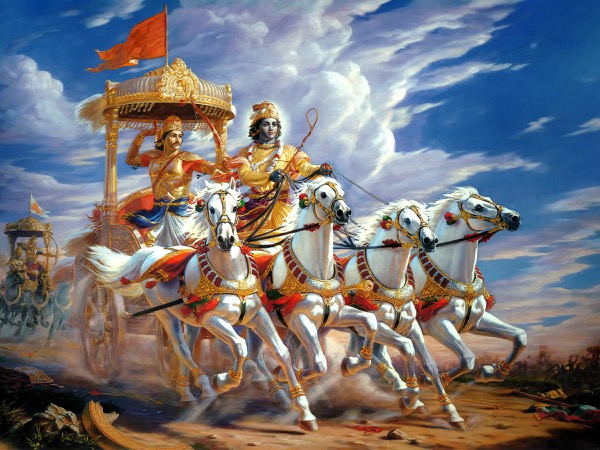
ಶ್ರೀಮದ್ಭಗವದ್ಗೀತಾ ಮೂಲಂ - ಷೋಡಶೋಽಧ್ಯಾಯಃ The sixteenth chapter of the Bhagavad Gita, called ದೈವಾಸುರಸಂಪದ್ವಿಭಾಗಯೋಗಃ or 'The ಯೋಗ of the Division between the Divine and the Demonic,' opens on the battlefield of ಕುರುಕ್ಷೇತ್ರ. Here, amid the tension and uncertainty of war, ಶ್ರೀಕೃಷ್ಣ continues his profound conversation with ಅರ್ಜುನ. The fate of the ಪಾಂಡವಾಃ and the ಕೌರವಾಃ hangs in the balance, but the Gita's focus remains on the inner battles that define each person. This chapter invites us to look beyond the clash of armies and examine the forces that shape our own character and choices. In the previous chapter, ಶ್ರೀಕೃಷ್ಣ revealed the cosmic form and the ultimate nature of the divine, showing ಅರ್ಜುನ that all beings are part of a vast, interconnected reality. That vision was awe-inspiring and overwhelming, reminding us that the universe is both magnificent and mysterious. Now, the Gita shifts from the cosmic to the personal. Instead of dazzling visions, we are asked to reflect on the qualities that make a person truly noble or truly destructive. ಶ್ರೀಕೃಷ್ಣ describes two sets of qualities: the ದೈವ (divine) and the ಅಸುರ (demonic). The divine qualities include fearlessness, self-control, compassion, honesty, and a spirit of generosity. The demonic qualities, on the other hand, are rooted in arrogance, anger, hypocrisy, and cruelty. Through vivid examples, ಶ್ರೀಕೃಷ್ಣ shows how these traits are not just labels but living forces that shape our actions, relationships, and destinies. He makes it clear that our choices-whether we nurture the divine or the demonic within-determine the direction of our lives. This chapter is not just a list of virtues and vices. It is a call to self-awareness. ಶ್ರೀಕೃಷ್ಣ urges ಅರ್ಜುನ (and us) to look honestly at our own hearts. Are we moved by compassion or by envy? Do we act out of wisdom or out of blind impulse? The Gita does not shy away from the reality that everyone has both divine and demonic tendencies. The real question is which side we choose to strengthen, especially when faced with difficult choices. Looking ahead, the next chapter will explore the power of faith and conviction-how our beliefs shape the way we live and the results we achieve. But before we get there, Chapter 16 asks us to take a hard look at ourselves. It challenges us to recognize the seeds of both light and darkness within, and to consciously cultivate the qualities that lead to freedom, peace, and true strength. ಓಂ ಶ್ರೀ ಪರಮಾತ್ಮನೇ ನಮಃ Meaning (ಪದಾರ್ಥ): Translation (ಭಾವಾರ್ಥ): Commentary (ಅನುಸಂಧಾನ): ಆದಿ ಶಂಕರಾಚಾರ್ಯ elucidates that discerning the ದೈವ and ಅಸುರ qualities is fundamental for ಅತ್ಮ-ವಿಚಾರ (self-inquiry) and ultimately leads to liberation by dispelling ignorance. Complementing this, ಶ್ರೀ ಮಧ್ವಾಚಾರ್ಯ stresses that these qualities are not abstract concepts but have direct implications on one's spiritual progress and worldly destiny, urging practitioners to cultivate the divine traits consciously. This distinction aligns with the Upanishadic injunction ತಮಸೋ ಮಾ ಜ್ಯೋತಿರ್ಗಮಯ from the ಬೃಹದಾರಣ್ಯಕ ಉಪನಿಷದ್, which means 'lead me from darkness to light,' symbolizing the movement from ignorance and demonic tendencies toward knowledge and divine qualities. Thus, the chapter title introduces a disciplined approach to understanding and transforming inner dispositions, preparing the ground for practical application in daily life. In modern life, we can see the relevance of this division in our daily choices: for example, when deciding whether to act with honesty or to cut corners for personal gain, or when choosing to respond to others with kindness or with anger. Another example is in the workplace, where teamwork and integrity reflect divine qualities, while selfishness and deceit align with demonic traits. As a reflection exercise, consider a recent situation where you faced a moral choice. Which qualities did you express, and how did that affect the outcome? This chapter invites us to observe and consciously cultivate the qualities that lead to personal and collective well-being. ಶ್ರೀಭಗವಾನುವಾಚ Meaning (ಪದಾರ್ಥ): Translation (ಭಾವಾರ್ಥ): Commentary (ಅನುಸಂಧಾನ): The profound qualities enumerated in this verse are elucidated with depth by revered Acharyas. ಆದಿ ಶಂಕರಾಚಾರ್ಯ explains that ಅಭಯಂ transcends mere absence of fear; it is a fearless state born from the realization of the Self's eternal nature, resonating with the Upanishadic invocation ನ ಜಾಯತೇ ಮ್ರಿಯತೇ ವಾ ವಿಪಶ್ಚಿತ್ from the ಕಠೋಪನಿಷದ್, which affirms the imperishability of the wise soul. Meanwhile, ಶ್ರೀ ರಾಮಾನುಜಾಚಾರ್ಯ interprets ಸತ್ತ್ವ-ಸಂಶುದ್ಧಿಃ as the mind's purity, free from the impurities of passion and ignorance, thus becoming a fit vessel for divine knowledge. These insights highlight that the virtues listed are not isolated traits but interconnected aspects of spiritual discipline, preparing the aspirant for practical application in daily life, as will be explored further. In modern life, fearlessness might mean standing up for what is right at work, even if it is unpopular. Purity of mind could involve being transparent and honest in relationships, avoiding manipulation or hidden motives. Steadfastness in knowledge and ಯೋಗ can be seen in maintaining a regular meditation or study routine despite distractions. For a reflection exercise, consider which of these qualities feels most natural to you and which is most challenging. Try to identify one small way to practice that challenging quality today-perhaps by offering help without expecting anything in return, or by being honest in a difficult conversation. These ancient virtues remain deeply relevant, guiding us to live with integrity and purpose. ಅಹಿಂಸಾ ಸತ್ಯಮಕ್ರೋಧಸ್ತ್ಯಾಗಃ ಶಾಂತಿರಪೈಶುನಮ್ । Meaning (ಪದಾರ್ಥ): Translation (ಭಾವಾರ್ಥ): Commentary (ಅನುಸಂಧಾನ): The Acharyas provide profound insights into these virtues, deepening our understanding beyond their surface meanings. ಆದಿ ಶಂಕರಾಚಾರ್ಯ teaches that ಅಹಿಂಸಾ encompasses not only abstaining from physical harm but also refraining from harsh speech and harmful thoughts, thus purifying the mind. Meanwhile, ಶ್ರೀ ರಾಮಾನುಜಾಚಾರ್ಯ explains ಸತ್ಯಂ as truthful speech that is also beneficial and harmonious, and interprets ಅಕ್ರೊಧಃ as the complete absence of anger, even at the mental level. These interpretations emphasize that these qualities must be firmly established within one's inner disposition, not merely displayed externally. This inner transformation aligns with the Upanishadic guidance from the ಬೃಹದಾರಣ್ಯಕ ಉಪನಿಷದ್: ಅಸತೋ ಮಾ ಸದ್ಗಮಯ-"Lead me from the unreal to the real." This prayer underscores the spiritual journey from ignorance and harmful tendencies toward truth and virtue, which these qualities embody. Thus, the Acharyas highlight that cultivating these virtues is essential for genuine spiritual progress and prepares one to apply them practically in daily life. In modern life, these qualities can be practiced in many ways. For example, ಅಹಿಂಸಾ can mean choosing words carefully in a heated discussion at work, ensuring that no one is hurt emotionally. ಸತ್ಯಂ might involve being honest about your limitations when taking on a new project, rather than exaggerating your abilities. ಅಕ್ರೊಧಃ could be applied when someone cuts you off in traffic; instead of reacting with anger, you pause and let it go. As a reflection exercise, consider a recent situation where you felt agitated or tempted to speak negatively about someone. How could you have responded differently by embodying one or more of these virtues? Try to identify one quality from this verse to focus on for the coming week, and observe how it changes your interactions and inner state. ತೇಜಃ ಕ್ಷಮಾ ಧೃತಿಃ ಶೌಚಮದ್ರೋಹೋ ನಾತಿಮಾನಿತಾ । Meaning (ಪದಾರ್ಥ): Translation (ಭಾವಾರ್ಥ): Commentary (ಅನುಸಂಧಾನ): The detailed expositions by ಆದಿ ಶಂಕರಾಚಾರ್ಯ and ಶ್ರೀ ರಾಮಾನುಜಾಚಾರ್ಯ deepen our understanding of these virtues. ಆದಿ ಶಂಕರಾಚಾರ್ಯ clarifies that ಕ್ಷಮಾ (forgiveness) transcends mere absence of anger; it is a composed acceptance of injury without internal disturbance, while ಧೃತಿಃ (fortitude) is the mental strength that sustains one through physical and emotional exhaustion. He also interprets ಶೌಚಂ as encompassing both external cleanliness and inner purity of mind and intellect. Meanwhile, ಶ್ರೀ ರಾಮಾನುಜಾಚಾರ್ಯ views ತೇಜಃ as the power to resist negative influences and explains ಅದ್ರೋಹಹ್ as refraining from interfering in others' actions, reflecting respect for their autonomy. These virtues are not isolated traits but form an integrated foundation for spiritual growth, as echoed in the Upanishadic injunction ಉತ್ತಿಷ್ಠತ ಜಾಗ್ರತ ಪ್ರಾಪ್ಯ ವರಾನ್ನಿಬೋಧತ (KaThOpaniShad 1.3.14), meaning "Arise, awake, and learn from the excellent ones." This call to active engagement and learning connects the qualities described in the verse to the practical pursuit of higher knowledge and sets the stage for applying them in daily life. In modern life, these qualities can be seen in a leader who stands up for justice without seeking revenge, or in a colleague who remains calm and constructive even when criticized. Practicing humility might mean giving credit to others at work or admitting mistakes without defensiveness. Purity could involve not just personal hygiene but also keeping one's intentions honest and transparent in relationships. As a reflection exercise, consider a recent situation where you felt wronged or slighted. How did you respond? What would it look like to apply ಕ್ಷಮಾ and ಅದ್ರೋಹಹ್ in that moment? Noticing these qualities in daily interactions can help cultivate a more peaceful and purposeful life. ದಂಭೋ ದರ್ಪೋಽಭಿಮಾನಶ್ಚ ಕ್ರೋಧಃ ಪಾರುಷ್ಯಮೇವ ಚ । Meaning (ಪದಾರ್ಥ): Translation (ಭಾವಾರ್ಥ): Commentary (ಅನುಸಂಧಾನ): The six negative qualities described here are not mere occasional faults but represent deep-rooted dispositions that characterize the ಅಸುರಿಚ್ nature, as explained by ಆದಿ ಶಂಕರಾಚಾರ್ಯ. He clarifies that ದಂಭಃ is a calculated display of false virtue aimed at selfish gain, while ದರ್ಪಃ and ಅಭಿಮಾನಹ್ strengthen a distorted self-importance that blinds one to true wisdom. ಶ್ರೀ ರಾಮಾನುಜಾಚಾರ್ಯ further elucidates that these traits stem from attachment to transient sense pleasures and a failure to discriminate between right and wrong, with ಪಾರುಷ್ಯಂ specifically causing sorrow to the virtuous and ಅಜ್ಞಾನಂ reflecting a profound ignorance of higher spiritual values. This understanding aligns with the Upanishadic injunction ತಮಸೋ ಮಾ ಜ್ಯೋತಿರ್ಗಮಯ from the ಬೃಹದಾರಣ್ಯಕ ಉಪನಿಷದ್, which means 'Lead me from darkness to light,' emphasizing the need to transcend such darkness of ignorance and delusion. Recognizing these qualities as obstacles prepares one to identify and overcome them in daily life, as the next paragraph will explore. In modern life, these qualities can be seen in various contexts: a manager who publicly boasts about their achievements while belittling others exhibits ದಂಭಃ and ದರ್ಪಃ. Someone who refuses to listen to feedback, convinced of their own superiority, displays ಅಭಿಮಾನಹ್. Road rage or lashing out at colleagues are everyday examples of ಕ್ರೋಧಃ. Speaking harshly to family members or subordinates, causing unnecessary hurt, is ಪಾರುಷ್ಯಂ. Ignorance, or ಅಜ್ಞಾನಂ, might show up as a refusal to learn from mistakes or to understand the impact of one's actions. As a reflection exercise, consider which of these qualities you notice in yourself or your environment. How do they affect your relationships and personal growth? What small step could you take today to reduce the influence of one of these traits in your life? ದೈವೀ ಸಂಪದ್ವಿಮೋಕ್ಷಾಯ ನಿಬಂಧಾಯಾಸುರೀ ಮತಾ । Meaning (ಪದಾರ್ಥ): Translation (ಭಾವಾರ್ಥ): Commentary (ಅನುಸಂಧಾನ): The profound distinction between ದೈವೀ ಸಂಪತ್ and ಅಸುರೀ ಸಂಪತ್ is further illuminated by ಆದಿ ಶಂಕರಾಚಾರ್ಯ, who explains that the divine qualities inherently lead to liberation by dispelling ignorance and attachment, while the demoniac qualities bind one to suffering and repeated birth. He reassures that Arjuna's nature is indeed divine, aligning with Krishna's compassionate exhortation not to grieve. ಶ್ರೀ ರಾಮಾನುಜಾಚಾರ್ಯ complements this by emphasizing that the divine nature reflects surrender to the Supreme Lord's will and adherence to ಧರ್ಮ, which ultimately culminates in union with the Divine, whereas the demoniac nature is marked by rebellion and spiritual degradation. This duality echoes the Upanishadic invocation ಮೃತ್ಯೋರ್ಮಾ ಅಮೃತಂ ಗಮಯ from the Bhadrayaka Upanishad, which prays to be led from death to immortality, symbolizing the soul's journey from bondage to liberation. Recognizing this, the verse not only clarifies the spiritual consequences of one's nature but also gently encourages Arjuna-and by extension all seekers-to cultivate the divine qualities that pave the way for freedom, setting the stage for practical application in daily life. In modern life, this verse can be reflected upon in situations where we face ethical dilemmas or feel tempted by negative impulses. For example, choosing honesty over deceit at work, or responding with patience instead of anger in a heated argument, are ways to cultivate 'divine qualities.' When feeling overwhelmed by guilt or self-doubt, remembering Krishna's reassurance can help us focus on our positive traits and potential for growth. As a reflection exercise, consider a recent situation where you acted out of kindness or integrity, and notice how it affected your sense of inner freedom. Conversely, recall a time when negative impulses led to regret or entanglement, and observe the difference. This awareness can guide us toward consciously nurturing the qualities that lead to liberation. ದ್ವೌ ಭೂತಸರ್ಗೌ ಲೋಕೇಽಸ್ಮಿಂದೈವ ಆಸುರ ಏವ ಚ । Meaning (ಪದಾರ್ಥ): Translation (ಭಾವಾರ್ಥ): Commentary (ಅನುಸಂಧಾನ): ಆದಿ ಶಂಕರಾಚಾರ್ಯ explains that the terms ದೈವ and ಆಸುರ denote intrinsic dispositions that shape a person's conduct, rather than mere external labels or birth-based identities. Similarly, ಶ್ರೀ ರಾಮಾನುಜಾಚಾರ್ಯ interprets these two categories as the fruits of accumulated ಕರ್ಮ, where beings are born with divine or demoniacal natures according to their past actions and tendencies. This distinction is crucial because it reveals the inner moral duality present in all individuals, guiding them either toward liberation or bondage. The Upanishadic prayer ತಮಸೋ ಮಾ ಜ್ಯೋತಿರ್ಗಮಯ (from the Brihadaranyaka Upanishad) supports this by invoking a transition from darkness (ignorance, tamas) to light (knowledge, divine qualities), emphasizing the spiritual journey from demoniacal to divine nature. Recognizing these two fundamental natures, as introduced in the first paragraph, prepares the seeker to identify and overcome demoniacal tendencies, which the next paragraph will relate to practical life situations and ethical choices. In modern life, this teaching can be seen in the way people choose to act with integrity or with selfishness, regardless of their background. For example, someone who consistently helps others and acts with honesty is expressing divine qualities, while someone who manipulates or harms others for personal gain is showing demoniacal tendencies. In the workplace, a leader who uplifts their team and fosters trust is acting from a divine nature, while one who sows discord or exploits others is acting from a demoniacal nature. As a reflection exercise, consider a recent decision you made: was it motivated by compassion and clarity, or by fear and self-interest? Recognizing these motivations is the first step toward cultivating the divine qualities described by Krishna. ಪ್ರವೃತ್ತಿಂ ಚ ನಿವೃತ್ತಿಂ ಚ ಜನಾ ನ ವಿದುರಾಸುರಾಃ । Meaning (ಪದಾರ್ಥ): Translation (ಭಾವಾರ್ಥ): Commentary (ಅನುಸಂಧಾನ): ಆದಿ ಶಂಕರಾಚಾರ್ಯ explains that the demonic individuals are fundamentally ignorant of both ಪ್ರವೃತ್ತಿಂ (what should be done) and ನಿವೃತ್ತಿಂ (what should be avoided), lacking the essential qualities of ಸೌಚಂ (purity), ಆಚರಃ (proper conduct), and ಸತ್ಯಂ (truthfulness). He interprets ಸೌಚಂ as encompassing both external cleanliness and internal purity of mind, while ಆಚರಃ refers to adherence to righteous social and spiritual duties. Similarly, ಶ್ರೀ ಮಧ್ವಾಚಾರ್ಯ highlights that without truthfulness and disciplined conduct, these individuals fall into moral and spiritual degradation, severing their connection with ಧರ್ಮ. This understanding aligns with the Upanishadic invocation ತಮಸೋ ಮಾ ಜ್ಯೋತಿರ್ಗಮಯ from the ಚಕ್ಷುಶೋಪನಿಷದ್, which beseeches the removal of darkness (ignorance) and the arrival of light (knowledge and clarity). Thus, the verse underscores how the absence of discernment and ethical virtues leads to a life enveloped in darkness, setting the stage for the practical reflection on ethical behavior in daily life discussed next. In modern life, this teaching can be seen in situations where individuals or groups ignore basic ethical guidelines, acting solely for personal gain without regard for honesty or the well-being of others. For instance, a business that deceives customers or an individual who habitually lies and disregards social norms reflects the qualities described here. Another example is neglecting personal or environmental cleanliness, showing disregard for both self-care and community responsibility. As a reflection exercise, consider a recent decision you made: did you clearly know what was right or wrong in that context? Did you act with honesty and integrity, and did your actions reflect inner and outer cleanliness? This verse invites us to examine whether our choices align with the foundational values of purity, proper conduct, and truthfulness. ಅಸತ್ಯಮಪ್ರತಿಷ್ಠಂ ತೇ ಜಗದಾಹುರನೀಶ್ವರಮ್ । Meaning (ಪದಾರ್ಥ): Translation (ಭಾವಾರ್ಥ): Commentary (ಅನುಸಂಧಾನ): The verse's depiction of a worldview that denies any ultimate truth or divine governance is elucidated by ಆದಿ ಶಂಕರಾಚಾರ್ಯ, who explains that such individuals regard the universe as ಅಸತ್ಯಂ-unreal and without any stable foundation or ಅನೀಶ್ವರಂ-a Lord. ಶ್ರೀ ರಾಮಾನುಜಾಚಾರ್ಯ further clarifies that this perspective rejects Brahman as the eternal substratum and controller of all existence, instead attributing creation solely to material causes and sensual desire. This denial leads to spiritual blindness and moral confusion, as the absence of a higher principle leaves one trapped in ignorance. The Upanishadic prayer ಅಸತೋ ಮಾ ಸದ್ಗಮಯ from the ಬೃಹದಾರಣ್ಯಕ ಉಪನಿಷದ್-meaning 'Lead me from the unreal to the real'-aptly captures the remedy to such delusion by urging the seeker to transcend falsehood and embrace ultimate reality. Thus, these teachings warn that embracing this nihilistic view severs one from the path of ಧರ್ಮ and true knowledge, setting the stage for the practical consequences discussed next. In modern life, this attitude might show up as extreme cynicism, where people believe that life has no meaning beyond physical pleasure or survival. For example, someone might argue that relationships are only about biological urges, or that ethical values are just social constructs with no real basis. In the workplace, this could manifest as a 'win at any cost' mentality, where integrity is sacrificed for short-term gain. As a reflection exercise, consider a time when you or someone you know dismissed the possibility of deeper meaning or purpose in life. What were the consequences of that outlook? How might recognizing a higher principle or purpose change the way you approach challenges and relationships? ಏತಾಂ ದೃಷ್ಟಿಮವಷ್ಟಭ್ಯ ನಷ್ಟಾತ್ಮಾನೋಽಲ್ಪಬುದ್ಧಯಃ । Meaning (ಪದಾರ್ಥ): Translation (ಭಾವಾರ್ಥ): Commentary (ಅನುಸಂಧಾನ): The verse's depiction of those who hold a harmful view aligns with ಆದಿ ಶಂಕರಾಚಾರ್ಯ's explanation that such individuals have strayed from spiritual discipline, their intellect clouded by material attachments, making them a threat to societal harmony. ಶ್ರೀ ರಾಮಾನುಜಾಚಾರ್ಯ further clarifies that their failure to discern the true self as distinct from the body leads to cruel and destructive actions. This distorted understanding of ಅತ್ಮ-ಜ್ಞಾನ is the root cause of their fierce behavior, which ultimately harms the world. Supporting this, the ಕಠೋಪನಿಷದ್ (1.3.14) exhorts, ಉತ್ತಿಷ್ಠತ ಜಾಗ್ರತ ಪ್ರಾಪ್ಯ ವರಾನ್ನಿಬೋಧತ - "Arise, awake, and learn from the excellent ones," emphasizing the need to overcome ignorance and realize higher truth. Thus, the verse warns that clinging to a false worldview not only diminishes one's intellect but also triggers actions that threaten collective well-being, setting the stage for reflecting on how such tendencies manifest in daily life. In modern life, this teaching can be seen in those who, driven by narrow beliefs or ideologies, act in ways that harm communities or the environment. For example, leaders who pursue personal gain at the expense of social welfare, or individuals who spread misinformation, can contribute to societal decline. Another example is when people, disconnected from their deeper values, engage in aggressive competition or exploitation. As a reflection exercise, consider a time when holding onto a rigid belief led you or someone you know to act in a way that was ultimately harmful. What helped shift that perspective, and how might greater self-awareness prevent such outcomes in the future? ಕಾಮಮಾಶ್ರಿತ್ಯ ದುಷ್ಪೂರಂ ದಂಭಮಾನಮದಾನ್ವಿತಾಃ । Meaning (ಪದಾರ್ಥ): Translation (ಭಾವಾರ್ಥ): Commentary (ಅನುಸಂಧಾನ): The insatiable desire and delusion described in this verse are deeply analyzed by ಆದಿ ಶಂಕರಾಚಾರ್ಯ, who explains that such individuals, overwhelmed by endless craving, lose the power of discrimination and thus adopt impure resolves (ಅಸುಚಿ-ವ್ರತಾಃ), acting without true understanding. ಶ್ರೀ ಮಧ್ವಾಚಾರ್ಯ highlights how pride and hypocrisy further blind them to the welfare of others, causing them to pursue selfish goals that contradict dharmic principles. This spiritual blindness is reflected in the Upanishadic prayer ತಮಸೋ ಮಾ ಜ್ಯೋತಿರ್ಗಮಯ from the ಬೃಹದಾರಣ್ಯಕ ಉಪನಿಷದ್, which means 'Lead me from darkness to light,' emphasizing the need to transcend ignorance and delusion. Together, these teachings underscore how such a mindset traps one in suffering and sets the stage for the practical reflections on desire and pretense that follow in the next paragraph. In modern life, this verse can be seen in people who chase after material success or social status without any sense of contentment, always wanting more and never feeling satisfied. For example, someone might constantly seek promotions or wealth, even at the cost of ethics or relationships, driven by a need to prove themselves. Another example is the tendency to present a false image on social media, pretending to be happier or more successful than one really is, which can lead to deeper dissatisfaction and insecurity. As a reflection exercise, consider where in your own life you might be acting out of insatiable desire or pretense, and what small step you could take to act with more authenticity and clarity. ಚಿಂತಾಮಪರಿಮೇಯಾಂ ಚ ಪ್ರಲಯಾಂತಾಮುಪಾಶ್ರಿತಾಃ । Meaning (ಪದಾರ್ಥ): Translation (ಭಾವಾರ್ಥ): Commentary (ಅನುಸಂಧಾನ): ಆದಿ ಶಂಕರಾಚಾರ್ಯ explains that the immeasurable worries arise because desires multiply endlessly, binding the mind and preventing liberation. ಶ್ರೀ ರಾಮಾನುಜಾಚಾರ್ಯ highlights the tragic certainty of death, yet these individuals remain absorbed in transient pleasures, never aspiring to eternal truths. This is reflected in the Upanishadic prayer ಮೃತ್ಯೋರ್ಮಾ ಅಮೃತಂ ಗಮಯ from the ಬೃಹದಾರಣ್ಯಕ ಉಪನಿಷದ್, which means 'lead me from death to immortality,' emphasizing the need to transcend mortal anxieties and seek higher spiritual goals. Together, these teachings deepen our understanding of the verse's warning against being trapped in endless anxiety over fleeting enjoyments, preparing us to recognize such patterns in our own lives as discussed in the next paragraph. In modern life, this attitude can be seen in those who are constantly stressed about wealth, status, or possessions, believing that happiness lies only in acquiring more. For example, someone who works relentlessly, sacrificing health and relationships, convinced that career success is the only thing that matters, mirrors this mindset. Another example is the person who seeks comfort in endless entertainment or consumption, never pausing to reflect on deeper meaning. As a reflection exercise, consider: Are there areas in your life where you are caught in a cycle of worry or pursuit, believing that nothing else matters? What might shift if you allowed space for a broader perspective or higher purpose? ಆಶಾಪಾಶಶತೈರ್ಬದ್ಧಾಃ ಕಾಮಕ್ರೋಧಪರಾಯಣಾಃ । Meaning (ಪದಾರ್ಥ): Translation (ಭಾವಾರ್ಥ): Commentary (ಅನುಸಂಧಾನ): ಆದಿ ಶಂಕರಾಚಾರ್ಯ emphasizes that the multitude of hopes acts as binding fetters, causing the mind to become restless and prone to unethical behavior, thus deepening the individual's entanglement in material desires. Meanwhile, ಶ್ರೀ ಮಧ್ವಾಚಾರ್ಯ highlights the spiritual consequences of such attachment, noting that the unjust accumulation of wealth for sensual enjoyment perpetuates the cycle of ಸಂಸಾರ and suffering. This understanding aligns with the Upanishadic prayer ಅಸತೋ ಮಾ ಸದ್ಗಮಯ from the ಬೃಹದಾರಣ್ಯಕ ಉಪನಿಷದ್, which means 'lead me from the unreal to the real,' underscoring the need to transcend false hopes and desires that bind the soul. Together, these insights extend the verse's portrayal of psychological bondage and prepare us to reflect on how such attachments manifest in our daily lives and ethical choices. In modern life, this verse is relevant to anyone who finds themselves chasing after material success at any cost, such as someone who compromises their values for career advancement or financial gain. It also applies to those who become obsessed with consumerism, always wanting the next new thing, never satisfied, and willing to cut corners to get it. Another example is the tendency to justify small dishonesties-like cheating on taxes or manipulating others for personal benefit-because of the pressure to fulfill endless desires. As a reflection exercise, consider listing your top five hopes or desires and honestly assess whether any of them are leading you to compromise your ethics or peace of mind. Where might you be bound by 'chains of hope' that are actually limiting your freedom? ಇದಮದ್ಯ ಮಯಾ ಲಬ್ಧಮಿಮಂ ಪ್ರಾಪ್ಸ್ಯೇ ಮನೋರಥಮ್ । Meaning (ಪದಾರ್ಥ): Translation (ಭಾವಾರ್ಥ): Commentary (ಅನುಸಂಧಾನ): This verse exemplifies the deluded mindset rooted in egoistic attachment to material gains, as explained by ಆದಿ ಶಂಕರಾಚಾರ್ಯ, who notes that the individual arrogantly claims all success as solely their own achievement, ignoring the transient nature of possessions. ಶ್ರೀ ಮಧ್ವಾಚಾರ್ಯ further stresses that such pride blinds one to the impermanence of wealth and the necessity of humility, which distances the seeker from true spiritual insight. This is echoed in the Upanishadic prayer from the ಬೃಹದಾರಣ್ಯಕ ಉಪನಿಷದ್: ಅಸತೋ ಮಾ ಸದ್ಗಮಯ, meaning 'lead me from the unreal to the real,' highlighting the need to transcend false identification with fleeting material acquisitions. Recognizing this false sense of ownership is essential to moving beyond mere worldly ambition toward lasting fulfillment, thus preparing the ground for practical reflection on our attitudes toward success and gratitude. In modern life, this attitude can be seen in people who constantly chase promotions, accumulate possessions, or measure their worth by material success, believing it is all due to their own hard work. For example, a businessperson might attribute every profit to their own skill, ignoring the roles of employees, market conditions, or luck. Similarly, a student who excels might think only their effort matters, overlooking the support of teachers or family. As a reflection exercise, consider a recent achievement and list all the factors and people who contributed to it. Notice how shifting from 'I did this alone' to recognizing interdependence can foster gratitude and reduce stress. ಅಸೌ ಮಯಾ ಹತಃ ಶತ್ರುರ್ಹನಿಷ್ಯೇ ಚಾಪರಾನಪಿ । Meaning (ಪದಾರ್ಥ): Translation (ಭಾವಾರ್ಥ): Commentary (ಅನುಸಂಧಾನ): The verse vividly illustrates the delusion born of ego, as explained by ಆದಿ ಶಂಕರಾಚಾರ್ಯ, who identifies the speaker's claim of sole lordship and enjoyment as ignorance of the true Self and the cosmic order. ಶ್ರೀ ರಾಮಾನುಜಾಚಾರ್ಯ further clarifies that this mindset rejects the role of divine will and destiny, falsely attributing all success to personal prowess alone. This self-centered view blinds one to the interconnectedness of life and the duties of ಧರ್ಮ, as also noted by ಮಧುಸೂದನ ಸರಸ್ವತೀ. The Upanishadic injunction ತಮಸೋ ಮಾ ಜ್ಯೋತಿರ್ಗಮಯ from the ಬೃಹದಾರಣ್ಯಕ ಉಪನಿಷದ್-meaning 'lead me from darkness to light'-aptly captures the need to transcend such ignorance and pride. Recognizing this helps prepare us to see beyond the ego's claims, paving the way for the practical reflections on humility and gratitude that follow. In modern life, this mindset can be seen in people who attribute all their success to their own abilities, ignoring the contributions of their team, family, or society. For example, a business leader might boast about defeating competitors and claim sole credit for the company's achievements, disregarding the role of employees or market conditions. Similarly, a student who excels might believe their success is entirely self-made, overlooking the support of teachers and mentors. To reflect, consider a recent accomplishment: did you acknowledge the help and circumstances that made it possible, or did you focus only on your own efforts? Try to notice moments when you feel like the 'sole doer' and practice gratitude for the interconnectedness of your achievements. ಆಢ್ಯೋಽಭಿಜನವಾನಸ್ಮಿ ಕೋಽನ್ಯೋಸ್ತಿ ಸದೃಶೋ ಮಯಾ । Meaning (ಪದಾರ್ಥ): Translation (ಭಾವಾರ್ಥ): Commentary (ಅನುಸಂಧಾನ): ಆದಿ ಶಂಕರಾಚಾರ್ಯ elucidates that the core delusion lies not only in pride over wealth and lineage but also in the false notion of self-sufficiency in one's actions, ignoring the indispensable role of divine grace and cosmic order. Similarly, ಶ್ರೀ ಮಧ್ವಾಚಾರ್ಯ stresses that this arrogance blinds individuals to their dependence on higher powers and the interconnectedness of all beings, fostering a dangerous illusion of uniqueness and superiority. This is reflected in the Upanishadic injunction from the ಬೃಹದಾರಣ್ಯಕ ಉಪನಿಷದ್, ಅಸತೋ ಮಾ ಸದ್ಗಮಯ, meaning 'Lead me from the unreal to the real,' which highlights the need to transcend ignorance and false pride to attain true knowledge and humility. Thus, these teachings deepen the understanding from the first paragraph by revealing how ignorance manifests as self-centered delusion, setting the stage for practical reflection on overcoming such attitudes in daily life. In modern life, this attitude can be seen in individuals who constantly compare themselves to others, measuring their worth by wealth, status, or achievements, and feeling superior as a result. For example, someone might think, 'I have the best job and the nicest house in my neighborhood; no one else is on my level,' or, 'I donate more to charity than anyone I know, so I must be a better person.' Such thinking can lead to isolation, lack of empathy, and a disconnect from the broader community. As a reflection exercise, consider a recent achievement or possession you are proud of. Ask yourself: Did I accomplish this entirely on my own, or were there unseen factors and support from others? How might gratitude and humility change my perspective? ಅನೇಕಚಿತ್ತವಿಭ್ರಾಂತಾ ಮೋಹಜಾಲಸಮಾವೃತಾಃ । Meaning (ಪದಾರ್ಥ): Translation (ಭಾವಾರ್ಥ): Commentary (ಅನುಸಂಧಾನ): ಆದಿ ಶಂಕರಾಚಾರ್ಯ explains that the ಮೋಹ-ಜಾಲ, or delusion, acts like a dense net obscuring true knowledge, causing the mind to be scattered and repeatedly trapped in error. This delusion is self-sustaining, making liberation difficult without conscious effort. ಶ್ರೀ ರಾಮಾನುಜಾಚಾರ್ಯ interprets the verse as describing those who, blinded by attachment to sensual pleasures, ignore both divine grace and the consequences of past actions, leading to endless restless planning and suffering not only after death but also in this life. This aligns with the Upanishadic prayer ತಮಸೋ ಮಾ ಜ್ಯೋತಿರ್ಗಮಯ from the Bhadrayaka Upanishad, which beseeches to be led from darkness (ignorance and delusion) to light (knowledge and clarity). Thus, the verse warns that without overcoming mental confusion and desire, one falls into suffering, preparing us to consider practical ways to cultivate focus and detachment in daily life. In modern life, this verse serves as a warning against becoming obsessed with material success, pleasure, or constant stimulation. For example, someone who is always chasing the next big purchase or experience may find themselves increasingly anxious and dissatisfied, never feeling fulfilled. Another example is the person who, overwhelmed by social media and digital distractions, loses the ability to focus or find inner peace. A useful reflection exercise is to pause and ask yourself: Are my daily choices driven by fleeting desires or by deeper values? Take a few minutes to write down the top five things that occupy your mind each day, and consider whether they lead to lasting well-being or just temporary gratification. ಆತ್ಮಸಂಭಾವಿತಾಃ ಸ್ತಬ್ಧಾ ಧನಮಾನಮದಾನ್ವಿತಾಃ । Meaning (ಪದಾರ್ಥ): Translation (ಭಾವಾರ್ಥ): Commentary (ಅನುಸಂಧಾನ): ಆದಿ ಶಂಕರಾಚಾರ್ಯ elucidates that those described in the verse are self-conceited and haughty, mistaking their external show of sacrifice for true virtue, while lacking the essential humility and inner purity that the wise recognize. He highlights that their ನಾಮ-ಯಜ್ಞೈಹ್-sacrifices in name only-are performed with ದಂಭೆನ, ostentation, and without adherence to scriptural injunctions, thus devoid of spiritual efficacy. Complementing this, ಶ್ರೀ ರಾಮಾನುಜಾಚಾರ್ಯ stresses that such individuals are intoxicated by pride and wealth, performing rituals not out of devotion but for fame, neglecting the prescribed methods and the transformative purpose of sacrifice. This aligns with the Upanishadic injunction from the ಬೃಹದಾರಣ್ಯಕ ಉಪನಿಷದ್, ಅಸತೋ ಮಾ ಸದ್ಗಮಯ, meaning 'lead me from the unreal to the real,' which underscores the need to transcend superficial acts and ego-driven motives to attain true spiritual progress. Together, these insights deepen our understanding of the verse's warning against hollow religiosity and prepare us to reflect on authentic intention in our actions, as discussed in the following paragraph. In modern life, this verse warns against performing good deeds or religious acts just for social recognition or personal pride. For example, someone might donate to charity only for publicity, or participate in community service to boost their reputation rather than out of genuine compassion. In the workplace, a person might follow rules only when being observed, but cut corners when they think no one is watching. To reflect, consider a recent action you took for public approval rather than sincere intent. Ask yourself: if no one knew about it, would you still have done it? This exercise helps uncover where pride or the desire for recognition may be overshadowing authentic motivation. ಅಹಂಕಾರಂ ಬಲಂ ದರ್ಪಂ ಕಾಮಂ ಕ್ರೋಧಂ ಚ ಸಂಶ್ರಿತಾಃ । Meaning (ಪದಾರ್ಥ): Translation (ಭಾವಾರ್ಥ): Commentary (ಅನುಸಂಧಾನ): ಆದಿ ಶಂಕರಾಚಾರ್ಯ explains that ಅಹಂಕಾರಂ is the fundamental cause of ignorance, leading one to falsely identify the self with the body and mind, which then gives rise to all other negative qualities such as ಬಲಂ and ದರ್ಪಂ. These traits foster a desire to dominate and violate ಧರ್ಮ, deepening one's separation from the true Self. ಶ್ರೀ ರಾಮಾನುಜಾಚಾರ್ಯ further clarifies that this ego-driven self-reliance excludes dependence on the divine, creating arrogance and hostility toward the divine presence in oneself and others. This is reflected in the Upanishadic prayer ತಮಸೋ ಮಾ ಜ್ಯೋತಿರ್ಗಮಯ from the ಬೃಹದಾರಣ್ಯಕ ಊಪನಿಷದ್, which beseeches to be led from darkness (ignorance and ego) to light (knowledge and humility). This connection highlights how such destructive qualities obscure spiritual illumination and harmony. Understanding this prepares us to recognize these tendencies in daily life and begin the process of overcoming them, as discussed in the following paragraph. In modern life, these qualities can manifest as a boss who uses their authority to belittle others, or someone who lets their anger and pride ruin relationships. Another example is a person who, driven by desire and ego, manipulates situations for personal gain without regard for others' well-being. To reflect, consider a recent situation where you felt a surge of pride, anger, or jealousy. Ask yourself: Was I acting from a place of ego or genuine care? How did this affect my connection with others and my own peace of mind? Noticing these patterns is the first step to transforming them. ತಾನಹಂ ದ್ವಿಷತಃ ಕ್ರೂರಾನ್ಸಂಸಾರೇಷು ನರಾಧಮಾನ್ । Meaning (ಪದಾರ್ಥ): Translation (ಭಾವಾರ್ಥ): Commentary (ಅನುಸಂಧಾನ): ಆದಿ ಶಂಕರಾಚಾರ್ಯ explains that the Lord's act of casting the hateful and cruel into demonic births is a direct consequence of their own persistent unrighteousness, illustrating the principle of karmic justice rather than arbitrary punishment. Similarly, ಶ್ರೀ ಮಧ್ವಾಚಾರ್ಯ emphasizes that this verse reveals the natural law by which those who reject ಧರ್ಮ and harbor hostility towards the divine are bound to experience the results of their inner dispositions, which manifest as suffering in ಸಂಸಾರ. This aligns with the Upanishadic teaching from the ಕಠೋಪನಿಷದ್ (1.2.18): ನ ಜಾಯತೇ ಮ್ರಿಯತೇ ವಾ ವಿಪಶ್ಚಿತ್, meaning the true Self is never born nor does it die, highlighting that the soul's entanglement in lower births is due to ignorance and negative qualities, not the soul's own nature. Thus, the verse underscores the importance of overcoming such tendencies to break free from the cycle of suffering, preparing the ground for practical reflection on how our attitudes influence our life circumstances. In modern life, this teaching can be seen in how persistent negativity, hatred, or cruelty can lead to cycles of suffering, both for oneself and others. For example, someone who habitually acts with malice may find themselves in toxic environments or relationships, reinforcing their own misery. Another example is how organizations or communities that foster hostility and unethical behavior often experience ongoing turmoil and decline. As a reflection exercise, consider a time when harboring resentment or acting out of cruelty led to further complications in your life. What could have shifted if a different attitude had been chosen? This verse invites us to break such cycles by consciously cultivating positive qualities and self-awareness. ಆಸುರೀಂ ಯೋನಿಮಾಪನ್ನಾ ಮೂಢಾ ಜನ್ಮನಿ ಜನ್ಮನಿ । Meaning (ಪದಾರ್ಥ): Translation (ಭಾವಾರ್ಥ): Commentary (ಅನುಸಂಧಾನ): The profound implications of this verse are illuminated through the insights of ಆದಿ ಶಂಕರಾಚಾರ್ಯ and ಶ್ರೀ ರಾಮಾನುಜಾಚಾರ್ಯ. ಆದಿ ಶಂಕರಾಚಾರ್ಯ interprets the phrase 'demoniac wombs' as births dominated by ತಮಸ್, representing darkness and spiritual inertia, which perpetuate ignorance and bind the soul to lower states. He underscores that such births reflect a failure to transcend the cycle of delusion, as captured in the Upanishadic prayer ತಮಸೋ ಮಾ ಜ್ಯೋತಿರ್ಗಮಯ from the ಬೃಹದಾರಣ್ಯಕ ಉಪನಿಷದ್, meaning 'lead me from darkness to light,' highlighting the soul's urgent need to move beyond ignorance. Meanwhile, ಶ್ರೀ ರಾಮಾನುಜಾಚಾರ್ಯ emphasizes the soul's antagonism toward the Divine, explaining that repeated births in such adverse conditions deepen separation from ಮಾಂ, the Supreme, making liberation increasingly remote. Together, their teachings reinforce the verse's warning: without conscious spiritual effort to overcome negative tendencies and ignorance, the soul remains trapped in a downward spiral. This understanding naturally leads us to consider how such patterns manifest in our own lives and what steps we might take to break free, as explored in the following paragraph. In modern life, this teaching can be seen in how people who consistently make harmful choices or surround themselves with negative influences often find it harder to break free from those patterns. For example, someone who repeatedly engages in dishonest behavior may find themselves in environments where dishonesty is normalized, making change even more difficult. Another example is a person who continually avoids self-reflection and growth, ending up in situations that reinforce their ignorance or suffering. As a reflection exercise, consider a habit or mindset you know is harmful. Ask yourself: what environments or choices keep you stuck there, and what small step could you take to move toward a more positive direction? ತ್ರಿವಿಧಂ ನರಕಸ್ಯೇದಂ ದ್ವಾರಂ ನಾಶನಮಾತ್ಮನಃ । Meaning (ಪದಾರ್ಥ): Translation (ಭಾವಾರ್ಥ): Commentary (ಅನುಸಂಧಾನ): ಆದಿ ಶಂಕರಾಚಾರ್ಯ explains that the threefold gateway of ಕಾಮಃ, ಕ್ರೋಧಃ, and ಲೋಭಃ acts as a destructive force that obscures the true self and prevents spiritual liberation, urging complete renunciation of these traits. Similarly, ಶ್ರೀ ರಾಮಾನುಜಾಚಾರ್ಯ emphasizes that these qualities are the root causes of demonic nature, which bind the soul to suffering and ignorance, making them obstacles to attaining ಮೋಕ್ಷ. This aligns with the Upanishadic invocation ತಮಸೋ ಮಾ ಜ್ಯೋತಿರ್ಗಮಯ from the ಬೃಹದಾರಣ್ಯಕ ಉಪನಿಷದ್, which prays to be led from darkness (ignorance and delusion) to light (knowledge and clarity). Together, these teachings highlight that desire, anger, and greed not only damage the soul but also cloud the intellect, making it imperative to consciously abandon them. This understanding bridges the recognition of these dangers to practical steps for self-awareness and transformation, as discussed in the following paragraph. In modern life, desire might show up as relentless consumerism or the urge to constantly upgrade our possessions, leading to dissatisfaction and stress. Anger can manifest in road rage, workplace conflicts, or online arguments, damaging relationships and mental health. Greed may appear as unethical business practices or the inability to share resources, resulting in social and personal harm. As a reflection exercise, consider which of these three tendencies most often arises in your daily life. Observe the triggers and effects for a week, and try to consciously pause and redirect your energy when you notice them. This self-awareness is the first step toward letting go of these destructive gateways. ಏತೈರ್ವಿಮುಕ್ತಃ ಕೌಂತೇಯ ತಮೋದ್ವಾರೈಸ್ತ್ರಿಭಿರ್ನರಃ । Meaning (ಪದಾರ್ಥ): Translation (ಭಾವಾರ್ಥ): Commentary (ಅನುಸಂಧಾನ): ಆದಿ ಶಂಕರಾಚಾರ್ಯ explains that liberation from the three gates of darkness-desire, anger, and greed-is essential for one to strive for the true welfare of the soul, as these qualities obscure spiritual vision and bind one to suffering. He highlights that only by closing these gates can one pursue ಸ್ರೆಯಹ್, the highest good, which leads to ಪರಂ ಗತಿಂ, the supreme goal of liberation. Complementing this, ಶ್ರೀ ರಾಮಾನುಜಾಚಾರ್ಯ emphasizes that freedom from these afflictions enables the aspirant to gain knowledge of the Divine and align their actions with ಧರ್ಮ, thus progressing steadily toward union with the Lord. This process is not passive but requires disciplined effort and surrender, reflecting the Upanishadic injunction ತಮಸೋ ಮಾ ಜ್ಯೋತಿರ್ಗಮಯ-"from darkness, lead me to light"-which underscores the transformative journey from ignorance to spiritual illumination. Together, these teachings reinforce that overcoming the three gates is both a prerequisite and a continuous practice for attaining the soul's highest good, setting the stage for practical application in daily life. In modern life, the three gates-desire, anger, and greed-can manifest as compulsive shopping, road rage, or relentless pursuit of wealth at the expense of well-being. For example, someone who overcomes the urge to retaliate in a heated argument at work, or who resists the temptation to make unethical financial gains, is practicing the essence of this verse. Another example is choosing to spend time in self-reflection or service rather than chasing fleeting pleasures. As a reflection exercise, consider identifying one recurring desire, anger, or greed-driven habit in your daily routine. For a week, consciously observe and gently work to reduce its hold, noting any changes in your sense of inner peace or clarity. This practice can help move you closer to your own highest good. ಯಃ ಶಾಸ್ತ್ರವಿಧಿಮುತ್ಸೃಜ್ಯ ವರ್ತತೇ ಕಾಮಕಾರತಃ । Meaning (ಪದಾರ್ಥ): Translation (ಭಾವಾರ್ಥ): Commentary (ಅನುಸಂಧಾನ): ಆದಿ ಶಂಕರಾಚಾರ್ಯ elucidates that forsaking ಸಾಸ್ತ್ರ-ವಿಧಿ severs the vital connection to discerning ಧರ್ಮ, thereby obstructing both worldly success and spiritual liberation. Similarly, ಶ್ರೀ ರಾಮಾನುಜಾಚಾರ್ಯ emphasizes that the Vedas constitute the foundational scriptural injunctions, and acting contrary to their guidance under the sway of ಕಾಮ results in failure to attain any true accomplishment, whether temporal or transcendental. This aligns with the Upanishadic injunction from the ಕಠೋಪನಿಷದ್ (1.3.14): ಉತ್ತಿಷ್ಠತ ಜಾಗ್ರತ ಪ್ರಾಪ್ಯ ವರಾನ್ನಿಬೋಧತ-'Arise, awake, and learn by approaching the excellent ones.' This verse underscores the necessity of awakening to and following the wisdom of sacred teachings rather than succumbing to impulsive desires. Thus, the verse's warning about abandoning scriptural discipline not only highlights the loss of perfection and happiness but also prepares us to reflect on how such disregard manifests in everyday life, as discussed in the following paragraph. In modern life, this teaching can be seen when someone ignores ethical guidelines at work to pursue personal gain, only to find themselves facing stress or regret later. Another example is when a person disregards health advice out of convenience or craving, resulting in long-term unhappiness. A third scenario might involve ignoring the wisdom of elders or mentors, choosing instead to follow impulsive decisions, which often leads to disappointment. As a reflection exercise, consider a recent choice you made primarily out of personal desire. Ask yourself: did this action bring lasting satisfaction, or did it leave you feeling incomplete? How might following a trusted guideline or principle have changed the outcome? ತಸ್ಮಾಚ್ಛಾಸ್ತ್ರಂ ಪ್ರಮಾಣಂ ತೇ ಕಾರ್ಯಾಕಾರ್ಯವ್ಯವಸ್ಥಿತೌ । Meaning (ಪದಾರ್ಥ): Translation (ಭಾವಾರ್ಥ): Commentary (ಅನುಸಂಧಾನ): ಆದಿ ಶಂಕರಾಚಾರ್ಯ emphasizes that the ಶಾಸ್ತ್ರಂ alone serves as the definitive authority to discern ಕಾರ್ಯ and ಅಕಾರ್ಯ, urging one to act only after fully understanding the scriptural injunctions. Similarly, ಶ್ರೀ ರಾಮಾನುಜಾಚಾರ್ಯ explains that the Vedas, supplemented by the ಧರ್ಮ-shastras and Puranas, collectively guide the aspirant toward the Supreme, prescribing actions that lead to His pleasure. This teaching aligns with the Upanishadic prayer from the ಬೃಹದಾರಣ್ಯಕ ಉಪನಿಷದ್, ಅಸತೋ ಮಾ ಸದ್ಗಮಯ, which means 'Lead me from the unreal to the real,' highlighting the necessity of scriptural wisdom to navigate between right and wrong. Together, these insights reinforce the verse's call to subordinate personal judgment to the eternal standards of scripture, thereby preparing the seeker to apply these principles practically in daily ethical decisions. In modern life, this teaching can be applied when facing ethical dilemmas at work or in personal relationships. For example, if a business practice seems profitable but questionable, one can look to ethical codes or spiritual texts for guidance rather than just following peer pressure. Similarly, when making decisions about environmental responsibility or social justice, consulting established principles rather than acting on impulse leads to more sustainable outcomes. As a reflection exercise, consider a recent decision where you felt uncertain about the right course of action. Ask yourself: Did you seek guidance from a trusted source or principle, or did you act based on convenience or emotion? How might consulting a higher standard have changed your choice? ಓಂ ತತ್ಸದಿತಿ ಶ್ರೀಮದ್ಭಗವದ್ಗೀತಾಸೂಪನಿಷತ್ಸು ಬ್ರಹ್ಮವಿದ್ಯಾಯಾಂ ಯೋಗಶಾಸ್ತ್ರೇ Meaning (ಪದಾರ್ಥ): Translation (ಭಾವಾರ್ಥ): Commentary (ಅನುಸಂಧಾನ): The colophon's invocation of ಓಂ ತತ್ ಸತ್ is deeply significant, as highlighted by ಆದಿ ಶಂಕರಾಚಾರ್ಯ, who interprets it as a call to transcend illusion and realize ultimate truth, resonating with the Upanishadic prayer ತಮಸೋ ಮಾ ಜ್ಯೋತಿರ್ಗಮಯ from the Bhadrayaka Upanishad, which means 'lead me from darkness to light.' This underscores the transformative spiritual journey from ignorance to enlightenment. Meanwhile, ಶ್ರೀ ಮಧ್ವಾಚಾರ್ಯ emphasizes the authoritative status of the Bhagavad Gita as akin to the Upanishads, affirming that its teachings integrate both knowledge and righteous action to cultivate divine qualities. Together, these insights reveal that the colophon is not merely a formal conclusion but a profound reminder of the sacred purpose of the text: to guide aspirants in discerning and embodying the divine virtues over demonic tendencies. This understanding naturally leads to practical reflection on how one can nurture these qualities in daily life, as explored in the following paragraph. In modern life, this verse can be seen as a prompt to reflect on the qualities we cultivate in ourselves. For example, when faced with ethical dilemmas at work, remembering the distinction between constructive and destructive traits can guide our choices. In relationships, being mindful of whether our actions stem from compassion or ego can help us build healthier connections. As a reflection exercise, consider listing the qualities you most admire in others and those you wish to overcome in yourself. How can you consciously nurture the divine traits in your daily routine? This closing verse invites us to see every chapter of our lives as an opportunity for growth and self-improvement, rooted in awareness and discipline.
|