
| | English | | Devanagari | | Telugu | | Tamil | | Kannada | | Malayalam | | Gujarati | | Odia | | Bengali | | |
| | Marathi | | Assamese | | Punjabi | | Hindi | | Samskritam | | Konkani | | Nepali | | Sinhala | | Grantha | | |
|
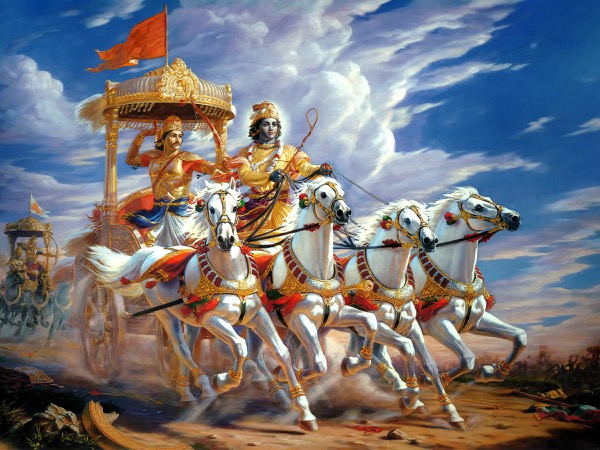
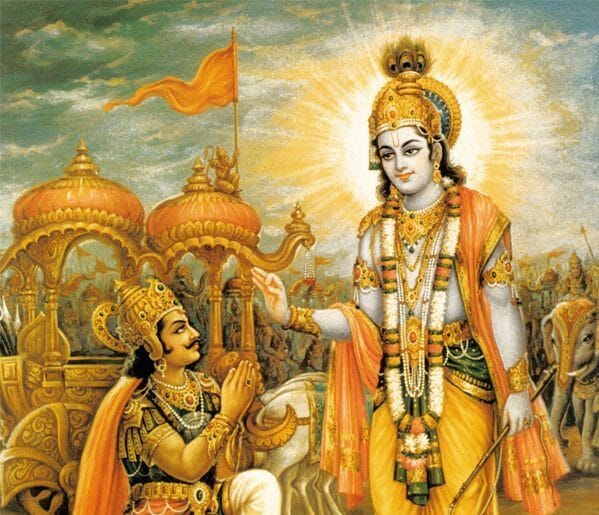
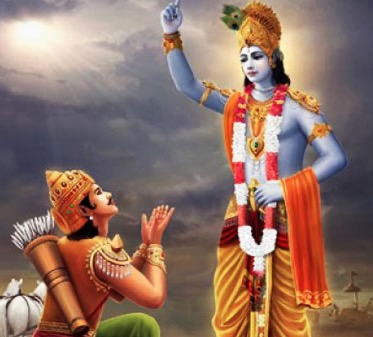
শ্রীমদ্ভগবদ্গীতা মূলম্ - পংচদশোঽধ্যাযঃ The fifteenth chapter of the Bhagavad Gita, called পুরুষোত্তমযোগঃ or Purushottama যোগ, opens in the heart of the কুরুক্ষেত্র battlefield. Here, the ancient dialogue between শ্রীকৃষ্ণ and অর্জুন continues, surrounded by the tension of war between the পাংডবাঃ and কৌরবাঃ. In this moment, the chaos of battle fades into the background as শ্রীকৃষ্ণ reveals profound truths about the nature of existence, the soul, and the ultimate reality. The Gita's teachings, spoken on the edge of action and uncertainty, are meant to cut through confusion and awaken clarity. In the previous chapter, শ্রীকৃষ্ণ described the difference between the divine and demonic natures, urging অর্জুন to cultivate qualities that lead to liberation. Chapter 14 explored the three গুণs-সত্ত্ব, রজস্, and তমস্-and how they bind or free the soul. Now, in Chapter 15, the Gita shifts from analyzing human tendencies to painting a cosmic picture. Here, শ্রীকৃষ্ণ uses the vivid image of the upside-down Ashvattha tree to describe the material world, its roots reaching into the unknown, its branches tangled in desire and attachment. The central theme of Purushottama যোগ is the distinction between the perishable and the imperishable. শ্রীকৃষ্ণ explains that all living beings are caught in the cycle of birth and death, bound to the ever-changing world. Yet, there is a higher Self-the পুরুষোত্তম, the Supreme Person-who transcends both the fleeting and the eternal. Through this chapter, we are invited to look beyond surface appearances and recognize the presence of the divine within and beyond all things. This teaching is not abstract philosophy. শ্রীকৃষ্ণ speaks of the world as a place where people chase after pleasures, get lost in confusion, and forget their true nature. He urges অর্জুন (and us) to cut down the tree of worldly entanglement with the axe of detachment and to seek the source from which all existence springs. The chapter is filled with examples from daily life-how we experience light, taste, memory, and even forgetfulness-all as expressions of the divine. As the chapter concludes, শ্রীকৃষ্ণ prepares অর্জুন for the next step: the path of unwavering devotion. The sixteenth chapter will return to the contrast between divine and demonic qualities, but now with a deeper understanding of the soul's journey. In this way, Chapter 15 stands as a bridge-connecting the analysis of human nature with the promise of liberation through knowledge and devotion. It is an invitation to see the world with new eyes, to recognize the sacred in the ordinary, and to remember who we truly are. ওং শ্রী পরমাত্মনে নমঃ Meaning (পদার্থ): Translation (ভাবার্থ): Commentary (অনুসংধান): আদি শংকরাচার্য explains that the term পুরুষোত্তম signifies the Supreme Being who transcends all dualities and is the ultimate reality itself, aligning with the invocation of পরমাত্মনে in the first paragraph. Meanwhile, শ্রী মধ্বাচার্য emphasizes the word প্রাপ্তি, interpreting it as the actual attainment or realization of the Supreme Person, not merely intellectual knowledge. This understanding is supported by the Upanishadic prayer তমসো মা জ্যোতির্গময from the Bhadrayaka Upanishad, which means 'lead me from darkness to light,' symbolizing the journey from ignorance to spiritual illumination. Together, these insights prepare the reader to approach the chapter with both reverence and practical intent, bridging the theoretical invocation with the practical application discussed in the next paragraph. In modern life, this invocation can be seen as a reminder to begin any important endeavor with mindfulness and respect for a higher purpose. For example, before starting a new project at work, one might take a moment to center themselves, much like invoking ওং. Similarly, dedicating one's actions to a greater good, as suggested by পরমাত্মনে নমঃ, can bring clarity and motivation. As a reflection exercise, consider what 'Supreme Person' or higher ideal you orient your life around, and how consciously invoking that can shape your daily actions and decisions. শ্রীভগবানুবাচ Meaning (পদার্থ): Translation (ভাবার্থ): Commentary (অনুসংধান): আদি শংকরাচার্য interprets the ঊর্ধ্বমূলম্-the roots above-as the supreme, unmanifest Brahman, the eternal cause from which all names and forms arise, while the downward branches represent the manifested world of সংসার. He explains that the tree is অব্যযম্ (imperishable) because it persists until one attains knowledge that severs ignorance. শ্রী রামানুজাচার্য similarly views the roots as the higher origin, Brahman, and the branches as all beings sustained by their karmic actions, with the Vedic hymns as leaves nourishing this existence and guiding the soul beyond it. This imagery is deeply rooted in the Upanishads, as seen in the কঠোপনিষদ্ (1.2.18): ঊর্ধ্বমূলোঽবাক্শাখ এষোঽশ্বত্থঃ সনাতনঃ, which affirms the eternal peepul tree with roots above and branches below. This verse and its commentary emphasize that understanding this cosmic tree is not merely intellectual but a transformative insight that prepares one to uproot সংসার, setting the stage for practical inner work described next. In modern life, this verse is a powerful way to see your own inner "tree." Your deepest assumptions - "I must be approved", "I am what I achieve", "I cannot be alone", "I need control" - act like hidden roots, and from them branches spread into habits, relationships, and reactions. The "leaves" are the ideas you repeatedly feed on: what you read, watch, and practice; these either nourish clarity or nourish confusion. Try a concrete exercise: pick one recurring stress-pattern (anger in traffic, doomscrolling, fear of public speaking, jealousy, procrastination). Write down the trigger (branch), the desire behind it (shoot), and the belief under it (root). Then ask, "Is this root true? Does it lead me toward freedom or toward bondage?" The point is not self-blame; it is to gain the courage to cut unhealthy roots with অসংগ (detachment) and to re-root the mind in what is higher and steady. When you begin to live from that higher root, the same outer world still appears, but it no longer owns you. অধশ্চোর্ধ্বং প্রসৃতাস্তস্য শাখা গুণপ্রবৃদ্ধা বিষযপ্রবালাঃ। Meaning (পদার্থ): Translation (ভাবার্থ): Commentary (অনুসংধান): The upward and downward branches of the cosmic tree, as described in this verse, symbolize the entire spectrum of existence, from the highest divine realms to the lowest forms of life, all nourished by the three গুণs. আদি শংকরাচার্য interprets the sense-objects as the shoots that continually arise, representing the ceaseless desires that sustain worldly growth and entanglement. Meanwhile, শ্রী রামানুজাচার্য emphasizes the roots extending into the human realm as the karmic consequences that bind souls to the cycle of birth and death, highlighting the unique role of human life as the ground for action and its fruits. This interconnectedness of qualities, desires, and actions is further illuminated by the Upanishadic declaration from the কঠোপনিষদ্ (2.3.1): ঊর্ধ্বমূলোঽবাক্শাখ এষোঽশ্বত্থঃ সনাতনঃ, which portrays the eternal cosmic tree with its roots above and branches below, symbolizing the profound and eternal nature of existence. This understanding bridges the cosmic metaphor to our lived experience, preparing us to reflect on how our own desires and actions form the shoots and roots that shape our worldly journey. In modern life, this verse can be seen in how our ambitions and desires (the branches and shoots) are shaped by our habits and tendencies (the গুণs), and how our choices (actions) create patterns that are hard to break (roots binding us). For example, someone might find themselves repeatedly drawn to certain distractions or pleasures, not realizing how these are like shoots growing from deeper roots of habit. Another example is how family or societal expectations can act as roots, influencing our decisions and keeping us tied to certain paths. As a reflection, consider what 'roots' in your life keep you bound to repetitive patterns. What are the 'shoots'-the desires or distractions-that keep appearing? Spend a few minutes journaling about one habit you wish to change and trace it back to its possible root causes. ন রূপমস্যেহ তথোপলভ্যতে নাংতো ন চাদির্ন চ সংপ্রতিষ্ঠা। Meaning (পদার্থ): Translation (ভাবার্থ): Commentary (অনুসংধান): The profound metaphor of the অশ্বত্থ tree in this verse has been elucidated with nuanced perspectives by revered Acharyas. আদি শংকরাচার্য emphasizes the illusory and transient nature of সংসার, comparing it to a dream or mirage that dissolves upon true knowledge, reflecting the idea that the tree's form is not truly perceived here. He supports this with the Upanishadic invocation অসতো মা সদ্গময from the বৃহদারণ্যক উপনিষদ্, which means "lead me from the unreal to the real," underscoring the need to transcend worldly illusions. Meanwhile, শ্রী রামানুজাচার্য highlights that the roots of this tree are ignorance and attachment to the three gunas, which bind the soul in সংসার; people perceive only the superficial branches-one's identity and relationships-without realizing the deeper cause of bondage. Both Acharyas agree that liberation demands cutting through these firmly established roots with the resolute sword of detachment, a process that requires conscious effort and inner renunciation. This understanding naturally leads us to reflect on how such attachments manifest in our daily lives and how we might begin to uproot them, setting the stage for practical application in the next paragraph. In modern life, this teaching can be related to how we often get caught up in endless cycles of work, relationships, and desires, rarely questioning their deeper purpose or origin. For example, someone might chase career success without ever feeling satisfied, or become entangled in family expectations without understanding why these patterns persist. Another example is the tendency to seek happiness in possessions or status, only to find that these pursuits never truly fulfill us. As a reflection exercise, consider identifying one area in your life where you feel 'stuck' or endlessly repeating the same patterns. Ask yourself: What is the root of this attachment? What would it mean to approach it with detachment, not indifference, but with clarity and freedom from compulsion? This verse invites us to examine the hidden roots of our actions and to cultivate the strength to let go where needed. ততঃ পদং তত্পরিমার্গিতব্যং যস্মিন্গতা ন নিবর্তংতি ভূযঃ। Meaning (পদার্থ): Translation (ভাবার্থ): Commentary (অনুসংধান): আদি শংকরাচার্য explains that the পদং to be sought is the supreme state of Brahman, attainable through discrimination and detachment, where one transcends all cycles of birth and death. শ্রী রামানুজাচার্য emphasizes surrender (prapatti) to the আদ্যং পুরুষ, the primal person from whom all manifestation arises, as the essential means to reach this final refuge. This aligns with the Upanishadic teaching ন জাযতে ম্রিযতে বা বিপশ্চিত্ from the কঠোপনিষদ্ (1.2.18), which declares that the realized Self is beyond birth and death, reinforcing the verse's promise of a state from which there is no return. Together, these insights deepen the understanding that the spiritual journey culminates in seeking and taking refuge in the Supreme Person, setting the foundation for applying this knowledge practically in life. In modern life, this teaching can be applied by recognizing when we are caught in endless cycles-whether of habits, distractions, or material pursuits-and consciously choosing to seek a deeper, more lasting fulfillment. For example, someone might feel trapped in a career that brings no real satisfaction, or in relationships that repeat the same patterns. The verse suggests that true resolution comes not from superficial changes, but from seeking the highest purpose and aligning with it. As a reflection exercise, consider what you currently seek as your 'ultimate goal.' Is it something that truly satisfies, or does it lead you back into the same cycles? Take a moment to identify one area where you can shift your focus from temporary gains to a more enduring sense of purpose or connection with the divine. নির্মানমোহা জিতসংগদোষা অধ্যাত্মনিত্যা বিনিবৃত্তকামাঃ। Meaning (পদার্থ): Translation (ভাবার্থ): Commentary (অনুসংধান): The interpretations of this verse by আদি শংকরাচার্য and শ্রী রামানুজাচার্য deepen our understanding of the qualities described. আদি শংকরাচার্য emphasizes that removing মন (pride) and মোহ (delusion) is essential because these are fundamental obstacles to realizing the Self, and he underscores the need for continuous meditation on the অধ্যাত্ম or inner Self. Meanwhile, শ্রী রামানুজাচার্য highlights the importance of discriminating the true Self from the body and senses, and surrendering attachments to attain liberation. This aligns with the Upanishadic injunction from the বৃহদারণ্যক উপনিষদ্: মৃত্যোর্মা অমৃতং গময, which means 'lead me from death to immortality,' symbolizing the aspirant's journey from ignorance and bondage to eternal freedom. These teachings connect the verse's call for freedom from pride, delusion, and attachment to the practical spiritual goal of transcending mortality and dualities, setting the stage for applying these principles in daily life. In modern life, these teachings can be applied in several ways. For example, someone working in a competitive environment may notice pride or attachment to success arising; by practicing humility and detachment, they can maintain inner peace regardless of outcomes. When facing emotional highs and lows, such as praise or criticism, one can remember the idea of being দ্বংদ্ব-বিমুক্ত and strive to remain balanced. A practical reflection exercise is to observe your reactions to both pleasant and unpleasant situations over a week, noting where attachment or aversion arises, and gently remind yourself to focus on your deeper values rather than fleeting experiences. In this way, the path to the 'imperishable state' becomes a living practice, not just a distant goal. ন তদ্ভাসযতে সূর্যো ন শশাংকো ন পাবকঃ । Meaning (পদার্থ): Translation (ভাবার্থ): Commentary (অনুসংধান): আদি শংকরাচার্য explains that the supreme ধাম is of the nature of pure consciousness and self-luminous light, transcending all physical sources like the sun, moon, and fire mentioned in the verse. He emphasizes that this abode is beyond material illumination and is attained through the realization of the self's true nature, leading to liberation from the cycle of birth and death. শ্রী রামানুজাচার্য highlights the distinction between external lights and the inner light of knowledge, noting that while the sun and moon remove physical darkness, it is only through যোগ and surrender that the self is truly illumined. This aligns with the Upanishadic prayer তমসো মা জ্যোতির্গময (lead me from darkness to light), which signifies the journey from ignorance to spiritual illumination. Together, these teachings deepen the understanding of the verse's assertion that the supreme abode is self-illuminated and final, setting the stage for reflecting on how this inner light contrasts with transient external sources in daily life. In modern life, this teaching can be reflected upon in several ways. For example, when people seek fulfillment in external achievements, sensory pleasures, or material possessions, they often find that these sources of 'light' are temporary and incomplete, much like the sun, moon, and fire in the verse. True contentment comes from connecting with an inner sense of purpose or higher consciousness that is not dependent on external circumstances. Another example is the experience of deep meditation or flow, where external distractions fade and a self-sustaining clarity emerges. As a reflection exercise, consider moments in your life when external sources of happiness failed to satisfy you, and contrast them with times when inner peace or insight brought lasting fulfillment. What practices help you access that inner 'light'? মমৈবাংশো জীবলোকে জীবভূতঃ সনাতনঃ । Meaning (পদার্থ): Translation (ভাবার্থ): Commentary (অনুসংধান): আদি শংকরাচার্য explains that the word অংসঃ signifies a portion that is not physical but conceptual, as the Supreme Being is indivisible; the soul's individuality arises due to limiting adjuncts born of ignorance. In contrast, শ্রী রামানুজাচার্য teaches that the soul is an eternal and real part of the Divine, yet it remains bound by কর্ম and ignorance, which causes its identification with the senses and mind within প্রকৃতি. This bondage is the root of the soul's entanglement in worldly experience, as reflected in the Upanishadic prayer তমসো মা জ্যোতির্গময from the বৃহদারণ্যক ঊপনিষদ্, meaning 'Lead me from darkness to light,' symbolizing the soul's journey from ignorance to spiritual illumination. These insights deepen the understanding from the first paragraph that the soul, though divine and eternal, becomes limited through association with the mind and senses, setting the stage for practical reflection on transcending this identification in daily life. In modern life, this teaching can be seen when we identify ourselves solely with our roles, emotions, or physical senses, forgetting our deeper, spiritual essence. For example, someone might become consumed by work stress, believing their entire worth is defined by job performance, or a person might chase sensory pleasures, thinking happiness lies only in external experiences. Another example is the tendency to react impulsively to emotions, as if the mind alone defines who we are. A useful reflection exercise is to pause and ask: 'Am I the one experiencing these thoughts and sensations, or am I something deeper, the witness behind them?' This can help reconnect with the sense of being more than just the body and mind, and foster a greater sense of peace and perspective. শরীরং যদবাপ্নোতি যচ্চাপ্যুত্ক্রামতীশ্বরঃ । Meaning (পদার্থ): Translation (ভাবার্থ): Commentary (অনুসংধান): আদি শংকরাচার্য elucidates that the ঈস্বরহ্ mentioned here is the individual soul, the master of the body-aggregate, which departs from one body and acquires another, carrying the subtle senses and mind along, much like the wind transporting fragrances. This highlights the soul's subtlety and its role as the controller of the শরির without being the Supreme Lord. Complementing this, শ্রী মধ্বাচার্য emphasizes the inseparable connection between the soul and its subtle faculties, explaining that the soul's journey is inferred from the continuity of sense-experience across lifetimes, just as the wind's presence is known by the scents it carries though it is invisible. This teaching aligns with the Upanishadic truth expressed in কঠোপনিষদ্ (1.2.18): ন জাযতে ম্রিযতে বা বিপশ্চিত্, meaning the wise soul neither is born nor dies, reinforcing the eternal nature of the self that moves through bodies while carrying its subtle instruments. Together, these insights deepen our understanding of the soul's subtle journey and prepare us to reflect on how this continuity manifests in our own lives and experiences. In modern life, this teaching can be related to the way our habits, tendencies, and memories seem to persist even as we move through different phases or environments. For example, a person who changes careers or moves to a new country often finds that their core attitudes and skills remain with them, shaping their new experiences. Similarly, emotional patterns or fears can persist despite external changes, much like the fragrance that clings to the wind. Another example is how family traits or talents seem to reappear in new generations, suggesting a continuity beyond the visible. As a reflection exercise, consider what 'scents'-habits, values, or tendencies-you carry with you from one stage of life to another. How might recognizing this continuity help you make conscious choices about what you wish to cultivate or leave behind? শ্রোত্রং চক্ষুঃ স্পর্শনং চ রসনং ঘ্রাণমেব চ । Meaning (পদার্থ): Translation (ভাবার্থ): Commentary (অনুসংধান): আদি শংকরাচার্য elucidates that the আত্মন্ is the immutable witness, distinct from the senses and mind, which it presides over without being limited by them. This aligns with the verse's portrayal of the self as the conscious principle enabling sensory experience rather than being the senses themselves. Meanwhile, শ্রী মধ্বাচার্য highlights the আত্মন্ as the true enjoyer who actively governs the senses and mind, emphasizing its role as the agent behind all perception. This relationship is further illuminated by the Upanishadic teaching from the কঠোপনিষদ্ (1.2.18): ন জাযতে ম্রিযতে বা বিপশ্চিত্, meaning the self neither takes birth nor dies, underscoring its eternal and unchanging nature beyond sensory experience. Together, these insights deepen our understanding of how the self, while intimately connected to sensory faculties, remains transcendent, setting the stage for practical reflection on how we engage with sensory objects in daily life. In modern life, this teaching can be seen when we become absorbed in music (through the ear), appreciate art (through the eye), savor food (through the tongue), or react emotionally to a fragrance (through the nose). Even when we are lost in thought, it is the mind processing sensory impressions. For reflection: Next time you enjoy something sensory, pause and notice the process-how the mind and senses work together, and how your awareness stands behind them. Consider how you might become less reactive and more mindful of what you 'consume' through your senses, recognizing your deeper self as the experiencer rather than the senses themselves. উত্ক্রামংতং স্থিতং বাপি ভুংজানং বা গুণান্বিতম্ । Meaning (পদার্থ): Translation (ভাবার্থ): Commentary (অনুসংধান): আদি শংকরাচার্য explains that the বিমূঢাঃ remain unaware of the self because their minds are captivated by sensory pleasures and they identify exclusively with the body, thus failing to perceive the unchanging consciousness present in all states. শ্রী মধ্বাচার্য further clarifies that this verse urges the seeker to cultivate বিবেক-discrimination-through scriptural study and reflection, enabling one to distinguish the eternal self from the transient gunas and bodily forms. This teaching aligns with the Upanishadic injunction ন জাযতে ম্রিযতে বা বিপশ্চিত্ from the কঠোপনিষদ্ (1.2.18), which means the self is not born nor does it die, nor is it subject to decay, emphasizing its immutable nature beyond physical transformations. Together, these insights deepen the understanding introduced in the first paragraph and prepare the ground for practical application in daily life, as discussed next. In modern life, this teaching can be seen when people become so absorbed in their roles, possessions, or emotions that they forget their deeper identity beyond these temporary states. For example, someone might define themselves entirely by their job or relationships, not realizing there is a witnessing consciousness behind all experiences. Another example is the inability to cope with change or loss, stemming from the belief that the self is limited to the body or mind. To reflect on this, try to observe your thoughts and feelings as passing events, asking yourself: Who is aware of these changes? Can you sense a stable presence behind all your experiences? Practicing this awareness can help cultivate the 'eye of knowledge' described in the verse. যতংতো যোগিনশ্চৈনং পশ্যংত্যাত্মন্যবস্থিতম্ । Meaning (পদার্থ): Translation (ভাবার্থ): Commentary (অনুসংধান): আদি শংকরাচার্য elucidates that true perception of the self arises only when the mind is purified and senses are disciplined through persistent spiritual practice, highlighting the indispensable role of discrimination (বিবেক) and self-control (দম) in this inner realization. Complementing this, শ্রী রামানুজাচার্য emphasizes that mere effort is insufficient without the grace attained through surrender (প্রপত্তি) and the transformative power of কর্ম যোগ, which purify the inner faculties and enable one to behold the self as distinct from the body and mind. This aligns with the Upanishadic injunction উত্তিষ্ঠত জাগ্রত প্রাপ্য বরান্নিবোধত from the কঠোপনিষদ্ (1.3.14), meaning 'Arise, awake, and learn from the excellent ones,' urging aspirants to awaken their inner vision through disciplined practice and guidance. Together, these teachings deepen the verse's message that it is not mere striving but the quality of inner transformation and clarity that allows yogis to perceive the self, setting the stage for practical methods to cultivate such purity and awareness. In modern life, this teaching is highly relevant. For example, someone might attend many meditation retreats or read spiritual books, but if their mind remains distracted or clouded by negative habits, they may not experience deeper insight. Another person might work hard at self-improvement but, without honest self-reflection and mental discipline, struggle to make real progress. A practical exercise is to spend a few minutes each day observing your thoughts and emotions without judgment, noticing when the mind is restless or unfocused. Ask yourself: Am I making space for clarity and inner calm, or am I just going through the motions? This reflection can help identify areas where deeper purification and attention are needed for genuine self-understanding. যদাদিত্যগতং তেজো জগদ্ভাসযতেঽখিলম্ । Meaning (পদার্থ): Translation (ভাবার্থ): Commentary (অনুসংধান): আদি শংকরাচার্য explains that the brilliance seen in the sun, moon, and fire is a reflection of the supreme consciousness, which manifests most clearly in these luminous bodies due to their purity and sattva predominance. He compares this to how a face is best reflected in a clear mirror rather than in opaque surfaces, illustrating that the divine light is especially perceptible where clarity and transparency exist. শ্রী রামানুজাচার্য elaborates that the power to illuminate found in these sources is not inherent but is granted by the Lord Himself, emphasizing the Lord's sovereign role as the ultimate cause and sustainer of all energies. This teaching aligns with the Upanishadic invocation তমসো মা জ্যোতির্গময from the বৃহদারণ্যক উপনিষদ্, which prays to be led from darkness to light, symbolizing the journey from ignorance to knowledge through the divine light that pervades the cosmos. Together, these insights deepen the understanding that the light in the universe is not merely physical but a manifestation of the divine presence, preparing the seeker to recognize this unity in everyday experiences of energy and illumination. In modern life, this teaching can be seen in our reliance on electricity, solar power, and other forms of energy that make daily living possible. For example, the sunlight that enables crops to grow, the moonlight that influences tides and biological rhythms, and the fire that cooks our food or warms our homes-all are reminders of a deeper source behind these forces. When using technology powered by natural energy, or simply enjoying a sunrise or a candle's glow, one can pause and reflect on the interconnectedness of all things and the underlying unity that supports them. As a reflection exercise, try to notice the sources of light and energy around you today and consider their origin, contemplating how they are all expressions of a single, sustaining presence. গামাবিশ্য চ ভূতানি ধারযাম্যহমোজসা । Meaning (পদার্থ): Translation (ভাবার্থ): Commentary (অনুসংধান): The profound significance of this verse is illuminated by আদি শংকরাচার্য, who explains that the Lord's entry into the earth symbolizes His all-pervading ওজস্ or vital energy, which sustains and upholds every being without attachment or limitation. This aligns with the Upanishadic invocation মৃত্যোর্মা অমৃতং গময from the বৃহদারণ্যক উপনিষদ্, meaning 'lead me from death to immortality,' emphasizing the divine power that nurtures life and transcends decay. Meanwhile, শ্রী রামানুজাচার্য highlights the personal and compassionate aspect of the Lord, who, by becoming সোমঃ-the nourishing sap or moon-actively nourishes all plants, thus sustaining the entire ecosystem. These insights deepen the understanding of the Lord not only as the cosmic foundation described earlier but also as the intimate sustainer of life, preparing us to reflect on how this divine presence manifests in our daily dependence on nature. In modern life, this teaching can be seen in our dependence on the earth for food, shelter, and resources. For example, farmers rely on the fertility of the soil and the cycles of the moon for successful crops, while urban dwellers depend on the natural world for clean air and water. Even in technology-driven societies, the basic sustenance comes from the earth's bounty, which is ultimately beyond human control. As a reflection exercise, consider the last meal you ate and trace each ingredient back to its source in the earth. Recognize the unseen forces and interconnected systems that made it possible, and reflect on the gratitude and responsibility that arise from this awareness. This verse invites us to see the sacred in the everyday processes that sustain life and to cultivate a sense of stewardship toward the environment. অহং বৈশ্বানরো ভূত্বা প্রাণিনাং দেহমাশ্রিতঃ । Meaning (পদার্থ): Translation (ভাবার্থ): Commentary (অনুসংধান): আদি শংকরাচার্য explains that the Lord's identity as বৈশ্বানরঃ signifies His essential presence as the inner digestive fire, a reality affirmed in the Upanishads, not merely a metaphor. He supports this by referencing the কঠোপনিষদ্ (1.2.18) verse ন জাযতে ম্রিযতে বা বিপশ্চিত্, which teaches the eternal, unchanging nature of the Self that transcends birth and death, underlying all bodily functions including digestion. Meanwhile, শ্রী মধ্বাচার্য highlights the Lord's sovereign control over the subtle energies প্রাণ and আপান, which together enable the transformation of the four kinds of food into life-sustaining energy. This divine orchestration reveals that every physiological process is a manifestation of the Supreme's immanence, linking the cosmic and the corporeal intimately. Thus, this verse not only deepens the understanding of divine presence within the body but also prepares us to appreciate the practical implications of this truth in daily life, as discussed in the following paragraph. In modern life, this teaching can inspire mindfulness about what we eat and how we care for our bodies, recognizing that digestion and health are not merely mechanical but are supported by a deeper intelligence. For example, someone recovering from illness might reflect on the unseen processes that allow their body to heal, fostering gratitude rather than frustration. A person preparing a meal could pause to acknowledge the interconnectedness of nature, body, and spirit in the act of nourishment. As a reflection exercise, consider the last meal you ate: take a moment to appreciate not just the food, but the entire process-growth, preparation, digestion-that made it possible, and recognize the subtle presence that sustains you through it all. সর্বস্য চাহং হৃদি সন্নিবিষ্টো মত্তঃ স্মৃতির্জ্ঞানমপোহনং চ। Meaning (পদার্থ): Translation (ভাবার্থ): Commentary (অনুসংধান): আদি শংকরাচার্য elucidates that the Lord, as the Self seated in the heart, is the ultimate source not only of memory and knowledge but also of their cessation, underscoring the non-dual substratum behind all cognitive processes. Similarly, শ্রী রামানুজাচার্য interprets this divine presence as the inner controller and guide, from whom all faculties of knowing and forgetting arise, making Him the supreme object of all scriptural inquiry. This aligns with the Upanishadic invocation তমসো মা জ্যোতির্গময from the বৃহদারণ্যক উপনিষদ্, which prays to be led from darkness to light, symbolizing the journey from ignorance to knowledge that is possible only through the Lord's indwelling grace. Thus, the verse reveals that all mental functions and the entire tradition of Vedic wisdom find their origin and culmination in the Divine, preparing us to recognize this presence in our daily experiences of remembering and forgetting. In daily life, this teaching can be seen when we suddenly recall something important, learn a new skill, or forget details despite our efforts; all these mental shifts are ultimately rooted in a deeper source beyond our conscious control. For example, a student preparing for exams may find that moments of clarity and memory, as well as lapses, are not entirely in their hands. A professional might discover new insights during problem-solving, or experience forgetfulness at crucial times. Recognizing the Divine as the source of these faculties can foster humility and gratitude. As a reflection exercise, consider a recent moment when you remembered or forgot something significant-pause and acknowledge the deeper presence guiding these experiences, and notice how this perspective shifts your sense of self-reliance and surrender. দ্বাবিমৌ পুরুষৌ লোকে ক্ষরশ্চাক্ষর এব চ । Meaning (পদার্থ): Translation (ভাবার্থ): Commentary (অনুসংধান): The distinction between the ক্ষরঃ (perishable) and অক্ষরঃ (imperishable) is further elucidated by Acharyas such as আদি শংকরাচার্য and শ্রী রামানুজাচার্য. আদি শংকরাচার্য explains that the perishable encompasses all manifest, changing beings, while the imperishable is the unchanging substratum often identified with মাযা, the subtle seed of all manifestation. In contrast, শ্রী রামানুজাচার্য interprets the perishable as embodied souls bound by material nature, and the imperishable as the liberated self, free from all transformations and associations with matter. This duality is echoed in the Upanishadic teaching ন জাযতে ম্রিযতে বা বিপশ্চিত্ from the কঠোপনিষদ্ (1.2.18), meaning 'the wise one is not born, nor does he die,' highlighting the imperishable nature of the true self beyond birth and death. Understanding this fundamental difference, as introduced in the verse, is essential for progressing from intellectual knowledge to direct spiritual realization, preparing the ground for practical application in daily life. In modern life, the distinction between the perishable and imperishable can be seen in how we relate to our bodies and identities. For example, our careers, possessions, and even relationships are subject to change and eventual loss-they are 'perishable.' However, the sense of self-awareness, the witness within us that observes all experiences, remains constant despite external changes. Another example is the difference between fleeting emotions and the underlying capacity to be aware of those emotions. As a reflection exercise, consider a recent change or loss in your life and notice what aspect of your experience remained unchanged throughout. This can help you connect with the 'imperishable' aspect within, fostering resilience and clarity. উত্তমঃ পুরুষস্ত্বন্যঃ পরমাত্মেত্যুধাহৃতঃ । Meaning (পদার্থ): Translation (ভাবার্থ): Commentary (অনুসংধান): The profound distinction of the উত্তমঃ পুরুষঃ as described in this verse is further elucidated by আদি শংকরাচার্য, who explains that this supreme person transcends both the mutable and immutable aspects of existence, remaining untouched by any limitations and embodying pure consciousness and eternal freedom. শ্রী রামানুজাচার্য complements this by highlighting that the supreme self is not only distinct from the bound and liberated souls but also pervades and sustains the three worlds without being affected by them, affirming its role as the imperishable ঈশ্বরঃ. This dual emphasis on transcendence and immanence aligns with the Upanishadic teaching ন জাযতে ম্রিযতে বা বিপশ্চিত্ from the কঠোপনিষদ্ (1.2.18), meaning 'the wise one is not born nor does he die,' which underscores the eternal and unchanging nature of the supreme self beyond birth and death. This understanding bridges the conceptual clarity of the supreme self's unique nature introduced earlier and prepares us to reflect on how such a presence can inspire steadfastness and support in our daily lives. In modern life, this teaching can be reflected upon in several ways. For example, a leader in an organization may support and guide their team without being entangled in every detail, much like the supreme self sustains the worlds without being changed by them. Similarly, a parent provides a stable foundation for their family, remaining a steady presence through all changes. Another example is the way the laws of nature uphold the universe, unseen but essential. As a reflection exercise, consider an area of your life where you play a supporting role. Ask yourself: How can you provide stability and guidance without becoming overly attached or affected by the outcomes? This verse invites us to recognize the value of being present and supportive while maintaining our own inner steadiness and clarity. যস্মাত্ক্ষরমতীতোঽহমক্ষরাদপি চোত্তমঃ । Meaning (পদার্থ): Translation (ভাবার্থ): Commentary (অনুসংধান): The profound meaning of this verse is illuminated by আদি শংকরাচার্য, who explains that the Lord transcends both the mutable ক্ষরম্ and the immutable অক্ষর, affirming the non-dual reality where the Supreme is beyond all dualities. শ্রী রামানুজাচার্য further clarifies that the Supreme Person is exalted above both the bound souls, who are perishable, and the liberated souls, who are imperishable, thus establishing the Lord as the ultimate object of devotion and the highest truth celebrated in the Vedas and Smritis. This transcendence is echoed in the Upanishadic prayer মৃত্যোর্মা অমৃতং গময from the বৃহদারণ্যক উপনিষদ্, which means 'Lead me from death to immortality,' highlighting the journey from the perishable to the imperishable, and beyond even that, to the Supreme. This understanding bridges the verse's philosophical depth with practical spiritual aspiration, preparing us to reflect on how the Divine surpasses all apparent realities. In modern life, this teaching can be reflected upon when we face situations that seem permanent or unchangeable, such as a long-standing habit or a deep-seated belief. Even these, the verse suggests, are not the ultimate reality. For example, someone might identify strongly with their career (the perishable), or even with their sense of self as a spiritual seeker (the imperishable), but both are transcended by the deeper truth of the Divine. Another example is when people seek validation from society or sacred texts; this verse reminds us that the highest recognition comes from aligning with the Supreme itself. As a reflection exercise, consider: What aspects of your identity do you see as permanent, and how might your understanding shift if you viewed even these as stepping stones toward something greater? যো মামেবমসংমূঢো জানাতি পুরুষোত্তমম্ । Meaning (পদার্থ): Translation (ভাবার্থ): Commentary (অনুসংধান): আদি শংকরাচার্য explains that the undeluded knower of Krishna as the পুরুষোত্তম attains omniscience by realizing the essential unity of all existence in the Supreme Being. This knowledge is not merely intellectual but a transformative insight that removes all confusion, enabling the devotee to worship with complete sincerity and devotion. Similarly, শ্রী রামানুজাচার্য emphasizes that such knowledge involves recognizing Krishna's transcendence beyond both the perishable and imperishable realities, which leads the devotee to engage in all prescribed forms of worship with unwavering faith. This aligns with the Upanishadic invocation তমসো মা জ্যোতির্গময from the Bhadrayaka Upanishad, which means 'Lead me from darkness to light,' symbolizing the journey from ignorance to the illuminating knowledge of the Supreme. Thus, this verse highlights that true knowledge is inseparable from wholehearted devotion, preparing the seeker for practical application in life, as discussed in the following paragraph. In modern life, this teaching can be seen when someone, after deep reflection, finds clarity about their purpose and dedicates themselves fully to it, whether in spiritual practice, service, or personal growth. For example, a scientist who understands the interconnectedness of life may feel inspired to work for the betterment of all, or a person who recognizes the unity behind diverse faiths may serve humanity with compassion. As a reflection exercise, consider an area of your life where you have lingering doubts or confusion. What would it look like to approach this area with total clarity and wholehearted commitment, as described in this verse? Try to identify one step you can take to move toward such undivided engagement. ইতি গুহ্যতমং শাস্ত্রমিদমুক্তং মযানঘ । Meaning (পদার্থ): Translation (ভাবার্থ): Commentary (অনুসংধান): The profound nature of this teaching is emphasized by আদি শংকরাচার্য, who explains that this গুহ্যতমং শাস্ত্রম্ represents the essence of all Vedic knowledge, and that true wisdom arises only when one realizes the Supreme Reality, thereby fulfilling all spiritual duties. Similarly, শ্রী রামানুজাচার্য highlights that understanding this scripture grants comprehensive spiritual accomplishment, except for the final direct vision of the Supreme, which is attained only at the end of one's karmic journey. This aligns with the Upanishadic injunction from the কঠোপনিষদ্ (1.2.18): ন জাযতে ম্রিযতে বা বিপশ্চিত্, meaning the wise soul neither takes birth nor dies, signifying the eternal nature of the Self revealed through this knowledge. Together, these insights affirm that the wisdom imparted here is not mere intellectual knowledge but a transformative realization that completes one's spiritual purpose, as introduced in the previous paragraph and preparing us to consider its practical implications in daily life. In modern life, this teaching can be seen in the way someone, after years of searching for purpose, finds clarity and peace through understanding their deeper self and connection to the world. For example, a person overwhelmed by career and family obligations might, upon internalizing these teachings, realize that their true fulfillment lies not in external achievements but in inner wisdom and self-realization. Another example is someone facing ethical dilemmas who, guided by this knowledge, acts with integrity and compassion, feeling a sense of completeness regardless of the outcome. As a reflection exercise, consider what duties or goals you are striving to fulfill, and ask yourself: if you deeply understood your own highest nature, how might your sense of accomplishment and purpose change? ওং তত্সদিতি শ্রীমদ্ভগবদ্গীতাসূপনিষত্সু ব্রহ্মবিদ্যাযাং যোগশাস্ত্রে Meaning (পদার্থ): Translation (ভাবার্থ): Commentary (অনুসংধান): আদি শংকরাচার্য explains that the invocation ওং তত্সত্ encapsulates the essence of spiritual truth, guiding the seeker from ignorance to ultimate reality, resonating with the Upanishadic prayer অসতো মা সদ্গময which means 'Lead me from the unreal to the real.' This highlights the chapter's role as a bridge to the highest knowledge. Meanwhile, শ্রী মধ্বাচার্য focuses on the term পুরুষোত্তম-যোগঃ, emphasizing that this যোগ reveals the Supreme Person as the ultimate goal and the path to liberation. The mention of সংবাদে (dialogue) underscores the dynamic exchange necessary for spiritual awakening, where questioning and guidance illuminate the path. Together, these insights deepen our understanding of the colophon as not only a conclusion but also a profound summary that connects the chapter's teachings with the transformative journey ahead, preparing us to integrate these truths into daily life. In modern life, such a concluding verse can remind us to pause and reflect at the end of any significant learning or experience, acknowledging its sacredness and integrating its lessons. For example, after completing a challenging project at work, one might take a moment to silently affirm its value and purpose, much like the use of ওং তত্সত্. In academic or personal growth, recognizing the journey and its culmination helps reinforce learning. As a reflection exercise, consider how you mark the end of important phases in your life. Do you take time to honor completion, or do you rush to the next task? Try creating a small ritual or affirmation to acknowledge your progress, drawing inspiration from this traditional closing.
|