
| | English | | Devanagari | | Telugu | | Tamil | | Kannada | | Malayalam | | Gujarati | | Odia | | Bengali | | |
| | Marathi | | Assamese | | Punjabi | | Hindi | | Samskritam | | Konkani | | Nepali | | Sinhala | | Grantha | | |
|
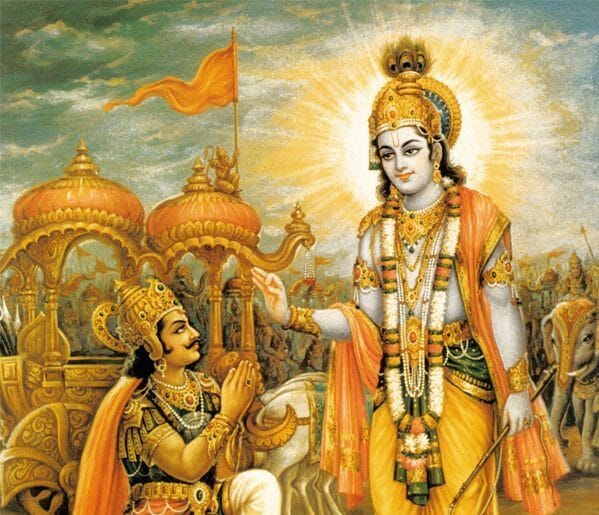
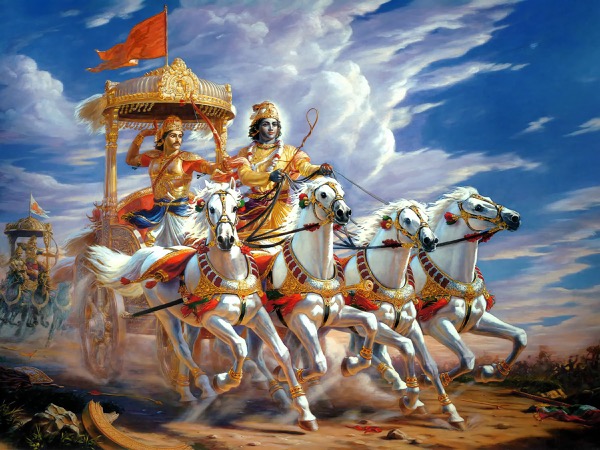
శ్రీమద్భగవద్గీతా పారాయణ - అష్టమోఽధ్యాయః The Bhagavad Gita unfolds on the battlefield of కురుక్షేత్ర, where the fate of two great families, the పాండవాః and the కౌరవాః, hangs in the balance. In the heart of this epic, శ్రీకృష్ణ and అర్జున pause amid the chaos, their conversation rising above the clash of weapons. Chapter 8, called అక్షరబ్రహ్మయోగః or Akshara Brahma యోగ, is a turning point in their dialogue. Here, the questions grow deeper, reaching into the mysteries of life, death, and what lies beyond. In the previous chapter, శ్రీకృష్ణ revealed the path of జ్ఞాన-యోగ-the యోగ of knowledge. He described the nature of the self, the importance of seeing the divine in all beings, and the value of selfless action. అర్జున listened intently, but his mind was still restless. The battlefield around him was a constant reminder of mortality and the unknown. Doubts lingered: What truly happens after death? What is the ultimate reality that endures when everything else fades? Chapter 8 responds to these questions with clarity and compassion. అర్జున asks about the meaning of terms like బ్రహ్మ, ఆధ్యాత్మ, and కర్మ. He wants to understand what happens to a person at the moment of death, and how one can remember the divine at that crucial time. శ్రీకృష్ణ explains the imperishable nature of the soul-the అక్షర-and how focusing the mind on the highest reality at the time of passing leads to liberation. Through vivid examples, he describes the different paths souls may take after death, depending on their actions and intentions. This chapter is not just philosophy; it is a guide for living with purpose. శ్రీకృష్ణ encourages అర్జున (and all seekers) to practice unwavering devotion, to remember the divine in every moment, and to face the unknown with courage. The teachings here are both practical and profound, offering a way to transform fear of death into a deeper trust in the eternal. Looking ahead, Chapter 9 will open the doors to the most secret and sacred wisdom. శ్రీకృష్ణ will share the essence of భక్తి-యోగ-the path of loving devotion. But before that, in Chapter 8, he lays the foundation by answering the timeless questions about what endures, what passes away, and how to find peace in the midst of uncertainty. This chapter invites you to reflect on what truly matters, and to discover the strength that comes from knowing your own imperishable self. ఓం శ్రీ పరమాత్మనే నమః Meaning (పదార్థ): Translation (భావార్థ): Commentary (అనుసంధాన): ఆది శంకరాచార్య elucidates అక్షర as the imperishable, unchanging reality that transcends all transient phenomena, aligning with the invocation's emphasis on the eternal పరమాత్మన్. He supports this by referencing the Upanishadic prayer మృత్యోర్మా అమృతం గమయ from the Bhadrayaka Upanishad, which means "lead me from death to immortality," highlighting the soul's journey toward the imperishable Brahman. Meanwhile, శ్రీ రామానుజాచార్య interprets పర బ్రహ్మ as the supreme personal God, emphasizing devotion and surrender as the means to unite with this highest reality. This dual perspective connects the chapter's title to both metaphysical understanding and practical spiritual discipline, preparing the seeker to approach the teachings with reverence and clarity, as suggested in the following paragraph's focus on mindful intention in daily life. In modern life, this invocation can serve as a reminder to pause and set an intention before starting any important task, just as the chapter begins with reverence and clarity of purpose. For example, before a challenging meeting or a significant life decision, one might take a moment to acknowledge a higher purpose or inner stillness. Another example is using a personal ritual, like a deep breath or a silent affirmation, to mark the start of a new project or phase. As a reflection exercise, consider what 'imperishable' means to you-what values, principles, or truths in your life feel unchanging and foundational? Take a few minutes to write down or contemplate these core aspects before moving forward with your day. అర్జున ఉవాచ Meaning (పదార్థ): Translation (భావార్థ): Commentary (అనుసంధాన): The inquiry posed by Arjuna is deeply examined by ఆది శంకరాచార్య, who interprets it as a quest to dispel confusion surrounding these fundamental terms, thereby guiding the aspirant beyond the cycle of birth and death. శ్రీ రామానుజాచార్య further elucidates that Arjuna's questions are not merely intellectual but are aimed at understanding how these concepts influence both the path of liberation and the pursuit of worldly duties. This dual focus is essential because grasping the distinctions between బ్రహ్మ, అధ్యాత్మ, కర్మ, అధిభూత, and అధిదైవ enables a seeker to navigate spiritual practice with clarity and purpose. The కఠోపనిషద్ (1.2.18) states న జాయతే మ్రియతే వా విపశ్చిత్, meaning the wise one neither takes birth nor dies, highlighting the eternal nature of the true self beyond these categories. This insight connects the philosophical definitions to the lived experience of the practitioner, preparing the ground for applying these teachings in daily life as discussed in the following paragraph. In modern life, these questions remain deeply relevant. For example, someone might wonder about the true nature of their identity (అధ్యాత్మ) when facing a career change, or reflect on the meaning of their actions (కర్మ) when making ethical decisions. The distinction between the material world (అధిభూత) and the guiding principles behind it (అధిదైవ) can help individuals navigate challenges with greater clarity. As a reflection exercise, consider a situation where you felt pulled between your deeper values and external pressures. Ask yourself: which part of you was responding-the inner self, the material aspect, or something higher? This kind of inquiry can lead to greater self-awareness and more purposeful living. అధియజ్ఞః కథం కోఽత్ర దేహేఽస్మిన్మధుసూదన । Meaning (పదార్థ): Translation (భావార్థ): Commentary (అనుసంధాన): The question of who is the అధియజ్ఞః within the body and how the self-controlled can know Krishna at death has been deeply explored by ఆది శంకరాచార్య and శ్రీ రామానుజాచార్య. ఆది శంకరాచార్య identifies the అధియజ్ఞః as the Supreme Self, the inner witness and enjoyer of all sacrifices performed in the body, emphasizing that the divine presence pervades the embodied existence. శ్రీ రామానుజాచార్య further clarifies that Krishna himself is the true అధియజ్ఞః, accessible through devotion and surrender, especially at the moment of death when the mind is steady and focused. This aligns with the Upanishadic teaching మృత్యోర్మా అమృతం గమయ from the బృహదారణ్యక ఉపనిషద్, which means 'lead me from death to immortality,' underscoring the spiritual goal of transcending the cycle of birth and death by realizing the divine within. The emphasis on the నియతాత్మభిః-those with disciplined minds-connects the metaphysical understanding of sacrifice to practical spiritual discipline, preparing the seeker to consciously remember and unite with Krishna at life's end. This understanding bridges the inquiry in the first paragraph with the practical reflection on daily life and conscious action that follows. In modern life, this verse invites us to reflect on the deeper purpose behind our daily actions-are we offering our work and efforts as a form of sacrifice, or are we merely going through routines? For example, a healthcare worker serving patients with compassion can view their service as a living sacrifice to the divine within each person. Similarly, someone facing a major life transition, such as retirement or moving to a new country, can use that moment to focus inwardly and seek a higher meaning, just as the verse suggests focusing on the divine at the time of death. As a reflection exercise, consider what 'sacrifice' means in your daily life and how you might bring more conscious intention and devotion into your actions, especially during moments of change or uncertainty. శ్రీ భగవానువాచ Meaning (పదార్థ): Translation (భావార్థ): Commentary (అనుసంధాన): ఆది శంకరాచార్య explains that అక్షరం is the supreme, immutable భ్రహ్మన్, distinct from any symbolic form such as the syllable Om, emphasizing its eternal and unchanging nature as introduced in the first paragraph. He identifies స్వభవః as the indwelling Self, the presence of భ్రహ్మన్ within every individual, while కర్మ is the ritual action or offering that sustains and brings forth all beings. Complementing this, శ్రీ రామానుజాచార్య interprets అక్షరం as the collective totality of all individual selves in their pure, indestructible essence, and views స్వభవః as the material nature or ప్రక్ర్తి that attaches to the self and must be transcended to realize liberation. This distinction between the unchanging absolute and the transient material nature is echoed in the Upanishadic prayer మృత్యోర్మా అమృతం గమయ from the బృహదారణ్యక ఉపనిషద్, which means 'Lead me from death to immortality,' highlighting the aspirant's journey from the perishable to the imperishable. These teachings prepare us to recognize in daily life the difference between our eternal core and the changing roles and actions we perform, setting the stage for practical application in the next paragraph. In modern life, these teachings can be applied by recognizing the difference between our unchanging core identity and the roles or actions we perform. For example, a person may be a parent, a professional, and a friend, but beneath these roles lies an essential self that remains constant. Similarly, understanding that our actions-whether at work, in relationships, or in service-are the means by which we shape our environment and contribute to the world. Another example is in creative pursuits: the inspiration (our essential nature) is distinct from the act of creating (action) and the unchanging awareness behind both. As a reflection exercise, consider a recent decision or action you took. Ask yourself: What part of me was unchanging throughout the process? What was my essential motivation? How did my actions shape the outcome for myself and others? అధిభూతం క్షరో భావః పురుషశ్చాధిదైవతమ్ । Meaning (పదార్థ): Translation (భావార్థ): Commentary (అనుసంధాన): Building on the distinctions introduced earlier, ఆది శంకరాచార్య emphasizes that అధిభూత comprises all perishable phenomena, underscoring the transient nature of the material world as క్షరహ్. He identifies అధిదైవత with the cosmic person, Hiranyagarbha, who pervades and sustains all beings, thus representing the divine principle behind the mutable universe. Meanwhile, శ్రీ రామానుజాచార్య clarifies that the పురుష as అధిదైవత is the supreme enjoyer, transcending even the gods, and that Krishna as అధియజ్ఞ is the inner Lord who alone receives all sacrifices performed within the body. This layered understanding aligns with the Upanishadic teaching న జాయతే మ్రియతే వా విపశ్చిత్ from the కఠోపనిషద్ (1.2.18), which means the true Self neither takes birth nor dies, highlighting the eternal presence of the divine amidst the changing world. Together, these insights deepen our grasp of the Lord's pervasive role, preparing us to see how these truths manifest in our daily experiences and spiritual practice. In modern life, the idea of అధిభూత can be seen in our constant engagement with changing circumstances, such as shifting careers or evolving relationships, reminding us that material conditions are always in flux. The concept of అధిదైవత is reflected when we recognize a deeper intelligence or order behind natural laws or personal inspiration. Understanding Krishna as అధియజ్ఞ encourages us to see the divine presence in all our actions, whether mundane or sacred. For reflection: Consider a recent challenge or success in your life. How might viewing it as part of the perishable realm help you respond with greater equanimity? Can you sense a guiding principle or presence behind your experiences, and how might that awareness change your approach to daily activities? అంతకాలే చ మామేవ స్మరన్ముక్త్వా కలేవరమ్ । Meaning (పదార్థ): Translation (భావార్థ): Commentary (అనుసంధాన): The verse's assurance of attaining the divine state by remembering Krishna at death is deeply explored by ఆది శంకరాచార్య, who interprets 'My state' as the realization of Brahman, emphasizing the necessity of unwavering focus on the Supreme during the final moment. శ్రీ రామానుజాచార్య highlights the power of exclusive devotion, explaining that the soul attains the very form or nature it meditates upon, thus underscoring the importance of continuous meditation on Krishna throughout life. This is supported by the Upanishadic prayer మృత్యోర్మా అమృతం గమయ from the బృహదారణ్యక ఉపనిషద్, which means 'Lead me from death to immortality,' illustrating the aspiration to transcend death through spiritual remembrance. Together, these teachings affirm that the final thought is not a random moment but the culmination of lifelong practice, setting the foundation for how one's habitual focus shapes the ultimate transition. In modern life, this teaching can be seen in how our deepest habits and mental patterns surface during times of crisis or transition. For example, someone who has consistently practiced mindfulness or prayer may find themselves naturally turning to these in their final moments. Another example is how a person who has cultivated loving relationships and gratitude may leave the world with a sense of peace, while someone preoccupied with regrets might experience anxiety. As a reflection exercise, consider what thoughts or feelings you would want to have at the end of your life, and what daily practices could help make that state of mind more natural for you. This verse invites us to align our everyday focus with our highest aspirations, so that our final moments reflect our truest intentions. యం యం వాపి స్మరన్భావం త్యజత్యంతే కలేవరమ్ । Meaning (పదార్థ): Translation (భావార్థ): Commentary (అనుసంధాన): ఆది శంకరాచార్య explains that the final thought at death is the natural outcome of the mind's habitual focus throughout life, emphasizing that the soul inevitably attains the object of its last remembrance. Similarly, శ్రీ మధ్వాచార్య highlights this verse as affirming the soul's conscious agency and the karmic principle that one's persistent attachments shape future existence. This teaching aligns with the Upanishadic invocation మృత్యోర్మా అమృతం గమయ from the బృహదారణ్యక ఉపనిషద్, which means "lead me from death to immortality," underscoring the transformative power of directing the mind toward the eternal at all times. Thus, the verse calls for cultivating steady, noble thoughts so that at life's end, the mind naturally turns toward liberation, preparing the ground for the practical applications discussed next. In modern life, this teaching can be seen in how our daily habits and repeated thoughts shape our character and future decisions. For example, someone who constantly dwells on anger or resentment may find it hard to let go of these emotions, even at critical moments. Conversely, a person who practices gratitude or compassion regularly is more likely to respond with calmness and kindness, even under stress. Another example is how athletes visualize success repeatedly, which conditions their mind and body to perform well under pressure. As a reflection exercise, consider what thoughts or feelings dominate your mind each day. Are they aligned with your deeper values and aspirations? Take a few minutes to observe your recurring thoughts, and imagine what you would want your mind to be focused on at the most important moments of your life. తస్మాత్సర్వేషు కాలేషు మామనుస్మర యుధ్య చ । Meaning (పదార్థ): Translation (భావార్థ): Commentary (అనుసంధాన): ఆది శంకరాచార్య explains that dedicating the mind and intellect to Krishna means perceiving all actions as offerings to the Supreme Brahman, thereby dissolving the apparent duality between spiritual knowledge and worldly duty. This non-dual vision aligns with the Upanishadic injunction మృత్యోర్మా అమృతం గమయ from the బృహదారణ్యక ఉపనిషద్, which urges moving from death to immortality, symbolizing the transformation achieved by unwavering devotion. Meanwhile, శ్రీ రామానుజాచార్య emphasizes performing one's prescribed duties with constant remembrance of the Lord, especially at the moment of death, since the final thought determines the soul's destination. Together, these teachings affirm that true spiritual progress arises when devotion permeates every action and thought, making remembrance of the Divine continuous and inseparable from daily life. This understanding naturally leads to practical application, as discussed in the following paragraph. In modern life, this teaching can be applied by remembering your core values or sense of purpose even while handling daily responsibilities, such as working at your job, caring for family, or facing challenges. For example, a doctor can dedicate their healing work to the welfare of humanity, or a student can study with the intention of serving society. Another example is someone facing a difficult decision at work, who pauses to recall their higher ideals before acting. As a reflection exercise, try to identify one routine activity where you can consciously dedicate your thoughts and efforts to a higher purpose, and notice how this changes your experience of that task. This practice helps bridge the gap between the spiritual and the practical, making every moment an opportunity for connection with the Divine. అభ్యాసయోగయుక్తేన చేతసా నాన్యగామినా । Meaning (పదార్థ): Translation (భావార్థ): Commentary (అనుసంధాన): The verse's emphasis on sustained mental focus is further illuminated by ఆది శంకరాచార్య, who explains that అభ్యాస denotes the repeated and uninterrupted turning of the mind toward the Supreme, excluding all distractions. This continuous engagement is the essence of యోగ, the disciplined union of mind and Divine. శ్రీ రామానుజాచార్య complements this by highlighting that such steadfastness is cultivated through a lifetime of devotion and disciplined practice, ensuring that at the final moment the mind remains fixed on the Supreme Person alone. This teaching resonates with the Upanishadic injunction ఉత్తిష్ఠత జాగ్రత ప్రాప్య వరాన్నిబోధత from the కఠోపనిషద్ (1.3.14), which urges one to 'Arise, awake, and learn by approaching the excellent ones,' emphasizing the necessity of alertness and persistent effort in spiritual progress. Together, these insights deepen our understanding of how habitual, focused meditation prepares the aspirant for ultimate union, setting the stage for practical application in daily life. In modern life, this teaching can be applied to any goal that requires deep focus and consistent effort. For example, a student preparing for exams must repeatedly bring their attention back to their studies, resisting the urge to check their phone or daydream. Similarly, someone building a new habit, like daily exercise or mindfulness, succeeds by returning to their practice each day, even when distractions arise. As a reflection exercise, try setting aside five minutes each day to focus on a single positive thought or intention, gently bringing your mind back whenever it wanders. Notice over a week how your ability to concentrate improves, and consider how this discipline could help you reach your most important aspirations. కవిం పురాణమనుశాసితారం అణోరణీయాంసమనుస్మరేద్యః । Meaning (పదార్థ): Translation (భావార్థ): Commentary (అనుసంధాన): The commentary of ఆది శంకరాచార్య and శ్రీ రామానుజాచార్య deepens our understanding of this meditation by highlighting complementary dimensions of the Supreme. ఆది శంకరాచార్య stresses the transcendental and formless nature of the Supreme, focusing on the phrase అచింత్య రూపం to indicate that the divine form is beyond all conceptualization and mental grasp. In contrast, శ్రీ రామానుజాచార్య emphasizes the personal and accessible aspect of the Supreme as the omniscient ruler and sustainer, encouraging devotion to a divine being who governs and supports all existence. Both perspectives converge on the importance of meditating on the Supreme as the ultimate reality that transcends ignorance and darkness, as reflected in the Upanishadic prayer తమసో మా జ్యోతిర్గమయ from the Bhadrayaka Upanishad, which means 'Lead me from darkness to light.' This invocation underscores the transformative power of such meditation, moving the practitioner from delusion to illumination. Thus, the verse not only describes the ideal object of meditation but also points toward the practical goal of spiritual enlightenment, bridging naturally to the application of these teachings in daily life. In modern life, this teaching can be applied by setting aside time each day to contemplate or visualize the qualities of the divine-such as wisdom, timelessness, and inner light-rather than getting caught up in transient worries. For example, someone facing uncertainty at work might remember the Supreme as the ultimate sustainer and guide, finding reassurance in that connection. A person struggling with self-doubt could meditate on the idea of an inner light that is always present, even when circumstances seem dark. As a reflection exercise, try to spend five minutes daily recalling or visualizing a presence that is both subtle and all-encompassing, radiant and beyond confusion, and notice how this impacts your sense of clarity and peace. ప్రయాణకాలే మనసాఽచలేన భక్త్యా యుక్తో యోగబలేన చైవ । Meaning (పదార్థ): Translation (భావార్థ): Commentary (అనుసంధాన): The verse's focus on unwavering mental steadiness and yogic control at the moment of death is deeply elucidated by ఆది శంకరాచార్య, who explains that the yogi's ability to fix the ప్రన between the eyebrows arises from a disciplined mastery over both mind and vital energies, achieved through persistent spiritual practice. This steady concentration, combined with heartfelt devotion, enables the soul to transcend ordinary experience and approach the supreme reality. శ్రీ రామానుజాచార్య complements this by emphasizing that such attainment is the fruit of lifelong భక్తి and purification of the mind, where devotion and యోగ work inseparably to prepare the aspirant for union with the పరం పురుషం. The Upanishadic injunction మృత్యోర్మా అమృతం గమయ (Lead me from death to immortality) from the చక్షుశోపనిషద్ beautifully captures this aspiration, underscoring the transformative journey from mortal limitation to divine liberation. This teaching not only highlights the culmination of yogic discipline at death but also sets the stage for applying such steadiness and devotion in life's transitions, as explored in the following paragraph. In modern life, this teaching can be reflected in how we prepare for major transitions, not just physical death but also endings and new beginnings in our careers, relationships, or personal growth. For example, someone facing retirement might use meditation and focused intention to approach this change with clarity and purpose. A person recovering from loss could combine mindfulness and heartfelt devotion to find peace and direction. As a reflection exercise, consider a significant change you are anticipating or experiencing. How can you bring steadiness of mind, sincere devotion, and focused energy to that moment, so you move forward with purpose and connection to your highest values? యదక్షరం వేదవిదో వదంతి విశంతి యద్యతయో వీతరాగాః । Meaning (పదార్థ): Translation (భావార్థ): Commentary (అనుసంధాన): ఆది శంకరాచార్య explains that అక్షరం refers to the immutable Brahman, the supreme reality described in the Upanishads, which the wise declare as the ultimate goal to be realized through knowledge and renunciation. He emphasizes that those who are వీత-రాగః, free from all attachments, enter this imperishable state by practicing disciplined living and self-control. Similarly, శ్రీ మధ్వాచార్య highlights that this verse points to the highest, imperishable reality attainable by sincere effort and purity of mind, accessible through both knowledge and unwavering discipline. Both Acharyas stress that the verse introduces the supreme goal that transcends all change and decay, aligning with the Upanishadic injunction మృత్యోర్మా అమృతం గమయ from the బృహదారణ్యక ఉపనిషద్, which means "lead me from death to immortality." This connection underscores the transformative aspiration behind the verse, linking the eternal nature of అక్షరం to the practical path of detachment and disciplined striving. Thus, the verse not only reveals the nature of the ultimate reality but also prepares the seeker for the practical discipline necessary to approach it, setting the stage for the application of these teachings in daily life. In modern life, this teaching can inspire anyone seeking a deeper sense of purpose or fulfillment. For example, a student dedicating themselves to their studies with discipline and focus, letting go of distractions, mirrors the practice of బ్రహ్మ-చర్యం. A professional who remains unattached to praise or criticism, focusing instead on doing their duty well, reflects the spirit of వీత-రాగః. Someone pursuing a spiritual or personal goal with consistent self-restraint and clarity of intention is following the path described here. As a reflection exercise, consider what your own 'imperishable goal' might be-what is truly unchanging and meaningful for you? How can you cultivate discipline and reduce attachment in your daily actions to move closer to that goal? సర్వద్వారాణి సంయమ్య మనో హృది నిరుధ్య చ । Meaning (పదార్థ): Translation (భావార్థ): Commentary (అనుసంధాన): The profound yogic discipline described in this verse is elucidated by Acharyas such as ఆది శంకరాచార్య and శ్రీ రామానుజాచార్య, who deepen our understanding of the inner process. ఆది శంకరాచార్య interprets the control of all sensory gates and the mind's confinement in the heart as essential steps toward stilling the fluctuations of consciousness, aligning with the sutra యోగశ్చిత్తవృత్తి నిరోధః from పాతంజలి యోగ సూత్రాణి (1.2), which means యోగ is the cessation of mental modifications. This highlights the technical mastery required to withdraw from external distractions and stabilize the mind. Meanwhile, శ్రీ రామానుజాచార్య emphasizes the devotional dimension, viewing the heart as the divine abode where the practitioner fixes their vital breath and mind, thus fostering a loving union with the Lord. Together, these perspectives show that the verse not only prescribes disciplined withdrawal and concentration but also prepares the aspirant for practical application in daily life, as discussed next. In modern life, this teaching can be applied during moments of stress or transition. For example, before an important meeting, one might close their eyes, withdraw attention from external distractions, focus the mind inward, and take a few deep breaths to center themselves. Similarly, during meditation, consciously relaxing the senses and focusing on the heart or breath can help deepen concentration. Another example is using this technique before sleep to calm the mind and body. As a reflection exercise, try spending five minutes each day sitting quietly, gently withdrawing your attention from sensory input, focusing on your breath, and observing the mind as it settles. Notice how this affects your clarity and sense of presence throughout the day. ఓమిత్యేకాక్షరం బ్రహ్మ వ్యాహరన్మామనుస్మరన్ । Meaning (పదార్థ): Translation (భావార్థ): Commentary (అనుసంధాన): ఆది శంకరాచార్య elucidates that the sacred syllable ఓం is none other than బ్రహ్మ itself, and thus uttering it at the moment of death is a direct invocation of the Absolute. He stresses the importance of unwavering అనుస్మరన్, or remembrance, of the Supreme Self, which aligns the departing soul with the ultimate reality. Meanwhile, శ్రీ రామానుజాచార్య interprets this practice as a loving meditation on the personal form of the Divine, emphasizing that the utterance of ఓం serves as a means to remember Krishna, the inner controller and highest truth. This remembrance is not merely intellectual but a heartfelt devotion that draws the soul toward liberation. Supporting this, the కఠోపనిషద్ (1.2.18) declares న జాయతే మ్రియతే వా విపశ్చిత్, meaning the true Self neither takes birth nor dies, reinforcing the teaching that focused remembrance at death leads to transcending the cycle of birth and death. These perspectives deepen the verse's teaching by showing how the sound, thought, and intention unite to guide the soul to పరమాం గతిం, the supreme goal. This understanding naturally leads to practical applications, as discussed next, where daily cultivation of such remembrance becomes essential. In modern life, this verse can inspire practices such as daily meditation on a sacred sound or mantra, and cultivating the habit of remembering a higher purpose throughout the day. For example, someone might set aside time each morning to chant Om and reflect on their connection to the Divine, or use moments of transition (like waking up or going to sleep) to recall their spiritual goal. In times of crisis or at the end of life, these habits can help the mind remain steady and focused. As a reflection exercise, consider what thoughts or feelings naturally arise in moments of stress or uncertainty. Ask yourself: If today were my last day, what would I want my mind to be focused on? This contemplation can help align daily actions with deeper values and intentions. అనన్యచేతాః సతతం యో మాం స్మరతి నిత్యశః । Meaning (పదార్థ): Translation (భావార్థ): Commentary (అనుసంధాన): ఆది శంకరాచార్య elucidates that the terms సతతం and నిత్యసహ్ together emphasize a lifelong, uninterrupted remembrance of the Divine, where the mind remains single-pointed and does not stray to other objects. This continuous focus is essential for the yogi to become truly accessible to the Lord. Similarly, శ్రీ రామానుజాచార్య highlights that such unwavering devotion arises from a deep love that makes remembrance as natural and constant as breathing, enabling the Lord to remove all obstacles for the devotee. This teaching aligns with the Upanishadic injunction from the కఠోపనిషద్ (1.3.14): ఉత్తిష్ఠత జాగ్రత ప్రాప్య వరాన్నిబోధత, which urges one to 'Arise, awake, and learn the excellent wisdom,' underscoring the necessity of persistent spiritual vigilance and effort. Together, these insights deepen the understanding from the first paragraph by showing that the Divine's accessibility depends on a steady, lifelong absorption, which then naturally leads to practical ways of maintaining this connection in daily life, as discussed next. In modern life, this teaching can be seen in someone who, despite a busy schedule, keeps a sense of inner connection to their highest values or to the Divine throughout the day-whether at work, with family, or alone. For example, a nurse caring for patients might silently dedicate each act of service as an offering, or a student might pause briefly to recollect their spiritual goal before each task. Another example is someone who uses reminders-like a picture, a mantra, or a journal-to bring their mind back to what matters most, even amid distractions. As a reflection exercise, consider what practices or reminders could help you maintain a sense of connection to your deepest purpose throughout your daily routine. Where does your attention wander most, and what gentle cues could help you return it to what you truly value? మాముపేత్య పునర్జన్మ దుఃఖాలయమశాశ్వతమ్ । Meaning (పదార్థ): Translation (భావార్థ): Commentary (అనుసంధాన): ఆది శంకరాచార్య explains that this verse affirms the ultimate goal of liberation as complete release from the cycle of rebirth, which is described as దుఃఖాలయం, an abode of suffering and impermanence. He emphasizes that only by realizing the Supreme Being can one transcend this sorrowful existence. Similarly, శ్రీ రామానుజాచార్య highlights the role of loving devotion, where the మహాత్మానః-the great souls-are deeply attached to the Lord, and this unwavering focus leads them to the highest perfection, making rebirth unnecessary. This teaching aligns with the Upanishadic prayer మృత్యోర్మా అమృతం గమయ from the బృహదారణ్యక ఉపనిషద్, which means 'Lead me from death to immortality,' underscoring the transition from the transient suffering of worldly life to the eternal bliss of liberation. Thus, the verse not only describes the nature of liberation but also points toward the spiritual path that frees one from impermanence and sorrow, preparing us to reflect on how this profound truth can be applied in our daily lives. In modern life, this teaching can be reflected in the way people seek lasting fulfillment. For example, someone who dedicates themselves to a higher purpose or selfless service often finds a sense of peace that is not disturbed by everyday ups and downs. Another example is the experience of overcoming a major life challenge and realizing that true contentment comes from within, not from external achievements. As a reflection exercise, consider what aspects of your life feel impermanent or unsatisfying, and contemplate what it would mean to seek a deeper, more enduring sense of purpose or connection beyond temporary circumstances. ఆబ్రహ్మభువనాల్లోకాః పునరావర్తినోఽర్జున । Meaning (పదార్థ): Translation (భావార్థ): Commentary (అనుసంధాన): The verse's emphasis on the impermanence of even the highest worlds is deeply explored by ఆది శంకరాచార్య, who teaches that all realms, including Brahma-loka, are transient and subject to the play of time and dissolution, thus compelling all beings to return to the cycle of birth and death. శ్రీ రామానుజాచార్య complements this by highlighting that these worlds, though places of great enjoyment and power, cannot confer ultimate liberation; only union with the Supreme Being, who transcends all change and destruction, grants freedom from rebirth. This aligns with the Upanishadic truth expressed in కఠోపనిషద్ (1.2.18): న జాయతే మ్రియతే వా విపశ్చిత్, meaning the wise soul neither takes birth nor dies, illustrating the transcendence of the self beyond the cycles governing material existence. This understanding bridges the impermanence described in the first paragraph with the practical reflection on worldly pursuits in the next, urging seekers to discern the fleeting nature of all material attainments and to aspire for the eternal. In modern life, this teaching can be seen in the pursuit of worldly goals-such as career success, wealth, or even spiritual experiences-that, while rewarding, are ultimately temporary and cannot provide lasting fulfillment. For example, someone might strive for a prestigious position or accumulate significant assets, only to find that these achievements do not bring permanent satisfaction. Similarly, even those who seek higher states of consciousness or mystical experiences may find themselves returning to ordinary life and its challenges. As a reflection exercise, consider what goals or achievements in your life feel most enduring, and which ones seem fleeting. Ask yourself: What would it mean to seek something truly permanent, and how might that change your priorities? సహస్రయుగపర్యంతం అహర్యద్బ్రహ్మణో విదుః । Meaning (పదార్థ): Translation (భావార్థ): Commentary (అనుసంధాన): The profound scale of cosmic time described here is further illuminated by ఆది శంకరాచార్య, who teaches that understanding Brahma's day and night reveals the transient nature of all existence, as even the grandest cosmic cycles are impermanent. శ్రీ మధ్వాచార్య emphasizes that this knowledge is essential for discerning the limits of material life and recognizing the need to transcend these cycles through spiritual liberation. This perspective aligns with the Upanishadic invocation మృత్యోర్మా అమృతం గమయ from the బృహదారణ్యక ఉపనిషద్, which means 'lead me from death to immortality,' underscoring the aspirant's journey beyond temporal limitations. Thus, the verse not only quantifies cosmic time but also points to a deeper truth about the impermanence of worldly existence and the importance of seeking the eternal, setting the stage for practical reflection on our place within this vast temporal framework. In modern life, this teaching can help us put our daily struggles and ambitions into perspective. For example, when facing a stressful deadline at work, remembering the vastness of cosmic time can help reduce anxiety and foster patience. Similarly, when we become attached to achievements or possessions, reflecting on the impermanence of even the longest-lived beings can encourage humility. As a reflection exercise, try to visualize the span of a thousand ages and consider how brief our own lifetimes are in comparison. How might this awareness influence your priorities or your sense of urgency in daily life? అవ్యక్తాద్వ్యక్తయః సర్వాః ప్రభవంత్యహరాగమే । Meaning (పదార్థ): Translation (భావార్థ): Commentary (అనుసంధాన): The verse reveals the cyclical nature of existence, where all manifested beings arise from and dissolve into the అవ్యక్త, the unmanifested substratum. ఆది శంకరాచార్య explains that this అవ్యక్త is not the ultimate Self but the subtle state of ప్రకృతి, the material cause of the universe, emphasizing the bondage of beings caught in this endless cycle due to ignorance and కర్మ. In contrast, శ్రీ రామానుజాచార్య interprets the అవ్యక్త as the subtle body of Brahma, from which all worlds and beings emerge at the dawn of cosmic day and into which they dissolve at night, highlighting the ordered process governed by divine will. This understanding aligns with the Upanishadic invocation తమసో మా జ్యోతిర్గమయ from the చక్షుశోపనిషద్, which prays to be led from darkness (ignorance and unmanifest) to light (manifest knowledge and liberation). Recognizing this cycle of manifestation and dissolution fosters detachment and prepares the seeker to face life's impermanence with equanimity, thus setting the stage for practical reflection in the following paragraph. In modern life, this teaching can remind us of the temporary nature of our achievements, possessions, and even identities. For example, a business may rise and fall, relationships may begin and end, and trends come and go, all reflecting the cycle of manifestation and dissolution. Another example is the way ideas or projects emerge from a period of planning (unmanifest) and eventually conclude or transform, returning to a state of potential. As a reflection exercise, consider an area of your life where you are overly attached to outcomes. Ask yourself: How might recognizing the cyclical, impermanent nature of things help you approach these situations with more calm and perspective? భూతగ్రామః స ఏవాయం భూత్వా భూత్వా ప్రలీయతే । Meaning (పదార్థ): Translation (భావార్థ): Commentary (అనుసంధాన): Building on the depiction of beings as helplessly caught in cosmic cycles, ఆది శంకరాచార్య explains that all entities, animate and inanimate, undergo repeated birth and dissolution not by their own volition but according to the divine cosmic order. He highlights the inevitability of this process, reflecting the verse's emphasis on the lack of autonomy in material existence. Complementing this, శ్రీ మధ్వాచార్య underscores the distinction between the eternal self and the transient world, noting that the soul's repeated cycles of birth and death are governed by కర్మ and divine will, reinforcing the verse's message of beings being swept along by forces beyond their control. This understanding resonates with the Upanishadic invocation మృత్యోర్మా అమృతం గమయ from the బృహదారణ్యక ఉపనిషద్, which prays to be led from death to immortality, symbolizing the soul's aspiration to transcend these cycles. Together, these teachings deepen the insight into the verse's portrayal of cosmic dissolution and set the stage for practical reflection on how such cycles manifest in our lives. In modern life, this teaching can be seen in the cycles we experience-such as the daily routines that seem to repeat endlessly, or the rise and fall of trends, relationships, and even careers. For example, someone may feel stuck in a pattern of work and rest, or see generations in a family repeating similar life stories. Another example is the way organizations or societies go through phases of growth and decline, often beyond the control of any single person. As a reflection exercise, consider an area of your life where you feel caught in a cycle. Ask yourself: What forces are at play that keep this pattern going? Are there aspects you can influence, or is acceptance and seeking a deeper purpose the wiser path? పరస్తస్మాత్తు భావోఽన్యః అవ్యక్తోఽవ్యక్తాత్సనాతనః । Meaning (పదార్థ): Translation (భావార్థ): Commentary (అనుసంధాన): The distinction made in this verse between two unmanifest realities is deeply explored by ఆది శంకరాచార్య, who identifies the first అవ్యక్తహ్ as ప్రకృతి, the subtle material cause of the universe, while the 'other' unmanifest is the imperishable Brahman, transcending all material forms. This eternal Brahman remains unaffected by cosmic dissolution, embodying the సనతనహ్ principle introduced earlier. శ్రీ రామానుజాచార్య further clarifies that this higher unmanifest is the true self, the ఆత్మన్, which is beyond ordinary perception and persists unchanged when all beings perish. This aligns with the Upanishadic teaching న జాయతే మ్రియతే వా విపశ్చిత్ from the కఠోపనిషద్ (1.2.18), meaning 'the wise self is neither born nor dies,' emphasizing the eternal and indestructible nature of this reality. Thus, the verse points to an ultimate refuge beyond the transient world and subtle matter, a foundation for the enduring self that remains constant amid all change. Recognizing this eternal unmanifest sets the stage for practical reflection on how one can maintain equanimity and resilience in the face of loss and transformation. In modern life, this teaching can be reflected in how we approach change and loss. For example, when a company closes or a relationship ends, it may feel as if everything has collapsed, but there remains an underlying sense of self or purpose that endures. Similarly, during times of personal crisis or transformation, we might lose familiar roles or identities, yet a deeper awareness persists. Another example is the resilience people show after natural disasters-while material things are destroyed, the human spirit and hope endure. As a reflection exercise, consider a time when something significant in your life ended. What remained constant beneath the surface changes? How might recognizing an 'eternal unmanifest' within yourself help you face future uncertainties with greater calm and confidence? అవ్యక్తోఽక్షర ఇత్యుక్తః తమాహుః పరమాం గతిమ్ । Meaning (పదార్థ): Translation (భావార్థ): Commentary (అనుసంధాన): The profound nature of the అవ్యక్త and అక్షర as the supreme goal is elucidated by ఆది శంకరాచార్య, who identifies this unmanifest and imperishable reality with Brahman, the ultimate substratum beyond all sensory perception and change. He emphasizes that reaching this state results in complete liberation, free from the cycles of birth and death. Complementing this, శ్రీ రామానుజాచార్య distinguishes between the inert unmanifest material nature and the conscious unmanifest self, portraying the supreme goal as the soul's pure state, untouched by material influence and eternally under the Lord's protection. This aligns with the Upanishadic invocation మృత్యోర్మా అమృతం గమయ from the బృహదారణ్యక ఉపనిషద్, which means "Lead me from death to immortality," highlighting the aspirant's journey from the transient to the imperishable. Together, these teachings affirm that the highest abode is the final destination where one attains eternal peace and does not return to worldly existence, thus setting the foundation for practical reflection on seeking imperishable fulfillment beyond temporary gains. In modern life, this teaching can be related to the pursuit of lasting fulfillment rather than temporary pleasures. For example, someone may chase career success or material wealth, only to find these achievements fleeting. Another person might seek deeper meaning through self-inquiry or spiritual practice, aiming for a state of inner peace that is not disturbed by external changes. A third example is someone who, after overcoming repeated setbacks, realizes that true contentment comes from connecting with something unchanging within. As a reflection exercise, consider what you currently see as your 'supreme goal' and whether it is subject to change or loss. How might your priorities shift if you sought something truly imperishable and unmanifest as your ultimate aim? పురుషః స పరః పార్థ భక్త్యా లభ్యస్త్వనన్యయా । Meaning (పదార్థ): Translation (భావార్థ): Commentary (అనుసంధాన): ఆది శంకరాచార్య elucidates that the Supreme పురుషః is both immanent and transcendent, accessible through అనన్యయా భక్త్యా-a devotion undistracted and deeply rooted in self-knowledge, reflecting the unity of the individual self with the Supreme. Similarly, శ్రీ రామానుజాచార్య emphasizes the personal and all-pervading nature of the Supreme, affirming that all beings reside within Him and that He pervades everything, making Him attainable by exclusive, loving devotion. This aligns with the Upanishadic invocation మృత్యోర్మా అమృతం గమయ from the బృహదారణ్యక ఉపనిషద్, which prays to be led from death to immortality, symbolizing the transformative power of such devotion that transcends the cycle of birth and death. Together, these teachings highlight that unwavering devotion focused solely on the Supreme is the means to realize His presence within and beyond all existence, preparing the seeker for the practical application of this principle in daily life. In modern life, this teaching can be applied by dedicating oneself wholeheartedly to a chosen ideal or higher purpose, whether in spiritual practice, service, or personal growth. For example, a scientist who immerses herself fully in her research, setting aside distractions, mirrors the principle of అనన్యయా భక్త్యా. A parent who cares for their child with undivided attention also embodies this focused devotion. To reflect: consider an area of your life where your attention is scattered. What would it look like to bring single-minded devotion to that pursuit? Try dedicating a week to practicing this kind of focus, observing how it transforms your experience and sense of connection to your goal. యత్ర కాలే త్వనావృత్తిం ఆవృత్తిం చైవ యోగినః । Meaning (పదార్థ): Translation (భావార్థ): Commentary (అనుసంధాన): The distinction between అనావృత్తిం (non-return) and ఆవృత్తిం (return) reflects the yogi's ultimate fate upon departing the body, as explained by ఆది శంకరాచార్య. He clarifies that this applies to both meditators and those engaged in action, the latter being yogis by courtesy, emphasizing the inclusive scope of the term యోగినః. Meanwhile, శ్రీ రామానుజాచార్య interprets కాల (time) as a cosmic path governed by various deities overseeing divisions like day and night, highlighting the divine orchestration behind the soul's journey at death. This teaching aligns with the Upanishadic invocation మృత్యోర్మా అమృతం గమయ from the బృహదారణ్యక ఉపనిషద్, which prays to be led from death to immortality, underscoring the transformative potential of the moment of departure. Thus, the verse not only distinguishes the timing that leads to liberation or rebirth but also points to the deeper metaphysical and cosmic realities influencing that transition. This understanding prepares us to reflect on how timing and readiness affect outcomes in all life transitions, a theme explored in the following paragraph. In modern life, this teaching can be seen as a metaphor for the importance of timing and preparedness in all transitions, not just at the end of life. For example, a student who prepares steadily throughout the year is more likely to succeed in exams than one who crams at the last minute. Similarly, someone who leaves a job thoughtfully, having completed their responsibilities, tends to move forward more smoothly than someone who departs abruptly. As a reflection exercise, consider a major transition you are facing or have recently faced. How might your preparation and the timing of your actions influence the outcome? What can you do to ensure that your next transition leads to growth rather than repetition of old patterns? అగ్నిర్జ్యోతిరహః శుక్లః షణ్మాసా ఉత్తరాయణమ్ । Meaning (పదార్థ): Translation (భావార్థ): Commentary (అనుసంధాన): The interpretations of this verse by ఆది శంకరాచార్య and శ్రీ రామానుజాచార్య deepen our understanding of the significance of these auspicious times. ఆది శంకరాచార్య highlights that these periods symbolize the predominance of sattvic qualities-purity and clarity-that facilitate the soul's ascent to Brahman, aligning with the inner spiritual state cultivated through knowledge. శ్రీ రామానుజాచార్య emphasizes the role of divine guidance during these times, viewing the deities presiding over the northern solstice and bright fortnight as facilitators who help the soul traverse the cosmic path toward liberation. This aligns with the Upanishadic injunction మృత్యోర్మా అమృతం గమయ from the బృహదారణ్యక ఉపనిషద్, which means 'lead me from death to immortality,' underscoring the transformative potential of departing in such spiritually charged moments. Together, these perspectives affirm that both the cosmic timing and the individual's spiritual readiness are crucial for attaining the highest goal, thus connecting the cosmic order with personal soteriology and preparing us to consider how such timing can be integrated into daily life. In modern life, this teaching can be related to the idea of aligning important transitions with auspicious timing, such as starting new ventures during favorable periods or being mindful of one's state of mind during significant life events. For example, someone might choose to begin a new job or move homes during a time they consider positive or energizing. Another example is the practice of setting intentions or meditating at sunrise, believing that the environment supports inner clarity. As a reflection exercise, consider how your environment and timing influence your mindset and actions. Are there moments in your daily or yearly cycle that feel more supportive of your growth or well-being? How can you consciously align your efforts with these periods to enhance your spiritual or personal journey? ధూమో రాత్రిస్తథా కృష్ణః షణ్మాసా దక్షిణాయనమ్ । Meaning (పదార్థ): Translation (భావార్థ): Commentary (అనుసంధాన): The verse's depiction of cosmic phases as guiding forces is elaborated by ఆది శంకరాచార్య, who explains that these times symbolize deities governing the soul's journey, leading it to transient realms rather than final liberation. శ్రీ రామానుజాచార్య interprets the 'lunar light' as the ancestral world attained by those whose virtuous deeds are still bound by attachment to results, emphasizing that such attainment is temporary. This aligns with the Upanishadic prayer తమసో మా జ్యోతిర్గమయ from the Bhadrayaka Upanishad, which means 'lead me from darkness to light,' highlighting the aspirant's desire to transcend temporary states toward ultimate illumination. These insights clarify that the yogi described here is one whose departure occurs during these cosmic phases, resulting in a return after enjoying the fruits of their actions, rather than achieving permanent liberation. This understanding sets the stage for reflecting on the nature of spiritual practice and its motivations, as discussed in the following paragraph. In modern life, this teaching can be seen in how people pursue good deeds or spiritual practices primarily for rewards, recognition, or temporary happiness, rather than for lasting transformation. For example, someone might volunteer or donate with the hope of gaining social status, or practice meditation only to reduce stress, not to seek deeper self-realization. Another example is focusing on timing or rituals for success, believing that certain periods are more auspicious, rather than cultivating consistent inner growth. Reflect for a moment: Are there areas in your life where your actions are motivated by temporary gains rather than by a desire for lasting fulfillment? Consider how shifting your focus from external rewards to inner growth might change your journey. శుక్లకృష్ణే గతీ హ్యేతే జగతః శాశ్వతే మతే । Meaning (పదార్థ): Translation (భావార్థ): Commentary (అనుసంధాన): The distinction between the bright and dark paths is deeply rooted in the soul's spiritual condition and actions, as explained by ఆది శంకరాచార్య, who associates the bright path with the attainment of knowledge and liberation, where the soul does not return to worldly existence. శ్రీ రామానుజాచార్య emphasizes that these paths correspond to the results of selfless devotion and ritual actions performed with awareness versus those done with attachment or ignorance. This eternal duality is reflected in the Upanishadic prayer from the బృహదారణ్యక ఉపనిషద్: తమసో మా జ్యోతిర్గమయ, meaning "lead me from darkness to light," which symbolizes the soul's journey from ignorance and repeated birth to spiritual illumination and liberation. This verse thus reinforces the permanence of these two cosmic courses and highlights the importance of conscious spiritual effort, setting the stage for understanding how daily choices align with these eternal paths. In modern life, the idea of the bright and dark paths can be seen in the choices we make daily: living with integrity, self-awareness, and compassion can be likened to the bright path, leading to lasting fulfillment and growth. In contrast, acting out of selfishness, ignorance, or harmful intent may perpetuate cycles of dissatisfaction or repeated mistakes, similar to the dark path. For example, someone who consistently chooses honesty and service may find themselves progressing in their personal and professional life, while someone who repeatedly acts unethically may face recurring setbacks. As a reflection exercise, consider a recent decision you made: did it align with your higher values (the bright path), or was it driven by short-term gain or fear (the dark path)? What might be the long-term consequences of each choice? నైతే సృతీ పార్థ జానన్ యోగీ ముహ్యతి కశ్చన । Meaning (పదార్థ): Translation (భావార్థ): Commentary (అనుసంధాన): According to ఆది శంకరాచార్య, the yogi who truly knows the two paths-one leading to rebirth and the other to liberation-cannot be deluded, as this knowledge dispels ignorance and clarifies the consequences of each path. శ్రీ రామానుజాచార్య emphasizes that such understanding empowers the yogi to consciously choose the divine path, remaining steadfast in యోగ at all times, thus aligning with the ultimate goal of liberation. This steadfastness is echoed in the కఠోపనిషద్ (1.3.14): ఉత్తిష్ఠత జాగ్రత ప్రాప్య వరాన్నిబోధత, which means 'Arise, awake, and learn by approaching the excellent ones.' This injunction encourages constant vigilance and dedication to spiritual practice, reinforcing the verse's call to be unwavering in యోగ throughout all circumstances. Together, these teachings highlight that knowledge combined with persistent practice protects the aspirant from confusion and guides them steadily toward liberation. In modern life, this teaching is relevant for anyone facing choices that impact their long-term well-being. For example, a person who understands the difference between short-term pleasure and lasting fulfillment is less likely to be distracted by fleeting temptations. Similarly, a student who knows the value of consistent study will not be confused by the pressure of last-minute cramming. To reflect: Think of a situation where you were faced with two options-one easy but temporary, the other demanding but meaningful. How did understanding the consequences guide your decision? Consider how you can apply the principle of being 'steadfast in యోగ'-that is, consistently aligned with your deeper values-throughout your daily routine. వేదేషు యజ్ఞేషు తపస్సు చైవ దానేషు యత్పుణ్యఫలం ప్రదిష్టమ్ । Meaning (పదార్థ): Translation (భావార్థ): Commentary (అనుసంధాన): The profound insight of this verse is elaborated by ఆది శంకరాచార్య, who explains that the yogi's knowledge transcends the temporary fruits of rituals, leading to the realization of the eternal Self beyond all external acts. Similarly, శ్రీ రామానుజాచార్య emphasizes that the joy arising from the direct experience of the Lord's supreme nature renders all ritualistic merits insignificant, as the devotee attains the primordial abode that is beyond all material gains. This transcendence is beautifully captured by the Upanishadic prayer from the బృహదారణ్యక ఉపనిషద్: మృత్యోర్మా అమృతం గమయ, meaning 'Lead me from death to immortality.' This prayer encapsulates the essence of moving beyond the transient results of వేదేషు, యజ్ఞేషు, తపఃసు, and దానేషు to reach the supreme, imperishable state. Thus, the verse not only highlights the superiority of spiritual realization over ritual merit but also prepares us to reflect on how this understanding can transform our approach to spiritual practice and daily life. In modern life, this teaching encourages us to look beyond external achievements or recognition, whether in religious, professional, or social contexts. For example, someone might volunteer, donate, or study spiritual texts for the sake of accumulating merit or praise, but the verse suggests that inner realization and sincere understanding are far more transformative. Another example is focusing on personal growth and self-awareness rather than just ticking off good deeds. As a reflection exercise, consider what motivates your acts of charity or discipline: is it for external reward, or for inner growth and connection to something higher? This verse invites us to seek the deeper fulfillment that comes from genuine understanding and spiritual maturity. ॥ ఓం తత్సదితి శ్రీమద్భగవద్గీతాసు ఉపనిషత్సు బ్రహ్మవిద్యాయాం Meaning (పదార్థ): Translation (భావార్థ): Commentary (అనుసంధాన): The invocation of ఓం తత్ సత్ at the conclusion of each chapter, as explained by ఆది శంకరాచార్య, serves to sanctify the teachings by linking them to the ultimate reality and truth emphasized in the first paragraph. శ్రీ మధ్వాచార్య highlights that referring to the Gita as an Upanishad elevates its status to that of the highest spiritual knowledge, reinforcing its authority as a guide to liberation. This is further illuminated by the Upanishadic prayer from the Bhadrayaka Upanishad, అసతో మా సద్గమయ, which means 'Lead me from the unreal to the real,' underscoring the Gita's role in guiding aspirants from ignorance to truth. Together, these insights reveal that the colophon is not merely a formal ending but a profound reminder of the sacred purpose behind the scripture, preparing the reader to integrate this wisdom practically, as discussed in the following paragraph. In modern life, such a closing invocation can be likened to ending a significant meeting or project with a moment of gratitude and reflection, acknowledging the higher purpose behind our actions. For example, a team might conclude a project by reaffirming their shared values and intentions, or an individual might end their day with a brief meditation on truth and purpose. As a reflection exercise, consider how you can bring a sense of sacredness or higher intent to the way you conclude your daily activities or important tasks. What words or rituals help you remember the deeper meaning behind your efforts?
|