
| | English | | Devanagari | | Telugu | | Tamil | | Kannada | | Malayalam | | Gujarati | | Odia | | Bengali | | |
| | Marathi | | Assamese | | Punjabi | | Hindi | | Samskritam | | Konkani | | Nepali | | Sinhala | | Grantha | | |
|
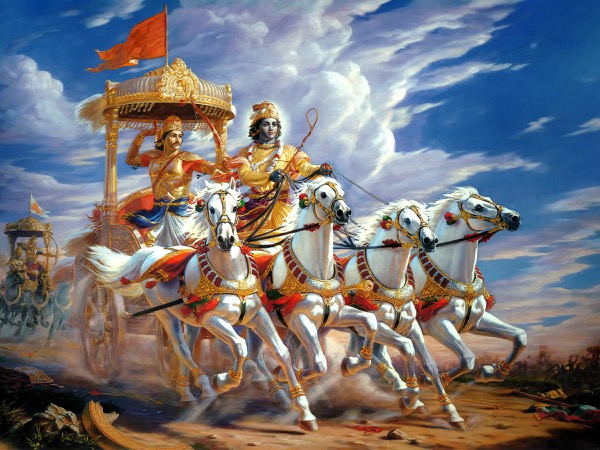
శ్రీమద్భగవద్గీతా మూలమ్ - ద్వాదశోఽధ్యాయః The twelfth chapter of the Bhagavad Gita, called భక్తియోగః or the యోగ of Devotion, unfolds on the battlefield of కురుక్షేత్ర, in the thick of the మహాభారత war. Here, అర్జున, the skilled archer and hero of the పాణ్డవాః, faces his deepest doubts and fears. Across from him stand the కౌరవాః, his own relatives and former friends. In this charged moment, శ్రీకృష్ణ, his charioteer and guide, offers wisdom that cuts through confusion and despair. In the previous chapter, శ్రీకృష్ణ revealed his cosmic form to అర్జున, showing the vast, all-encompassing reality behind the universe. That vision was overwhelming-both awe-inspiring and terrifying. అర్జున saw the endless power and majesty of the divine, but he was left with a pressing question: how should a person actually relate to such an infinite being? Is it better to worship the formless, all-pervading reality, or to focus on a personal form of God? Chapter 12 dives into this question with honesty and warmth. అర్జున asks directly: Who is the better yogi-the one who worships the unmanifest, or the one who serves the personal God with devotion? శ్రీకృష్ణ responds with clarity, explaining the nature of భక్తి-యోగ, the path of loving devotion. He describes the qualities of a true devotee, painting a vivid picture of someone who is steady, compassionate, and undisturbed by the ups and downs of life. The chapter is full of practical advice, showing that devotion is not just about rituals or emotions, but about transforming one's entire way of being. Throughout, శ్రీకృష్ణ emphasizes that the path of devotion is accessible to everyone, regardless of background or ability. He reassures అర్జున-and through him, all of us-that sincere love and surrender are more powerful than intellectual knowledge or rigid discipline. The teachings here are not abstract philosophy; they are meant to be lived, in the middle of struggle and uncertainty, just as అర్జున faces on the battlefield. Looking ahead, the next chapter will explore the difference between knowledge and ignorance, diving deeper into the qualities that lead a person toward liberation. But here, in భక్తియోగః, the focus is on the heart-on the power of devotion to bring peace, courage, and a sense of connection with the divine, even in the midst of chaos. ఓం శ్రీ పరమాత్మనే నమః Meaning (పదార్థ): Translation (భావార్థ): Commentary (అనుసన్ధాన): ఆది శఙ్కరాచార్య elucidates భక్తియోగః as a path uniquely suited for those whose intellects may find the subtlety of knowledge difficult, emphasizing devotion as a direct and heartfelt means to connect with the పరమాత్మన్. Meanwhile, శ్రీ రామానుజాచార్య stresses the universal accessibility of this path, highlighting that sincere devotion transcends social and intellectual boundaries, making it the ideal response to the spiritual needs of all seekers. This chapter's invocation, with its reverential నమః, aligns with the Upanishadic prayer అసతో మా సద్గమయ from the Bhadrayaka Upanishad, which means 'lead me from the unreal to the real,' underscoring the transformative power of devotion to guide the aspirant from ignorance to ultimate truth. Thus, the verse not only introduces the theme of devotion but also sets the tone of humility and surrender necessary for the practice, preparing the reader to engage with the teachings in a spirit of earnestness and receptivity. In modern life, this invocation can be compared to taking a moment of silence or setting an intention before starting an important task, reminding us to approach our goals with respect and focus. For example, before beginning a challenging project at work, one might pause to reflect on their purpose and motivation. Similarly, someone starting a new phase in life-like moving to a new city or beginning a relationship-can benefit from acknowledging a higher purpose or expressing gratitude. As a reflection exercise, take a few minutes before your next significant activity to silently dedicate your effort to something greater than yourself, noticing how this changes your mindset and approach. అర్జున ఉవాచ Meaning (పదార్థ): Translation (భావార్థ): Commentary (అనుసన్ధాన): The question posed by Arjuna invites a profound exploration of spiritual paths, as illuminated by revered Acharyas. ఆది శఙ్కరాచార్య explains that meditating on the formless, imperishable Brahman demands a subtle intellect and rigorous discrimination, making it a path suited for advanced seekers. In contrast, శ్రీ రామానుజాచార్య highlights the accessibility and transformative power of loving devotion to the personal form of Krishna, emphasizing surrender and grace as central. This distinction reflects the practical challenges and psychological dispositions involved in each approach, as also noted by శ్రీధర స్వామి. The Upanishadic prayer తమసో మా జ్యోతిర్గమయ (from the Bhadrayaka Upanishad) meaning 'Lead me from darkness to light,' encapsulates the aspirant's journey from ignorance to spiritual illumination, whether through devotion or knowledge. Thus, the verse's inquiry about the superior యోగ path not only contrasts these approaches but also encourages seekers to discern which method aligns best with their nature, preparing the ground for practical application in daily life. In modern life, this question is highly relevant. For example, some people find deep connection and peace through personal prayer, ritual, or singing devotional songs, while others are drawn to silent meditation on the formless or universal consciousness. A scientist might contemplate the vastness of the cosmos as a way to connect with the unmanifest, while a caregiver might feel closest to the divine through acts of loving service. To reflect: consider which approach resonates more with your temperament at this stage of life. Do you feel more drawn to a personal relationship with the divine, or to the idea of an all-pervading, formless reality? Try dedicating a week to each practice and observe how your mind and heart respond. శ్రీభగవానువాచ Meaning (పదార్థ): Translation (భావార్థ): Commentary (అనుసన్ధాన): ఆది శఙ్కరాచార్య elucidates that the phrase ఆవేశ్య మనహ్-fixing the mind on the Lord-is the very essence of devotion, representing the culmination of all yogic disciplines where mental absorption leads to supreme union. శ్రీ రామానుజాచార్య further stresses the importance of being నిత్య-యుక్తాహ్, or ever steadfast, interpreting this as the devotee's loving surrender and constant engagement with the Divine as their highest goal. This steadfastness is not mere emotional attachment but a disciplined and unwavering focus, supported by supreme faith (స్రద్ధయా పరయా). The Upanishadic injunction ఉత్తిష్ఠత జాగ్రత ప్రాప్య వరాన్నిబోధత from the కఠోపనిషద్ (1.3.14) meaning "Arise, awake, and learn by approaching the excellent ones" encourages aspirants to cultivate such alertness and dedication. Together, these teachings affirm that the Lord esteems those who maintain continuous, faithful mental absorption as the most perfect yogis, setting the foundation for applying this ideal in daily life. In modern life, this teaching can be seen in someone who, despite a busy schedule, keeps their mind anchored in a sense of higher purpose or connection to the Divine, whether through silent prayer, mindful work, or compassionate service. For example, a nurse caring for patients with empathy and seeing their work as an offering to something greater, or a student who studies diligently while remembering their values and aspirations, both embody this steadfastness and faith. As a reflection exercise, consider what activities or thoughts help you feel most connected to your deeper purpose, and how you might bring more consistent attention and faith into those moments throughout your day. యే త్వక్షరమనిర్దేశ్యమవ్యక్తం పర్యుపాసతే । Meaning (పదార్థ): Translation (భావార్థ): Commentary (అనుసన్ధాన): The verse's depiction of the imperishable, indescribable, and unmanifest ultimate reality as the object of meditation is deeply explored by ఆది శఙ్కరాచార్య, who identifies this as meditation on the nirguna Brahman, free from all attributes and beyond sensory perception. He explains అక్షరమ్ as the eternal substratum and అనిర్దేశ్యమ్ as that which transcends all verbal definitions. Similarly, శ్రీ రామానుజాచార్య interprets these qualities as describing the individual self (అత్మన్), distinct from the body and senses, whose meditation leads to liberation akin to devotion to the personal God. This understanding is supported by the Upanishadic prayer మృత్యోర్మా అమృతం గమయ from the Bhadrayaka Upanishad, which means 'lead me from death to immortality,' emphasizing the aspirant's journey from the transient to the eternal through such meditation. These insights highlight that meditating on this subtle, formless reality requires a mind capable of sustained concentration and detachment, preparing the seeker for the practical challenges of focusing on something beyond ordinary perception, as discussed in the following paragraph. In modern life, meditating on something formless and beyond description can be compared to focusing on abstract concepts like infinity or pure consciousness. For example, a scientist contemplating the vastness of space, or a philosopher reflecting on the nature of existence, is engaging in a similar kind of abstract meditation. Another example is someone practicing mindfulness by observing the flow of thoughts without attachment, seeking the unchanging awareness behind all experiences. As a reflection exercise, try sitting quietly and bringing your attention to the sense of being itself-without attaching it to any particular thought, image, or emotion. Notice how challenging it is to remain focused on something that cannot be seen or described, and observe what this reveals about the nature of your own awareness. సన్నియమ్యేన్ద్రియగ్రామం సర్వత్ర సమబుద్ధయః । Meaning (పదార్థ): Translation (భావార్థ): Commentary (అనుసన్ధాన): The profound insight of ఆది శఙ్కరాచార్య reveals that the attainment of the Supreme is accessible not only through external rituals but fundamentally through the inner discipline of restraining the senses and maintaining equanimity. This aligns with the verse's emphasis on సన్నియమ్య and సమ-బుద్ధయహ్, underscoring that true spiritual progress arises from self-mastery and impartiality. శ్రీ రామానుజాచార్య further elucidates that such aspirants meditate on the imperishable self, recognizing the same divine essence in all beings and thus dedicating themselves to universal welfare. This perspective resonates with the Upanishadic invocation మృత్యోర్మా అమృతం గమయ from the చక్షుశోపనిషద్, which prays to be led from mortality to immortality, symbolizing the transformative journey from sensory bondage to spiritual liberation. Together, these teachings affirm that cultivating inner balance and altruistic engagement is not merely preparatory but constitutes a direct path to union with the Divine, setting the stage for practical application in daily life. In modern life, this teaching can be seen in those who remain calm and fair-minded during both success and failure, and who dedicate themselves to causes that benefit others, such as volunteering, mentoring, or supporting community initiatives. For example, a leader who listens to criticism without anger and works for the good of their entire team, or a person who practices mindful self-control in the face of temptation while also helping those in need, both embody these qualities. To reflect on this verse, consider a recent situation where your senses or emotions pulled you strongly-how might you have responded differently with more self-restraint and a focus on the greater good? Try to identify one area where you can practice both inner balance and outward compassion this week. క్లేశోఽధికతరస్తేషామవ్యక్తాసక్తచేతసామ్ । Meaning (పదార్థ): Translation (భావార్థ): Commentary (అనుసన్ధాన): ఆది శఙ్కరాచార్య explains that the difficulty arises because meditating on the అవ్యక్త demands a complete renunciation of identification with the body and senses, which is a profound challenge for embodied beings. He highlights that this path requires intense inner discipline and detachment, as the unmanifest cannot be grasped by ordinary perception or imagination. Similarly, శ్రీ మధ్వాచార్య interprets the verse as a caution that while the unmanifest is indeed the supreme goal, it is attained with great difficulty by those still attached to their physical existence. This aligns with the Upanishadic prayer తమసో మా జ్యోతిర్గమయ from the బృహదారణ్యక ఉపనిషద్, which beseeches the seeker to be led from darkness (ignorance) to light (knowledge), emphasizing the arduous journey from the obscurity of the manifest world to the subtlety of the unmanifest. Together, these insights deepen our understanding of why devotion to a manifest form is often more accessible, and they prepare us to consider the practical implications of this teaching in daily life. In modern life, this teaching can be seen in the struggle people face when trying to connect with abstract ideals or invisible goals, such as pursuing inner peace or understanding the concept of pure consciousness. For example, someone trying to meditate on the idea of infinity or emptiness may find it much harder than focusing on a concrete image or mantra. Similarly, people often find it easier to relate to a personal mentor or role model than to an abstract principle. As a reflection exercise, consider what kinds of goals or ideals you find most motivating: are they concrete and personal, or abstract and formless? Notice how your mind responds differently to each, and reflect on which approach helps you grow more steadily. యే తు సర్వాణి కర్మాణి మయి సన్న్యస్య మత్పరాః । Meaning (పదార్థ): Translation (భావార్థ): Commentary (అనుసన్ధాన): The verse's emphasis on అనన్యేన యోగేన-single-minded devotion-is elucidated by ఆది శఙ్కరాచార్య, who explains that the mind must be restrained from wandering to other objects, aligning with the yogic principle of mental control as stated in పాతఞ్జలి యోగ సూత్రాణి (1.2): యోగశ్చిత్తవృత్తి నిరోధః, meaning యోగ is the cessation of mental fluctuations. శ్రీ రామానుజాచార్య further clarifies that dedicating all actions (సర్వాణి కర్మాణి మయి సన్న్యస్య) includes both worldly and spiritual duties, performed as offerings to the Supreme, thus transforming ordinary life into continuous worship. This integrated approach reflects a complete orientation of life toward God, not limited to isolated rituals but encompassing every thought and deed. Such a perspective naturally leads to practical application, as discussed in the following paragraph. In modern life, this teaching can be applied by consciously dedicating daily tasks-whether at work, home, or in relationships-to a higher purpose, rather than seeing them as isolated or self-serving. For example, a teacher might approach each lesson as an offering to the greater good, or a parent might see caring for their child as a form of service to the divine. Even routine chores can become acts of devotion when performed with the right intention. As a reflection exercise, consider one activity you do every day and ask yourself: How would it feel to perform this action as an offering, with full attention and without expecting personal reward? Try this for a week and notice any changes in your mindset or sense of fulfillment. తేషామహం సముద్ధర్తా మృత్యుసంసారసాగరాత్ । Meaning (పదార్థ): Translation (భావార్థ): Commentary (అనుసన్ధాన): ఆది శఙ్కరాచార్య explains that the ocean of సంసార is perilous and impossible to cross by mere human effort, emphasizing that Krishna Himself becomes the immediate సముద్ధర్తా-the deliverer-for those whose minds are fully absorbed in Him, as stated in the verse. Similarly, శ్రీ మధ్వాచార్య highlights the necessity of unwavering, single-pointed devotion, noting that Krishna's grace is both unique and swift for such devotees. This teaching aligns with the Upanishadic prayer from the బృహదారణ్యక ఉపనిషద్, మృత్యోర్మా అమృతం గమయ, which means "lead me from death to immortality," illustrating the soul's deepest aspiration for liberation from the cycle of birth and death. Together, these insights deepen the promise made in the first paragraph and prepare us to consider how this divine rescue manifests in the practical challenges of life. In modern life, this teaching can be seen in situations where people feel overwhelmed by challenges-such as facing a serious illness, financial crisis, or emotional turmoil. For someone who places unwavering trust in a higher purpose or divine presence, there is often a sense of support and unexpected solutions that arise, much like being rescued from deep waters. Another example is when a person, despite repeated failures, continues to focus their mind on positive values or a spiritual goal, and eventually finds a way out of despair. As a reflection exercise, consider a current difficulty you are facing. Imagine what it would mean to fully entrust this situation to a higher power or guiding principle, and observe how that changes your sense of burden or hope. మయ్యేవ మన ఆధత్స్వ మయి బుద్ధిం నివేశయ । Meaning (పదార్థ): Translation (భావార్థ): Commentary (అనుసన్ధాన): శ్రీ రామానుజాచార్య explains that fixing both the mind and intellect exclusively on Krishna reflects the highest form of surrender, where the seeker's entire being is absorbed in the supreme reality, ensuring immediate and unwavering devotion. మధుసూదన సరస్వతీ emphasizes the practical necessity of this focused dedication, noting that the mind's restless tendencies must be restrained and the intellect firmly established in the Divine to attain lasting spiritual union. This harmonization of emotional and rational faculties aligns perfectly with the Upanishadic injunction యోగశ్చిత్తవృత్తి నిరోధః from పాతఞ్జలి యోగ సూత్రాణి (1.2), meaning 'యోగ is the cessation of the fluctuations of the mind.' This supports the verse's teaching that by restraining mental distractions and centering both mind and intellect on the Divine, the devotee attains a state of doubtless abiding in God. Thus, the verse not only calls for exclusive devotion but also points toward the disciplined mental focus necessary for spiritual realization, preparing the ground for practical application in daily life. In modern life, this teaching can be applied by consciously redirecting your attention from distractions to a higher purpose or value, whether in moments of stress or during daily routines. For example, a student preparing for exams might focus both their motivation (mind) and study strategies (intellect) on their goal, minimizing distractions. Similarly, someone facing a difficult decision can align their feelings and reasoning toward what they truly value, leading to clarity and peace. As a reflection exercise, try setting aside a few minutes each day to bring both your thoughts and reasoning back to your core values or spiritual focus, noticing how this affects your sense of purpose and calm. అథ చిత్తం సమాధాతుం న శక్నోషి మయి స్థిరమ్ । Meaning (పదార్థ): Translation (భావార్థ): Commentary (అనుసన్ధాన): The verse's emphasis on steady practice is deeply elucidated by ఆది శఙ్కరాచార్య, who explains that when one cannot fix the mind unwaveringly on the Divine, the next best approach is persistent effort-repeatedly bringing the mind back to the object of meditation. శ్రీ రామానుజాచార్య further enriches this understanding by highlighting that such practice should be suffused with loving remembrance of the Lord's infinite auspicious qualities, which naturally attract and stabilize the mind. This aligns with the Upanishadic invocation తమసో మా జ్యోతిర్గమయ from the బృహదారణ్యక ఉపనిషద్, meaning "lead me from darkness to light," symbolizing the aspirant's journey from mental distraction to illumination through sustained effort. Together, these teachings affirm that spiritual progress is accessible to all through sincere, continuous practice, even if immediate perfection is not attained, thus bridging the initial recognition of fluctuating attention to the practical cultivation of focus described in the following paragraph. In modern life, this teaching is highly relevant for anyone struggling to maintain focus, whether in meditation, study, or work. For example, someone learning a new skill may find their attention wandering, but through regular, repeated practice, improvement comes. Similarly, a person trying to develop a daily meditation habit might initially face restlessness, but by gently returning to the practice each day, steadiness grows over time. As a reflection exercise, consider an area where you find it difficult to concentrate. Commit to a short, daily practice for a week, and notice how repetition begins to shift your ability to focus. This verse encourages patience with oneself and faith in the power of steady, repeated effort. అభ్యాసేఽప్యసమర్థోఽసి మత్కర్మపరమో భవ । Meaning (పదార్థ): Translation (భావార్థ): Commentary (అనుసన్ధాన): ఆది శఙ్కరాచార్య explains that dedicating all actions to the Divine gradually purifies the mind, preparing it for higher knowledge and liberation. This transformation of intention is crucial, as it turns ordinary deeds into spiritual practice. శ్రీ మధ్వాచార్య emphasizes that even simple actions, when performed with sincere devotion to the Lord, become powerful means of attaining perfection. Supporting this, the కఠోపనిషద్ (1.3.14) states, ఉత్తిష్ఠత జాగ్రత ప్రాప్య వరాన్నిబోధత, urging the seeker to "Arise, awake, and learn by approaching the excellent ones," highlighting the importance of conscious effort and guidance on the spiritual path. Thus, Krishna's instruction to become మత్-కర్మ-పరమహ్ not only offers an accessible alternative to rigorous practice but also lays the foundation for steady spiritual progress, which the next paragraph will relate to everyday life. In modern life, this teaching can be applied by dedicating your daily work-whether it is your job, household chores, or helping others-to a higher purpose or ideal. For example, a teacher might see their work as service to humanity, or a parent might view caring for their family as an offering. Even routine tasks like cooking or cleaning can be done with mindfulness and a sense of devotion. As a reflection exercise, consider one activity you do every day and consciously dedicate it to something greater than yourself. Notice how this shift in intention affects your motivation and sense of fulfillment. అథైతదప్యశక్తోఽసి కర్తుం మద్యోగమాశ్రితః । Meaning (పదార్థ): Translation (భావార్థ): Commentary (అనుసన్ధాన): ఆది శఙ్కరాచార్య explains that మద్-యోగ-అశ్రితహ్ signifies performing all actions as offerings to the Divine, renouncing personal gain, which is essential when higher devotional practices are difficult. శ్రీ రామానుజాచార్య further clarifies that this renunciation of the fruits of all actions purifies the mind and removes ignorance, enabling the aspirant to realize their complete dependence on the Lord. This detachment from outcomes fosters deeper love and surrender. The కఠోపనిషద్ (1.3.14) states ఉత్తిష్ఠత జాగ్రత ప్రాప్య వరాన్నిబోధత, urging one to 'Arise, awake, and learn by approaching the excellent ones,' emphasizing the need for self-discipline and mindful effort. Together, these teachings show that even if one cannot maintain constant devotion, cultivating self-control and renouncing attachment to results is a practical and effective path toward spiritual growth, preparing the aspirant for the more advanced practices discussed next. In modern life, this teaching can be applied by doing your daily work-whether at your job, in your studies, or in your relationships-without obsessing over the outcome or seeking constant validation. For example, a student can focus on learning and putting in honest effort, rather than being anxious about grades. An employee can contribute sincerely to a project, letting go of worries about recognition or promotion. A reflection exercise: At the end of each day, recall one action you performed and consciously let go of any lingering attachment to its result. Notice how this affects your sense of peace and motivation. Over time, this practice can help reduce stress and foster a more balanced, contented approach to life. శ్రేయో హి జ్ఞానమభ్యాసాజ్జ్ఞానాద్ధ్యానం విశిష్యతే । Meaning (పదార్థ): Translation (భావార్థ): Commentary (అనుసన్ధాన): ఆది శఙ్కరాచార్య clarifies that while disciplined అభ్యాస or practice is important, it is the knowledge (జ్ఞానమ్) gained through scriptural study and discrimination that is superior, as it purifies the intellect. Meditation (ధ్యానమ్) then deepens this knowledge by steadying the mind and focusing it inward, making it more transformative. Ultimately, renunciation of the fruits of actions (కర్మఫల-త్యాగః) is the highest step, because it removes attachment and desire, the root causes of mental disturbance, leading directly to peace (శాన్తిః). శ్రీ మధ్వాచార్య emphasizes that this renunciation is not mere inaction but a selfless attitude that frees one from bondage, regardless of the path followed. This progression aligns with the Upanishadic teaching న జాయతే మ్రియతే వా విపశ్చిత్ (kaThOpaniShad 1.2.18), meaning the true Self neither takes birth nor dies, pointing to the eternal peace attained by transcending worldly attachments. Thus, the verse guides seekers from external effort to inner realization and sets the stage for applying these principles practically in daily life, as discussed next. In modern life, this teaching can be seen in the journey from simply following routines (like going to the gym or studying for exams) to truly understanding why those actions matter, then moving to a state where one is fully absorbed in the activity itself, and finally acting without being anxious about the outcome-such as working hard on a project without obsessing over recognition or rewards. Another example is volunteering: first, you might do it out of obligation, then learn about the cause, then serve with focused attention, and ultimately find peace by letting go of expectations for thanks or results. As a reflection exercise, consider an area where you are attached to results-can you consciously perform the action for its own sake and notice if this brings you greater calm? అద్వేష్టా సర్వభూతానాం మైత్రః కరుణ ఏవ చ । Meaning (పదార్థ): Translation (భావార్థ): Commentary (అనుసన్ధాన): ఆది శఙ్కరాచార్య elucidates that the qualities described in this verse reflect the natural disposition of a liberated soul who perceives all beings as manifestations of the same Self, thus eliminating any basis for hatred. He emphasizes కరుణః-compassion-as the heart of this unity, extending kindness to all who suffer. శ్రీ రామానుజాచార్య interprets these traits as practical virtues for the devotee actively engaged in the world, who recognizes the divine will behind all actions and therefore harbors no ill-will even toward those who cause harm. This aligns with the Upanishadic injunction న జాయతే మ్రియతే వా విపశ్చిత్ from the కఠోపనిషద్ (1.2.18), meaning the true Self is never born nor does it die, nor is it tainted by ignorance-implying that the devotee's identity transcends transient ego and attachments. This understanding fosters the equanimity and forgiveness described in the verse, bridging the inner realization of unity with outward conduct. Such teachings prepare the aspirant to embody these qualities in daily life, as discussed in the following paragraph. In modern life, these qualities can be practiced by responding to difficult coworkers or family members with understanding instead of anger, by volunteering to help those in need without expecting anything in return, and by letting go of grudges when someone wrongs us. For example, if a colleague takes credit for your work, instead of reacting with resentment, try to see the bigger picture and respond with patience. Or, when faced with personal loss, strive to maintain inner balance rather than being swept away by sorrow. As a reflection exercise, consider a recent situation where you felt wronged or upset-ask yourself how you might have responded differently if you were embodying the qualities described in this verse. What would it look like to be truly forgiving and even-minded in that moment? సన్తుష్టః సతతం యోగీ యతాత్మా దృఢనిశ్చయః । Meaning (పదార్థ): Translation (భావార్థ): Commentary (అనుసన్ధాన): The profound insights of ఆది శఙ్కరాచార్య illuminate that సన్తుష్టః-contentment-is rooted in an inner state of equanimity, unaffected by external gains or losses, reflecting a mind steady in detachment and peace. He explains that dedicating the mind and intellect to Krishna involves unwavering focus and surrender, embodying the yogic ideal of యోగశ్చిత్తవృత్తి నిరోధః from the పాతఞ్జలి యోగ సూత్రాణి, meaning the cessation of mental fluctuations. Meanwhile, శ్రీ రామానుజాచార్య stresses the importance of దృఢనిశ్చయః, firm conviction, which anchors the devotee in the knowledge of the self and the Lord's supreme reality, enabling all actions to become offerings to Krishna. These teachings deepen the understanding of the qualities described in the first paragraph and prepare us to consider how such steadfastness and dedication can be cultivated in daily life. In modern life, these qualities can be cultivated in practical ways. For example, someone facing job uncertainty might practice contentment by focusing on gratitude for what they have, rather than anxiety about what is missing. A student preparing for exams can demonstrate self-control by sticking to a study schedule and resisting distractions. Firm resolve shows up when someone continues their meditation or spiritual practice even when results are not immediately visible. Dedicating mind and intellect to a higher purpose could mean making decisions based on ethical values or a sense of service, rather than just personal gain. As a reflection exercise, consider a recent situation where you felt dissatisfied or restless. Ask yourself: Was my mind focused on what I lack, or could I have found contentment in the present moment? How might dedicating your thoughts and decisions to a higher ideal change your response next time? యస్మాన్నోద్విజతే లోకో లోకాన్నోద్విజతే చ యః । Meaning (పదార్థ): Translation (భావార్థ): Commentary (అనుసన్ధాన): ఆది శఙ్కరాచార్య explains that the devotee described in this verse is one whose mind is firmly controlled, so that neither does he disturb others nor is he disturbed by the world. This mastery over the mind and senses leads to freedom from హర్ష (excessive elation) and అమర్ష (intolerance), qualities that cause agitation. Similarly, శ్రీ మధ్వాచార్య highlights that such equanimity is a mark of spiritual maturity, where the devotee's mind remains steady and unaffected by external circumstances due to unwavering devotion. This inner tranquility aligns with the yogic principle of controlling the fluctuations of the mind, as expressed in పాతఞ్జలి యోగ సూత్రాణి (1.2): యోగశ్చిత్తవృత్తి నిరోధః, meaning 'యోగ is the cessation of the modifications of the mind.' Together, these insights deepen the understanding that the verse calls for a profound transformation beyond mere emotional suppression, fostering a natural state of peacefulness that benefits both the individual and society. In modern life, this teaching can be seen in someone who remains calm and composed even when faced with criticism at work, or who does not retaliate when provoked in social situations. Another example is a person who, despite facing uncertainty or change, does not let fear or anxiety dictate their actions, and instead responds thoughtfully. A third scenario could be someone who, even when achieving success, does not become arrogant or overly excited, nor does failure make them bitter or impatient. For personal reflection: recall a recent situation where you felt disturbed by someone's words or actions. How might you have responded differently if you embodied the qualities described in this verse? Consider what practical steps you could take to reduce both the agitation you feel and the agitation you might cause others. అనపేక్షః శుచిర్దక్ష ఉదాసీనో గతవ్యథః । Meaning (పదార్థ): Translation (భావార్థ): Commentary (అనుసన్ధాన): The verse's emphasis on renouncing attachment to results and maintaining purity in action is deeply explored by ఆది శఙ్కరాచార్య, who explains సర్వారమ్భ-పరిత్యాగీ as the surrender of all actions motivated by selfish desires, highlighting a mind steady in equanimity. శ్రీ రామానుజాచార్య complements this by stressing the devotee's adherence to scriptural duties with skill and detachment, ensuring that actions are performed without personal craving or disturbance. This aligns with the Upanishadic teaching న జాయతే మ్రియతే వా విపశ్చిత్ from the కఠోపనిషద్ (1.2.18), which means the wise soul neither takes birth nor dies, symbolizing transcendence beyond worldly fluctuations. Together, these insights deepen our understanding of the qualities described in the first paragraph and prepare us to recognize how such detachment and purity can manifest in everyday life, as discussed next. In modern life, these qualities can be seen in someone who works diligently at their job without obsessing over promotions or praise, or in a person who volunteers for a cause without seeking recognition. Another example is a student who studies sincerely out of love for learning, not just for grades or competition. To reflect on this verse, consider: In what areas of your life do you act with hidden expectations or anxieties? Try to identify one activity this week where you can let go of personal gain and simply focus on doing it with purity and skill, observing how this shift affects your peace of mind. యో న హృష్యతి న ద్వేష్టి న శోచతి న కాఙ్క్షతి । Meaning (పదార్థ): Translation (భావార్థ): Commentary (అనుసన్ధాన): The profound detachment described in this verse is elucidated by ఆది శఙ్కరాచార్య, who explains that such a devotee transcends all dualities and attains a serene equanimity, unaffected by joy or sorrow. శ్రీ రామానుజాచార్య further clarifies that renouncing both good and evil deeds is essential because attachment to merit or demerit alike binds the soul; thus, the devotee's focus remains solely on loving surrender to the Divine. This state of inner steadiness is not mere indifference but arises from intense devotion that purifies the mind and stabilizes the emotions. The Upanishadic injunction న జాయతే మ్రియతే వా విపశ్చిత్ from the కఠోపనిషద్ (1.2.18) supports this understanding by affirming the eternal nature of the Self, which neither is born nor dies, encouraging the devotee to rise above transient emotional fluctuations. This insight naturally leads to practical application, as discussed in the following paragraph, where maintaining such equanimity in daily life becomes a means of embodying devotion. In modern life, this teaching can be applied when facing both praise and criticism at work-remaining calm and not letting either affect your self-worth. If you experience a financial setback or a personal loss, practicing not to dwell in sorrow or longing helps maintain mental balance. Similarly, when achieving a goal, avoid becoming overly attached to the success or fearing future failure. As a reflection exercise, think of a recent situation where you felt strong joy or disappointment. Ask yourself: Could I have responded with more equanimity? What would it look like to act with devotion, letting go of attachment to the outcome? సమః శత్రౌ చ మిత్రే చ తథా మానాపమానయోః । Meaning (పదార్థ): Translation (భావార్థ): Commentary (అనుసన్ధాన): ఆది శఙ్కరాచార్య elucidates that the yogi described here has attained a state beyond all dualities, remaining unmoved by both honor and dishonor, friend and foe, embodying the సమః ideal of unwavering equanimity introduced in the previous paragraph. He explains that such steadiness arises from the realization of the Self's transcendence over transient experiences, resonating with the Upanishadic injunction న జాయతే మ్రియతే వా విపశ్చిత్ from the కఠోపనిషద్ (1.2.18), which affirms the imperishable nature of the true Self that neither is born nor dies. Meanwhile, శ్రీ రామానుజాచార్య emphasizes that this equanimity is not mere mental discipline but is rooted in loving surrender to the Divine, where the devotee's mind is firmly established in God, making external fluctuations of praise or blame inconsequential. Together, these perspectives deepen the understanding of సఙ్గ-వివర్జితః as both a transcendental state and a devotional reality, thus preparing the ground for practical application in daily life as discussed in the following paragraph. In modern life, this teaching can be applied when facing criticism at work or praise in social circles-remaining steady without letting either inflate or deflate your self-worth. Another example is dealing with physical discomfort, such as enduring a cold winter or a hot summer, without excessive complaint or elation. A third scenario is navigating relationships, where one might encounter both friends and adversaries; the challenge is to treat both with fairness and composure. As a reflection exercise, consider a recent situation where you felt slighted or honored. Ask yourself: did your mood swing dramatically, or were you able to maintain inner balance? What would it look like to respond with equanimity next time? తుల్యనిన్దాస్తుతిర్మౌనీ సన్తుష్టో యేన కేనచిత్ । Meaning (పదార్థ): Translation (భావార్థ): Commentary (అనుసన్ధాన): The profound qualities described in this verse have been elucidated by revered Acharyas who deepen our understanding of equanimity and devotion. ఆది శఙ్కరాచార్య explains that being unaffected by praise or blame reflects a mind purified by knowledge, recognizing these as transient and external phenomena. He highlights that such steadfastness is rooted in the practice of భక్తి, which leads to ultimate realization. Similarly, శ్రీ రామానుజాచార్య interprets the state of being అనికెత-homeless-not as physical homelessness but as freedom from attachment to worldly abodes, symbolizing firm resolve in self-knowledge and surrender to the Divine. This inner firmness supports the devotee's ability to remain silent and content amidst all circumstances. The Upanishadic prayer తమసో మా జ్యోతిర్గమయ (from the Bhadrayaka Upanishad) meaning 'Lead me from darkness to light,' complements this teaching by urging the aspirant to transcend ignorance and remain steady in spiritual illumination. Together, these insights bridge the verse's emphasis on inner stability with practical devotion, preparing us to embody these virtues in daily life. In modern life, these teachings can be seen in someone who does not let workplace criticism or praise affect their self-worth, or in a person who adapts easily to new environments without clinging to a particular home or comfort zone. Another example is someone who practices mindful speech, choosing silence over gossip or unnecessary arguments. To reflect on this verse, consider a recent situation where you received either criticism or praise. How did you react internally? Try to observe your response next time, aiming to maintain inner calm and focus on your deeper values rather than external validation. This practice can help cultivate steadiness and devotion in everyday life. యే తు ధర్మ్యామృతమిదం యథోక్తం పర్యుపాసతే । Meaning (పదార్థ): Translation (భావార్థ): Commentary (అనుసన్ధాన): The profound significance of this verse is illuminated by ఆది శఙ్కరాచార్య, who explains that ధర్మ్యామృతమ్ represents the highest form of virtue that leads the soul toward liberation, making such devotees supremely dear to Krishna. శ్రీ రామానుజాచార్య further elaborates that this path of devotion is both a sacred duty and a source of bliss, where the journey itself is as fulfilling as the ultimate goal. This aligns with the Upanishadic invocation మృత్యోర్మా అమృతం గమయ from the బృహదారణ్యక ఉపనిషద్, which prays to be led from death to immortality, symbolizing the transformative power of sincere faith and righteous living. These teachings emphasize that unwavering devotion, grounded in virtuous conduct and heartfelt faith, purifies the practitioner and draws them closer to the Divine. This understanding naturally leads to practical application, as explored in the following paragraph. In modern life, this teaching can be seen in someone who lives with integrity, guided by ethical principles, and who pursues their spiritual ideals with steady faith, even when faced with challenges. For example, a person who volunteers selflessly, motivated by a sense of higher purpose, or someone who maintains honesty and compassion in a competitive workplace, embodying their values without compromise. Another example is someone who, despite setbacks, continues their meditation or prayer practice, trusting in its value. As a reflection exercise, consider what it means for you to make your highest values or spiritual ideals the central focus of your life. How might your daily actions change if you approached them as expressions of devotion and faith? ఓం తత్సదితి శ్రీమద్భగవద్గీతాసూపనిషత్సు బ్రహ్మవిద్యాయాం యోగశాస్త్రే Meaning (పదార్థ): Translation (భావార్థ): Commentary (అనుసన్ధాన): The concluding verse's invocation of ఓం తత్సత్ has been deeply elucidated by ఆది శఙ్కరాచార్య, who explains it as a dedication of the teachings to the ultimate non-dual reality, affirming the highest truth that transcends all distinctions. శ్రీ రామానుజాచార్య emphasizes the centrality of భక్తియోగః in this chapter, underscoring devotion as a direct and potent means to realize the Divine. This aligns with the Upanishadic aspiration expressed in అసతో మా సద్గమయ from the Bhadrayaka Upanishad, which means "lead me from the unreal to the real," highlighting the spiritual journey from ignorance to truth that devotion facilitates. Together, these perspectives affirm the sanctity and authority of the Gita's teachings, linking the primordial sound ఓం and the highest truth తత్సత్ to the practical path of loving surrender. This understanding naturally leads to the practical application of concluding one's efforts with gratitude and dedication, as discussed next. In modern life, this verse can be seen as a reminder to conclude our efforts and studies with a sense of gratitude and dedication to a higher purpose, much like ending a project or a day with a moment of reflection or prayer. For example, after completing a challenging task at work or finishing a period of study, one might pause to acknowledge the support received and dedicate the results to the greater good. Similarly, in group settings, ending meetings or gatherings with a moment of silence or a positive affirmation can foster unity and purpose. As a reflection exercise, consider how you might bring a sense of closure and dedication to your daily activities, and what it would mean to mentally offer your actions to something beyond your own self-interest.
|