
| | English | | Devanagari | | Telugu | | Tamil | | Kannada | | Malayalam | | Gujarati | | Odia | | Bengali | | |
| | Marathi | | Assamese | | Punjabi | | Hindi | | Samskritam | | Konkani | | Nepali | | Sinhala | | Grantha | | |
|
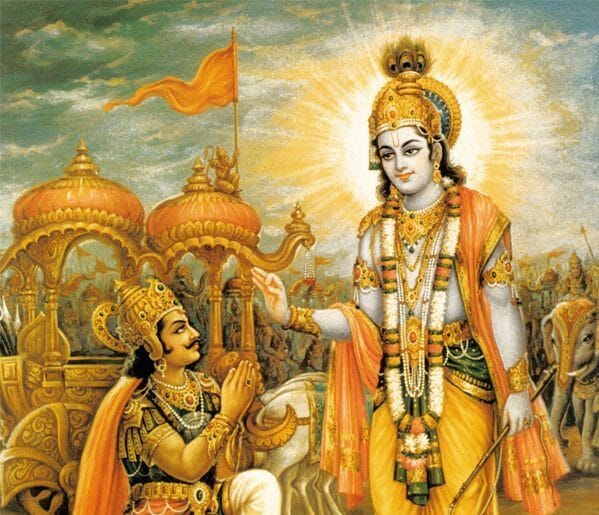
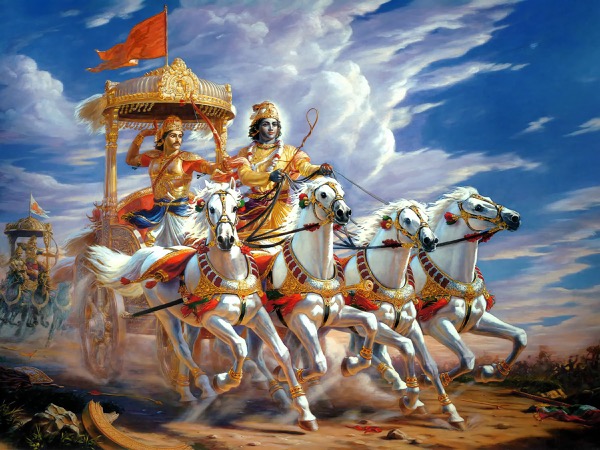
ஶ்ரீமத்³ப⁴க³வத்³கீ³தா பாராயண - ஸப்தமோத்⁴யாய: The battlefield of குருக்ஷேத்ர is alive with tension. On one side stand the பாண்ட³வா:, led by அர்ஜுன, and on the other, the கௌரவா:. In the heart of this chaos, the மஹாபா⁴ரத gives us a moment of stillness: a deep conversation between ஶ்ரீக்ருஷ்ண and அர்ஜுன. As the armies wait, அர்ஜுன is torn by doubt and despair, and ஶ்ரீக்ருஷ்ண becomes his guide, revealing truths that go far beyond the battlefield. Chapter 7, called ஜ்ஞானவிஜ்ஞானயோக:³ (the Yoga of knowledge and lived realization), marks a turning point in the கீ³தா. Here, ஶ்ரீக்ருஷ்ண shifts from discussing the nature of action and duty to unveiling the deeper mysteries of knowledge (ஜ்ஞான) and realization (விஜ்ஞான). This is not just book learning or philosophy; it is the kind of understanding that transforms how you see yourself and the world. Imagine standing on a mountaintop: it is one thing to know about the view, and another to actually see the landscape stretching before you. That is the difference between ஜ்ஞான and விஜ்ஞான. The previous chapters have built a foundation. ஶ்ரீக்ருஷ்ண first taught அர்ஜுன about the eternal nature of the ஆத்மா and the importance of acting without attachment (கர்ம-யோக³). Then, in Chapter 6, he introduced the path of meditation and self-mastery (ஜ்ஞான-யோக³), showing how inner discipline can lead to peace. But அர்ஜுன's questions are not fully answered. He still wonders: What is the ultimate reality? How can one truly know and connect with the divine? In this chapter, ஶ்ரீக்ருஷ்ண reveals his own cosmic nature. He explains how all beings and elements, from the earth beneath our feet to the thoughts in our minds, are expressions of his energy. He describes the difference between ordinary knowledge and the wisdom that comes from direct experience of the divine. The chapter is filled with vivid examples: just as pearls are strung on a thread, all things are held together by the presence of the divine, often unseen but essential. ஶ்ரீக்ருஷ்ண also introduces the idea of ப⁴க்தி-யோக³-the path of loving devotion. He explains that while many seek him through study or ritual, the most direct way is through wholehearted love and surrender. This is a chapter for anyone who has ever wondered about the meaning behind the universe, or who has felt a longing for something greater than themselves. Looking ahead, the next chapter will dive deeper into the nature of the divine, exploring how the infinite takes countless forms and how people approach the divine in different ways. But here, in ஜ்ஞானவிஜ்ஞானயோக:³, the groundwork is laid: understanding and experience, knowledge and realization, are both needed to walk the spiritual path. The conversation between ஶ்ரீக்ருஷ்ண and அர்ஜுன invites us to open our minds and hearts to a reality that is both vast and intimately close. ஓம் ஶ்ரீ பரமாத்மனே நம: Meaning (பதா³ர்த²): Translation (பா⁴வார்த²): Commentary (அனுஸந்தா⁴ன): The distinction between ஜ்ஞான and விஜ்ஞான is deeply explored by ஆதி³ ஶங்கராசார்ய and ஶ்ரீ மத்⁴வாசார்ய, who clarify that mere intellectual knowledge (ஜ்ஞான) is incomplete without the transformative, experiential realization (விஜ்ஞான) of the Supreme. ஆதி³ ஶங்கராசார்ய explains that ஜ்ஞான involves scriptural study and conceptual understanding, while விஜ்ஞான is the living wisdom that dawns through direct perception and devotion. Similarly, ஶ்ரீ மத்⁴வாசார்ய emphasizes that true knowledge manifests only when it leads to unwavering faith and surrender, moving beyond theoretical learning. This progression aligns with the Upanishadic invocation அஸதோ மா ஸத்³க³மய from the ப்³ருஹதா³ரண்யக உபனிஷத்³, which prays to be led from the unreal to the real, symbolizing the journey from superficial knowledge to profound realization. Thus, the chapter's title invites the seeker to transcend mere study and enter into a dynamic, lived experience of spiritual truth, preparing the ground for practical application in daily life. In modern life, this distinction is relevant whenever we move from reading about a skill to actually practicing it-like learning about healthy eating versus consistently making nutritious choices, or understanding mindfulness in theory versus experiencing calm through meditation. Another example is knowing the importance of empathy but only truly grasping it when we comfort a friend in distress. As a reflection exercise, consider an area where you possess knowledge but have yet to embody it fully. What small step could you take today to transform that knowledge into lived experience? ஶ்ரீ ப⁴க³வானுவாச Meaning (பதா³ர்த²): Translation (பா⁴வார்த²): Commentary (அனுஸந்தா⁴ன): ஆதி³ ஶங்கராசார்ய elucidates that the phrase மயி ஆஸக்த-மனா: underscores the necessity of unwavering mental attachment to the Supreme as the foundation for true knowledge, emphasizing that such focused devotion excludes all other distractions. Complementing this, ஶ்ரீ ராமானுஜாசார்ய interprets மத்³-ஆஸ்ரய: as complete surrender and exclusive reliance on Krishna, highlighting that this refuge is not merely intellectual but a heartfelt dependence that transforms the seeker's entire being. This exclusive surrender and disciplined focus align with the essence of யோக³, as described in the பாதஞ்ஜலி யோக³ ஸூத்ராணி (1.2): யோக³ஶ்சித்தவ்ருத்தி நிரோத:⁴, meaning யோக³ is the cessation of the fluctuations of the mind. This sutra supports the verse's teaching by showing that controlling the mind's distractions through யோக³ enables the seeker to maintain steadfast attachment and refuge in the Lord, leading to doubtless and complete knowledge. Thus, the verse integrates mental focus, disciplined practice, and surrender, forming a cohesive path that the following paragraph will relate to practical daily application. In modern life, this teaching can be applied by dedicating time each day to focused meditation or prayer, consciously setting aside distractions and centering the mind on a higher purpose or ideal. For example, someone facing uncertainty in their career might practice letting go of anxieties by mentally surrendering outcomes to a trusted higher power, while maintaining steady effort. Another example is a student preparing for exams who, instead of being overwhelmed by doubt, chooses to trust in their preparation and remain calm, drawing strength from a sense of inner support. As a reflection exercise, consider: What does it mean for you to take refuge in something or someone? Identify an area where you tend to rely on external supports, and experiment with shifting your trust inward or upward, focusing your mind and effort with single-pointed attention. ஜ்ஞானம் தேஹம் ஸவிஜ்ஞானம் இத³ம் வக்ஷ்யாம்யஶேஷத: । Meaning (பதா³ர்த²): Translation (பா⁴வார்த²): Commentary (அனுஸந்தா⁴ன): ஆதி³ ஶங்கராசார்ய explains that this verse assures the revelation of the supreme knowledge which unites ஜ்ஞானம் (intellectual understanding) with விஜ்ஞானம் (direct realization), thus transcending mere theoretical learning. Meanwhile, ஶ்ரீ ராமானுஜாசார்ய highlights that this knowledge distinctly reveals Krishna's unique and auspicious nature, setting Him apart from all else, both animate and inanimate. This teaching is complete and final, leaving no further knowledge to be sought. The Upanishadic prayer ந ஜாயதே ம்ரியதே வா விபஶ்சித் from the கடோ²பனிஷத்³ (1.2.18) supports this by affirming the eternal, unchanging nature of the Self, which is the ultimate object of this knowledge. Thus, Krishna prepares Arjuna to receive a transformative wisdom that ends all doubts and spiritual searching, paving the way for practical application in life. In modern life, this verse can be compared to finally understanding a complex subject so thoroughly that you no longer feel the need to keep searching for answers elsewhere. For example, a scientist who grasps the fundamental laws of physics, or a person who discovers their true purpose after much searching, experiences a similar sense of completeness. Another example is someone who, after years of seeking, finds a spiritual practice that brings inner peace and no longer feels restless or incomplete. As a reflection exercise, consider an area of your life where you are still searching for answers. What would it mean to receive knowledge so complete that your search would end? How would it change your daily actions and sense of fulfillment? மனுஷ்யாணாம் ஸஹஸ்ரேஷு கஶ்சித்³யததி ஸித்³த⁴யே । Meaning (பதா³ர்த²): Translation (பா⁴வார்த²): Commentary (அனுஸந்தா⁴ன): The rarity of true knowledge of the Supreme is underscored by ஆதி³ ஶங்கராசார்ய, who explains that while many purify their minds through disciplined practice, only a few attain the highest truth. He emphasizes that intellectual effort alone cannot reveal the Divine; rather, one must transcend ignorance, as expressed in the Upanishadic prayer தமஸோ மா ஜ்யோதிர்க³மய ('Lead me from darkness to light'), highlighting the necessity of divine illumination. ஶ்ரீ ராமானுஜாசார்ய further clarifies that sincere striving must be accompanied by the Lord's grace, without which even the most diligent seekers cannot fully realize Him. This teaching connects the rarity of spiritual perfection described in the verse to the practical need for both effort and surrender, preparing us to reflect on how such rare attainment manifests in everyday life. In modern life, this teaching can be seen in the way many people pursue self-improvement, but only a few are willing to dedicate themselves fully to inner growth. For example, in a large company, thousands may work hard, but only a handful become true visionaries who understand the deeper purpose of their work. Similarly, among those who practice meditation or யோக³, very few persist long enough to experience profound transformation. As a reflection exercise, consider your own pursuits: Are you striving for surface-level success, or are you seeking a deeper understanding of yourself and your purpose? What steps could you take to move closer to genuine realization in your own life? பூ⁴மிராபோனலோ வாயு: க²ம் மனோ பு³த்³தி⁴ரேவ ச । Meaning (பதா³ர்த²): Translation (பா⁴வார்த²): Commentary (அனுஸந்தா⁴ன): The interpretation of this eightfold division of ப்ரக்ருதி is deepened by ஆதி³ ஶங்கராசார்ய, who explains that these elements are not merely gross but include their subtle forms, serving as the fundamental constituents of the manifest universe. He clarifies that மனஸ், பு³த்³தி⁴:, and அஹங்கார: are subtle faculties essential for the operation of consciousness within material nature. Complementing this, ஶ்ரீ மத்⁴வாசார்ய highlights the distinction between the Lord's independent nature and these dependent material and mental aspects, emphasizing that all eightfold divisions function under the divine will as the material cause of creation. This understanding aligns with the Upanishadic invocation தமஸோ மா ஜ்யோதிர்க³மய from the ப்³ருஹதா³ரண்யக உபனிஷத்³, which beseeches to be led from darkness (ignorance) to light (knowledge), symbolizing the movement from the material and subtle elements of nature toward spiritual illumination. Thus, the verse not only enumerates the components of ப்ரக்ருதி but also points to their role in the soul's journey, bridging the cosmic framework with individual experience. In modern life, these eight aspects can be seen in how we interact with the world: the physical elements make up our environment and bodies, while mind, intellect, and ego shape our thoughts, decisions, and sense of self. For example, when facing a stressful situation at work, it is the interplay of mind (processing emotions), intellect (analyzing solutions), and ego (sense of personal stake) that determines our response. Another example is in creative pursuits, where the physical elements provide materials, but the mind and intellect drive innovation. As a reflection exercise, consider a recent challenge and identify how each of these eight aspects played a role in your experience. This helps to recognize the interconnectedness of the material and psychological realms in daily life. அபரேயமிதஸ்த்வன்யாம் ப்ரக்ருதிம் வித்³தி⁴ மே பராம் । Meaning (பதா³ர்த²): Translation (பா⁴வார்த²): Commentary (அனுஸந்தா⁴ன): ஆதி³ ஶங்கராசார்ய explains that the அபரா ப்ரக்ருதி is insentient and the source of bondage, while the பராம் ப்ரக்ருதி is the conscious principle, the true Self that knows the body and sustains life. ஶ்ரீ ராமானுஜாசார்ய similarly identifies this higher nature as the individual soul, distinct from inert matter and responsible for upholding the universe. This distinction is echoed in the கடோ²பனிஷத்³ (1.2.18) verse ந ஜாயதே ம்ரியதே வா விபஶ்சித், which means the Self neither takes birth nor dies, highlighting its eternal and conscious nature. This teaching connects directly to the previous verse's emphasis on two types of nature and prepares us to understand how the conscious principle actively sustains and animates the world, a theme that resonates in practical life as we will see next. In modern life, this teaching can be seen in how technology and resources (the lower nature) are inert without the creativity and drive of people (the higher nature). For example, a computer is useless without a user, and a business cannot thrive without the passion and intelligence of its employees. Similarly, a family home is just a structure until it is filled with relationships and care. Reflect for a moment: In your daily activities, do you focus more on external resources or on nurturing the conscious energy-your intentions, values, and connections-that truly sustains your world? Consider one area where you can shift your attention from material concerns to the quality of your inner engagement. ஏதத்³யோனீனி பூ⁴தானி ஸர்வாணீத்யுபதா⁴ரய । Meaning (பதா³ர்த²): Translation (பா⁴வார்த²): Commentary (அனுஸந்தா⁴ன): The profound teaching of this verse is illuminated through the perspectives of revered Acharyas who deepen our understanding of the Divine as the origin and dissolution of all beings. ஆதி³ ஶங்கராசார்ய interprets the two sources mentioned as the dual aspects of மய and ப்⁴ரஹ்மன், emphasizing the non-dual reality where all phenomena arise and ultimately merge back into the supreme Self. In contrast, ஶ்ரீ ராமானுஜாசார்ய highlights the inseparable relationship between the soul and matter, both sustained by the Supreme Person, who is the sovereign cause and final refuge of the universe. This unity in diversity is echoed in the Upanishadic prayer ம்ருத்யோர்மா அம்ருதம் க³மய from the சக்ஷுஶோபனிஷத்³, which means 'lead me from death to immortality,' symbolizing the journey from the transient material existence to the eternal Divine source. This verse and its interpretations invite us to recognize the cyclical nature of creation and dissolution as an expression of the Divine will, preparing us to reflect on how this cosmic process relates to our own experiences and transformations. In modern life, this teaching can be reflected upon in several ways. For example, consider how all technological advancements and societal changes ultimately stem from the interplay of human consciousness and the material world-both of which are expressions of the same underlying reality. When facing the loss of a loved one or the end of a significant phase in life, remembering that endings are as much a part of the cosmic process as beginnings can bring comfort and perspective. As a reflection exercise, take a moment to observe something in your environment-a plant, a gadget, or even your own thoughts-and contemplate how it has emerged from a combination of material and conscious factors, both of which are rooted in a deeper source. This awareness can foster a sense of connection and humility in the face of the universe's vast cycles. மத்த: பரதரம் நான்யத் கிஞ்ஜித³ஸ்தி த⁴னஞ்ஜய । Meaning (பதா³ர்த²): Translation (பா⁴வார்த²): Commentary (அனுஸந்தா⁴ன): ஆதி³ ஶங்கராசார்ய elucidates that Krishna is the supreme substratum, beyond whom nothing else exists, and all creation is intimately woven into His being, just as pearls are strung on a single thread. This reinforces the verse's metaphor of unity underlying diversity. ஶ்ரீ ராமானுஜாசார்ய further explains that Krishna is both the material and efficient cause of the universe, the அந்தர்யமின் or inner controller of all, possessing infinite divine qualities that sustain and govern all existence. This inseparability of the cosmos from Krishna is echoed in the Upanishadic prayer அஸதோ மா ஸத்³க³மய from the ப்³ருஹதா³ரண்யக உபனிஷத்³, which means "Lead me from the unreal to the real," emphasizing the movement from apparent multiplicity to the ultimate unity found in Krishna. Together, these teachings affirm that Krishna alone is the foundational reality on which everything depends, preparing us to recognize this truth in our daily lives as described in the following paragraph. In modern life, this teaching can be seen in how all aspects of our lives-relationships, work, and even our thoughts-are interconnected and ultimately rest on a deeper foundation. For example, just as a necklace would fall apart without its thread, a community cannot function without trust and shared values, even if those are not always visible. Similarly, the internet connects people globally, but its underlying infrastructure is often unnoticed. As a reflection exercise, consider one area of your life where you take the 'thread' for granted-what supports your daily routine, and how might you honor or recognize that hidden support? This verse invites us to look beyond surface differences and appreciate the unity and support that underlies all existence. ரஸோஹமப்ஸு கௌந்தேய ப்ரபா⁴ஸ்மி ஶஶிஸூர்யயோ: । Meaning (பதா³ர்த²): Translation (பா⁴வார்த²): Commentary (அனுஸந்தா⁴ன): ஆதி³ ஶங்கராசார்ய explains that the manifestations described in this verse-taste in water, light in the sun and moon, the sacred syllable Om, and manhood-are not isolated phenomena but direct expressions of the singular divine essence that pervades all existence. Similarly, ஶ்ரீ ராமானுஜாசார்ய teaches that these qualities are modes or மாயா through which the Supreme Being is intimately present in the world, emphasizing that all created things are inseparable from the divine body. This understanding is supported by the Upanishadic injunction தமஸோ மா ஜ்யோதிர்க³மய from the ப்³ருஹதா³ரண்யக ஊபனிஷத்³, which means 'lead me from darkness to light,' symbolizing the movement from ignorance to divine illumination inherent in recognizing the divine in these elements. This insight bridges the recognition of divine immanence in natural and human qualities with the practical cultivation of reverence and mindfulness in daily life. In modern life, this teaching invites us to notice the sacred in ordinary experiences: savoring a glass of water and appreciating its refreshing quality, feeling the warmth and light of the sun or the calm glow of the moon, or recognizing the energy and motivation that drive us to act. When we chant or hear Om, we can remember its role as a symbol of unity and origin. As a reflection exercise, try to identify moments throughout your day when you encounter these manifestations-whether in nature, in your own vitality, or in the sounds around you-and pause to acknowledge them as expressions of the divine. This practice can foster gratitude, mindfulness, and a sense of interconnectedness with the world. புண்யோ க³ந்த:⁴ ப்ருதி²வ்யாம் ச தேஜஶ்சாஸ்மி விபா⁴வஸௌ । Meaning (பதா³ர்த²): Translation (பா⁴வார்த²): Commentary (அனுஸந்தா⁴ன): ஆதி³ ஶங்கராசார்ய explains that the புண்ய: க³ந்த:⁴, or pure fragrance of the earth, represents the natural, unblemished essence that arises from the divine presence, free from any impurity caused by ignorance or worldly contamination. He further identifies the தெஜஸ் in fire as the luminous power that manifests the Lord's brilliance, while the ஜீவனம், the life force in all beings, is the sustaining energy that originates from Him. Complementing this, ஶ்ரீ ராமானுஜாசார்ய teaches that these qualities are not separate entities but are modes or attributes through which the Supreme Being expresses His immanence in creation. This understanding aligns with the Upanishadic truth ந ஜாயதே ம்ரியதே வா விபஶ்சித் from the கடோ²பனிஷத்³ (1.2.18), meaning the Self is unborn, eternal, and beyond death, underscoring that these manifestations are transient expressions of the eternal divine. Together, these insights deepen the verse's message that the divine essence pervades all subtle qualities, preparing us to recognize and honor this sacred presence in our daily experiences. In modern life, we can recognize the divine in the simple pleasures of nature, such as the scent of fresh soil after rain or the warmth and light of a campfire. The vitality we feel in moments of health and energy, or the discipline we observe in someone dedicated to a cause, are also reflections of these divine qualities. For reflection: Next time you encounter a natural fragrance, a source of light, or witness someone practicing self-discipline, pause and consider how these are expressions of something greater. How might recognizing the sacred in everyday experiences change your perspective on the world around you? பீ³ஜம் மாம் ஸர்வபூ⁴தானாம் வித்³தி⁴ பார்த² ஸனாதனம் । Meaning (பதா³ர்த²): Translation (பா⁴வார்த²): Commentary (அனுஸந்தா⁴ன): The profound insight of this verse is further illuminated by ஆதி³ ஶங்கராசார்ய, who explains that the பீ³ஜம் or seed represents the unmanifest, eternal source from which all beings arise, affirming the Lord as both the material and efficient cause of the universe. Complementing this, ஶ்ரீ ராமானுஜாசார்ய emphasizes that all individual beings and their qualities are not separate from the divine but are manifestations or modes of the Lord's own nature, highlighting a non-dual yet personal relationship. This understanding is echoed in the Upanishadic declaration ந ஜாயதே ம்ரியதே வா விபஶ்சித் (KathOpaniShad 1.2.18), meaning the true Self neither takes birth nor dies, underscoring the eternal and immutable reality that underlies all transient forms. Together, these teachings deepen the recognition that the intelligence and brilliance we observe in the world are not isolated phenomena but expressions of the same eternal principle described in the first paragraph, preparing us to see these divine qualities within ourselves as explored in the following practical reflection. In modern life, this teaching can be seen when we recognize that our talents, intelligence, and courage are not solely personal achievements but are rooted in something greater than ourselves. For example, a scientist making a breakthrough, an artist creating a masterpiece, or a leader showing exceptional bravery all draw upon an inner source that transcends their individual ego. A practical reflection exercise: the next time you experience a moment of insight or display courage, pause and consider the deeper source of that ability. Ask yourself, 'What is the seed of this strength or wisdom in me?' This perspective can foster humility, gratitude, and a sense of connection to the larger fabric of existence. ப³லம் ப³லவதாம் சாஹம் காமராக³விவர்ஜிதம் । Meaning (பதா³ர்த²): Translation (பா⁴வார்த²): Commentary (அனுஸந்தா⁴ன): ஆதி³ ஶங்கராசார்ய explains that the ப³லம் mentioned here is the pure strength essential for sustaining life and performing one's duties, free from காம and ராக³, which are sources of attachment and passion. He clarifies that Krishna does not identify with strength driven by selfish desires or ego. Similarly, ஶ்ரீ மத்⁴வாசார்ய highlights that the காம Krishna refers to is desire that aligns with த⁴ர்ம்ய-அவிருத்³த⁴-not opposed to righteousness-and thus is a divine quality supporting ethical living. This distinction between pure and impure forms of strength and desire echoes the Upanishadic call தமஸோ மா ஜ்யோதிர்க³மய from the ப்³ருஹதா³ரண்யக உபனிஷத்³, which means 'lead me from darkness to light,' symbolizing the movement from ignorance and selfishness to enlightened, righteous action. Together, these insights deepen the understanding that Krishna's presence pervades the ethical exercise of strength and desire, setting the foundation for applying these principles in daily life as discussed next. In modern life, this teaching applies when someone uses their abilities to help others or to fulfill responsibilities without seeking personal gain or recognition. For example, a leader who motivates a team for the good of the group, rather than for personal advancement, is demonstrating this kind of strength. Similarly, the desire to care for one's family or to pursue a meaningful career, as long as it does not harm others or violate ethical principles, reflects the type of desire Krishna describes. As a reflection exercise, consider your current ambitions and sources of motivation: are they aligned with your values and the greater good, or are they driven by attachment and personal gratification? This verse invites us to channel our strengths and desires in ways that uplift ourselves and those around us. யே சைவ ஸாத்த்விகா பா⁴வா: ராஜஸாஸ்தாமஸாஶ்ச யே । Meaning (பதா³ர்த²): Translation (பா⁴வார்த²): Commentary (அனுஸந்தா⁴ன): The verse reveals the Supreme's unique position as the source of all கு³ணs while remaining untouched by them. ஆதி³ ஶங்கராசார்ய explains that although all qualities arise from the Divine, the Lord transcends their influence, never undergoing the changes they cause. Similarly, ஶ்ரீ ராமானுஜாசார்ய teaches that these qualities and their manifestations form the Lord's body, existing for His divine play, yet the Lord Himself is independent and not confined by them. This distinction is echoed in the Upanishadic prayer from the ப்³ருஹதா³ரண்யக உபனிஷத்³: அஸதோ மா ஸத்³க³மய, meaning "Lead me from the unreal to the real," which highlights the journey from the mutable qualities to the immutable Divine reality. Understanding this helps us recognize that while the qualities shape the world, the Supreme remains the unchanging foundation, preparing us to observe our own changing states without attachment, as discussed in the following paragraph. In modern life, this teaching can be seen in how we interact with our own tendencies and moods. For example, when you feel calm and clear-headed (ஸத்த்வ), energized and restless (ரஜஸ்), or lethargic and confused (தமஸ்), recognize that these are natural states arising within you, but your deeper self is not limited by them. Similarly, in workplaces or families, people display different qualities at different times, but the underlying unity remains. As a reflection exercise, observe your dominant mood or quality today and ask yourself: Can I notice this state without identifying with it? What remains constant beneath these changing qualities? This awareness can help cultivate a sense of inner freedom and connection to the deeper source within. த்ரிபி⁴ர்கு³ணமயைர்பா⁴வை: ஏபி⁴: ஸர்வமித³ம் ஜக³த் । Meaning (பதா³ர்த²): Translation (பா⁴வார்த²): Commentary (அனுஸந்தா⁴ன): The profound insight of this verse is further illuminated by the interpretations of ஆதி³ ஶங்கராசார்ய and ஶ்ரீ ராமானுஜாசார்ய. ஆதி³ ஶங்கராசார்ய explains that the delusion wrought by the three gunas veils the true Self, which is beyond all change and unaffected by the fluctuations of nature. This ignorance binds the soul to the cycle of birth and death, as it fails to perceive the eternal reality. Complementing this, ஶ்ரீ ராமானுஜாசார்ய emphasizes the Lord's transcendence over His creation, noting that although the universe is His body, the gunas obscure the individual's recognition of His immutable and supreme nature. This shared understanding aligns with the Upanishadic injunction ந ஜாயதே ம்ரியதே வா விபஶ்சித் from the கடோ²பனிஷத்³ (1.2.18), which declares that the true Self neither takes birth nor dies, highlighting the distinction between the transient phenomenal world and the eternal Self. Together, these teachings reveal that the root cause of spiritual ignorance is the overwhelming influence of the gunas, which must be transcended to realize the unchanging divine. This sets the stage for practical reflection on how these qualities manifest in our daily lives and how one might begin to overcome their limiting effects. In modern life, this teaching can be seen in how people get caught up in cycles of ambition, distraction, and inertia-whether through relentless work schedules (rajas), endless entertainment or lethargy (tamas), or even the pursuit of clarity and order (sattva). For example, someone might chase career success so intensely that they lose touch with deeper values, or another may become so absorbed in comfort and routine that they ignore the need for growth. Even positive qualities can become limiting if they obscure the bigger picture. A useful reflection exercise is to pause and ask: In what ways are my perceptions and decisions shaped by restlessness, inertia, or even a desire for harmony? What might lie beyond these patterns if I could see more clearly? Recognizing the influence of these qualities is the first step toward glimpsing the unchanging reality that the verse points to. தை³வீ ஹ்யேஷா கு³ணமயீ மம மாயா து³ரத்யயா । Meaning (பதா³ர்த²): Translation (பா⁴வார்த²): Commentary (அனுஸந்தா⁴ன): ஆதி³ ஶங்கராசார்ய explains that மாயா is the inscrutable divine power that conceals the true self and projects the manifold world, making liberation impossible without surrender to the Lord, who alone controls this force. He emphasizes that only by complete refuge in the divine can one transcend மாயா's binding influence. Similarly, ஶ்ரீ ராமானுஜாசார்ய teaches that மாயா is not mere illusion but a real, divine energy that both obscures the Lord's true nature and produces the experience of worldly enjoyment. This reality of மாயா necessitates seeking refuge in the Lord as the sole means to overcome it. Supporting this, the கடோ²பனிஷத்³ (1.2.18) states ந ஜாயதே ம்ரியதே வா விபஶ்சித், meaning the wise one is never born nor dies, pointing to the eternal self hidden by மாயா. This verse underscores the need to transcend the illusory cycle through divine grace. Thus, the verse's depiction of மாயா as தை³வீ and து³ரத்யயா flows naturally into the practical necessity of surrender, which the following paragraph will explore in the context of everyday challenges. In modern life, மாயா can be seen in the constant distractions of technology, the endless pursuit of status, or the emotional turbulence caused by comparing oneself to others. For example, someone might feel trapped by social media's illusions of perfection, or overwhelmed by the pressure to succeed in a competitive workplace. Another might struggle with addictive behaviors, feeling powerless to break free despite repeated efforts. This verse suggests that lasting freedom comes not just from self-discipline but from a deeper trust and surrender to a higher principle or purpose. As a reflection exercise, consider an area of your life where you feel stuck or repeatedly deceived by appearances. Ask yourself: What would it mean to let go of trying to control the outcome and instead seek support from something greater than your own willpower? How might surrendering in this way open up new possibilities for growth and peace? ந மாம் து³ஷ்க்ருதினோ மூடா⁴: ப்ரபத்³யந்தே நராத⁴மா: । Meaning (பதா³ர்த²): Translation (பா⁴வார்த²): Commentary (அனுஸந்தா⁴ன): ஆதி³ ஶங்கராசார்ய explains that the failure to seek refuge in the Divine arises primarily from the overpowering influence of மாயா, which obscures true knowledge and leads to an ஆஸுரம் பா⁴வம், or demonic nature. He interprets அபஹ்ருத-ஜ்ஞானா: as those whose wisdom has been taken away by illusion, rendering them incapable of perceiving the Supreme Reality. Similarly, ஶ்ரீ ராமானுஜாசார்ய elaborates that the categories mentioned in the verse represent different degrees of spiritual blindness: the foolish misunderstand their dependence on the Divine, the lowest among men are unable to turn towards God even when they have some awareness, and those with demonic tendencies actively reject or oppose the Divine presence. This aligns with the Upanishadic prayer from the ப்³ருஹதா³ரண்யக உபனிஷத்³, அஸதோ மா ஸத்³க³மய, which means 'Lead me from the unreal to the real.' This invocation highlights the essential spiritual journey from ignorance and illusion to truth and enlightenment, underscoring the importance of overcoming the delusions described in the verse. Understanding these distinctions helps us recognize how deeply entrenched ignorance and negative dispositions prevent sincere seeking, setting the stage for the practical reflections on personal transformation that follow. In modern life, this teaching can be seen in those who, despite having access to spiritual knowledge or opportunities for growth, remain caught up in harmful habits, cynicism, or self-centered thinking. For example, someone who repeatedly justifies unethical behavior for personal gain, or who dismisses all spiritual or ethical perspectives as naive, may be reflecting the qualities described here. Another example is a person who, out of pride or resentment, rejects any suggestion of humility or higher purpose. As a reflection exercise, consider times when you have ignored your better judgment due to stubbornness, pride, or negative influences. What beliefs or habits might be clouding your ability to seek deeper meaning or connection? Identifying these patterns is the first step toward transformation. சதுர்விதா⁴ பஜ⁴ந்தே மாம் ஜனா: ஸுக்ருதினோர்ஜுன । Meaning (பதா³ர்த²): Translation (பா⁴வார்த²): Commentary (அனுஸந்தா⁴ன): ஆதி³ ஶங்கராசார்ய explains that while all four types of devotees are ஸுக்ரிதினஹ்-virtuous because they turn to the Divine-the ஜ்னானீ or wise devotee is supreme, as their devotion arises from true knowledge rather than mere desire or distress. ஶ்ரீ ராமானுஜாசார்ய further clarifies this hierarchy by showing that each category reflects a deeper level of spiritual aspiration and purity, culminating in the ஜ்னானீ who seeks union with the Lord beyond material or intellectual gains. This gradation aligns with the Upanishadic ideal expressed in the கடோ²பனிஷத்³ (1.2.18): ந ஜாயதே ம்ரியதே வா விபஶ்சித், meaning the self is unborn, eternal, and beyond decay, which only the wise truly realize. Thus, the verse not only acknowledges the legitimacy of diverse devotional motivations introduced in paragraph one but also points toward the highest spiritual goal, preparing us to see how these types manifest in everyday life as discussed next. In modern life, these four types can be seen in people who turn to spirituality during personal crises, such as illness or loss; those who pursue spiritual study out of curiosity or a desire for answers; those who pray or practice for material success or security; and those who are drawn to spiritual practice out of a sense of inner fulfillment or realization. For example, someone might begin meditating after a stressful event, another might attend a philosophy class to understand life's meaning, a third might pray for a new job, and a fourth might simply feel a deep connection to the Divine without any specific desire. As a reflection exercise, consider what motivates your own spiritual or religious practices. Are you seeking relief, knowledge, material improvement, or is it a sense of wisdom or love that draws you? Notice if your motivations shift over time, and how that affects your sense of fulfillment. தேஷாம் ஜ்ஞானீ நித்யயுக்த: ஏக ப⁴க்திர்விஶிஷ்யதே । Meaning (பதா³ர்த²): Translation (பா⁴வார்த²): Commentary (அனுஸந்தா⁴ன): ஆதி³ ஶங்கராசார்ய explains that the ஜ்ஞானீ, being ever united with the Divine through true knowledge, transcends all other forms of devotion by maintaining unwavering, single-pointed love focused solely on the Lord. This steadfastness arises because the wise devotee recognizes no other worthy object of adoration. Similarly, ஶ்ரீ ராமானுஜாசார்ய highlights that such a devotee's love is exclusive and continuous, motivated not by worldly desires but by a profound yearning for union with the Divine. This mutual affection is reflected in the Lord's declaration that He is exceedingly dear to the ஜ்ஞானீ, who in turn is dear to Him. The essence of this relationship is captured in the கடோ²பனிஷத்³ (1.2.18) verse: ந ஜாயதே ம்ரியதே வா விபஶ்சித், meaning the wise soul neither takes birth nor dies, symbolizing the eternal bond of knowledge and devotion that transcends the cycle of life and death. This understanding deepens the verse's message from paragraph one and naturally leads us to consider how such steadfast devotion can be cultivated in daily life, as explored next. In modern life, this teaching can be seen in those who dedicate themselves to a higher purpose or ideal, not for personal benefit but out of genuine love and understanding. For example, a scientist who pursues knowledge for its own sake, or a humanitarian who serves others without expectation of reward, reflects this spirit. Another example is someone who practices meditation or prayer daily, not just in times of crisis, but as a steady commitment. To reflect: consider what motivates your own acts of devotion or service. Are they driven by need, or by a deeper sense of connection and love? Try to identify one area where you can shift from conditional engagement to steadfast, wholehearted commitment. உதா³ரா: ஸர்வ ஏவைதே ஜ்ஞானீ த்வாத்மைவ மே மதம் । Meaning (பதா³ர்த²): Translation (பா⁴வார்த²): Commentary (அனுஸந்தா⁴ன): ஆதி³ ஶங்கராசார்ய explains that the ஜ்னானீ is not simply dear to the Lord but is in essence non-different from Him, embodying the unity of ஆத்மா and ப²ரமாத்மா. This reflects the steadfast mind (யுக்தாத்மா) absorbed in the supreme reality, as the verse states. ஶ்ரீ ராமானுஜாசார்ய presents a complementary view, emphasizing the intimate mutual dependence between Krishna and the wise devotee: the devotee cannot exist without the Lord, and the Lord lovingly regards such a devotee as His very Self. This profound relationship is echoed in the Upanishadic prayer ம்ருத்யோர்மா அம்ருதம் க³மய from the ப்³ருஹதா³ரண்யக உபனிஷத்³, which means 'lead me from death to immortality,' symbolizing the transformation achieved by the ஜ்னானீ through knowledge and devotion. These interpretations deepen the understanding of the verse's key message from paragraph one, highlighting the supreme goal of union with Krishna. They also prepare us to reflect, as in paragraph three, on how this ideal manifests in our own spiritual commitment and practice. In modern life, this teaching can be seen in the difference between those who turn to spirituality only in times of crisis and those who are deeply committed to self-realization or service for its own sake. For example, someone who volunteers purely out of compassion, without expectation of reward, reflects the spirit of the ஜ்னானீ. Another example is a scientist or seeker who pursues truth for its own sake, not for fame or gain. As a reflection exercise, consider your own motivations in spiritual or service activities: are you seeking something for yourself, or are you drawn by a deeper love or understanding? Try to notice moments when your mind is fully absorbed in a higher purpose, and reflect on how that feels compared to times when your focus is divided. ப³ஹூனாம் ஜன்மனாமந்தே ஜ்ஞானவான்மாம் ப்ரபத்³யதே । Meaning (பதா³ர்த²): Translation (பா⁴வார்த²): Commentary (அனுஸந்தா⁴ன): ஆதி³ ஶங்கராசார்ய explains that this verse reveals the highest state of ஜ்ஞன, where the wise one realizes the non-duality of the Self and Vasudeva, perceiving all existence as one unified reality. In contrast, ஶ்ரீ ராமானுஜாசார்ய focuses on the heartfelt surrender that arises after many auspicious births, emphasizing that such devotion is both the means and the ultimate goal, where Vasudeva is recognized as the source and support of all. This profound realization is rare because it transcends mere intellectual knowledge and transforms the aspirant's entire perception of life. Supporting this, the கடோ²பனிஷத்³ (1.2.18) states ந ஜாயதே ம்ரியதே வா விபஶ்சித், meaning the wise soul neither takes birth nor dies, highlighting the eternal nature of the Self that the ஜ்ஞன person attains. This understanding connects directly to the verse's emphasis on the culmination of many lifetimes of spiritual effort and prepares us to consider how such realization manifests practically in one's life. In modern life, this teaching can be seen in those who, after years of searching through different philosophies or life experiences, finally find deep contentment in a spiritual path that recognizes unity in diversity. For example, someone might explore various careers, relationships, or belief systems before realizing a deeper purpose that connects everything. Another example is a person who, after facing repeated challenges, comes to see all events as expressions of a higher order and surrenders to it with trust. As a reflection exercise, consider moments in your life where repeated experiences led you to a profound realization or change in perspective. Ask yourself: What patterns or lessons have I encountered again and again, and what deeper truth might they be pointing me toward? காமைஸ்தை ஸ்தைர்ஹ்ருதஜ்ஞானா: ப்ரபத்³யந்தேன்யதே³வதா: । Meaning (பதா³ர்த²): Translation (பா⁴வார்த²): Commentary (அனுஸந்தா⁴ன): ஆதி³ ஶங்கராசார்ய explains that ஹ்ருத-ஜ்ஞானா: signifies the loss of true discriminative knowledge caused by overpowering desires, which mislead individuals to seek fulfillment through worship of various other deities. ஶ்ரீ ராமானுஜாசார்ய further clarifies that ப்ரக்ருத்யா நியதா: ஸ்வயா refers to the binding influence of one's own inherent nature, shaped by past impressions (வஸனாஸ்), which directs people toward specific rituals and devotional practices aimed at satisfying worldly cravings. This aligns with the Upanishadic prayer தமஸோ மா ஜ்யோதிர்க³மய from the ப்³ருஹதா³ரண்யக உபனிஷத்³, which beseeches to be led from ignorance (darkness) to knowledge (light), highlighting the need to transcend desire-driven ignorance that clouds true wisdom. Together, these insights emphasize how desires distort understanding and channel human effort into temporary solutions, setting the stage for practical reflection on the deeper causes of such tendencies. In modern life, this teaching can be seen when people, overwhelmed by ambitions or cravings-whether for wealth, recognition, or relationships-turn to various sources for help, such as self-help gurus, motivational speakers, or even superstitious rituals, hoping to fulfill their wishes. Another example is when someone, shaped by family traditions or cultural influences, follows particular religious or spiritual practices without questioning their deeper purpose. A useful reflection exercise is to pause and ask: What desires are driving my current choices, and am I seeking fulfillment in temporary solutions rather than addressing the root cause? By becoming aware of these patterns, one can begin to redirect energy toward more lasting and meaningful goals. யோ யோ யாம் யாம் தனும் ப⁴க்த: ஶ்ரத்³த⁴யார்சிதுமிச்ச²தி । Meaning (பதா³ர்த²): Translation (பா⁴வார்த²): Commentary (அனுஸந்தா⁴ன): ஆதி³ ஶங்கராசார்ய explains that the term தனும் encompasses any form of deity that a devotee, guided by their innate nature and desires, chooses to worship. He emphasizes that the Lord, recognizing the devotee's heartfelt inclination, strengthens and stabilizes their faith in that particular form. Similarly, ஶ்ரீ ராமானுஜாசார்ய interprets these forms as manifestations of the Divine's own body, teaching that even if the devotee does not yet perceive the ultimate oneness behind all forms, the Lord nurtures their faith as a vital step on the path to higher realization. This compassionate support aligns with the Upanishadic injunction உத்திஷ்ட²த ஜாக்³ரத ப்ராப்ய வரான்னிபோ³தத⁴ from the கடோ²பனிஷத்³ (1.3.14), which urges spiritual awakening and striving for the supreme knowledge. Together, these teachings affirm that the Divine meets each seeker where they are, fostering unwavering faith in their chosen form and preparing them for deeper spiritual growth. In modern life, this teaching can be seen in the way people are drawn to different spiritual paths, teachers, or practices-whether it is meditation, prayer, service, or devotion to a particular symbol or ideal. For example, someone may find deep meaning in lighting a candle before a picture of a saint, while another feels connected through silent meditation or community service. The verse reassures us that sincere faith, regardless of its external expression, is honored and supported by the Divine. As a reflection exercise, consider what form or practice most inspires your own faith, and notice how your commitment to it grows stronger when you approach it with sincerity and trust. This verse invites us to respect the diversity of spiritual expressions in ourselves and others, seeing them as valid paths supported by the same divine source. ஸ தயா ஶ்ரத்³த⁴யா யுக்த: தஸ்யாராத⁴னமீஹதே । Meaning (பதா³ர்த²): Translation (பா⁴வார்த²): Commentary (அனுஸந்தா⁴ன): ஆதி³ ஶங்கராசார்ய explains that the worshipper's faith (ஶ்ரத்³த⁴யா) directs their devotion toward a chosen form, yet the fulfillment of desires is ultimately dispensed by the Supreme alone, who transcends all forms. Similarly, ஶ்ரீ ராமானுஜாசார்ய clarifies that even if the devotee does not perceive the various deities as manifestations of the one Supreme, the results of worship come solely from that Supreme, since all divine forms are His body. This teaching aligns with the Upanishadic injunction ம்ருத்யோர்மா அம்ருதம் க³மய from the ப்³ருஹதா³ரண்யக உபனிஷத்³, which urges moving from mortality to immortality, symbolizing the journey from limited forms to the ultimate reality. Thus, the verse emphasizes the unity behind diverse worship practices and prepares us to recognize the singular divine source behind all blessings, as discussed in the following paragraph. In modern life, this teaching can be seen when people pray to different forms of the divine, saints, or even seek blessings from various traditions, yet the outcomes they experience are ultimately part of a larger, unified order. For example, someone might pray to a local deity for success in exams or health, and when their wish is fulfilled, they may attribute it solely to that form. Another person might follow a different spiritual path and receive similar blessings. This verse invites us to reflect: when we receive what we desire, do we recognize the deeper source behind all blessings? Try recalling a time when your efforts or prayers bore fruit-consider what or who you credited, and reflect on the possibility of a single, underlying source guiding all outcomes. அந்தவத்து ப²லம் தேஷாம் தத்³ப⁴வத்யல்பமேத⁴ஸாம் । Meaning (பதா³ர்த²): Translation (பா⁴வார்த²): Commentary (அனுஸந்தா⁴ன): ஆதி³ ஶங்கராசார்ய elucidates that the term அல்பமெத⁴ஸாம் signifies those with limited discernment who pursue transient goals, resulting in அந்தவத் ப²லம், or perishable fruits. He emphasizes that although the external acts of worship may appear similar, the essential difference lies in the object of devotion, which determines the permanence of the outcome. ஶ்ரீ ராமானுஜாசார்ய further clarifies that worship directed toward deities like Indra yields only temporary enjoyment, as these gods themselves are subject to decay and dissolution. Only by surrendering to Krishna, the Supreme, does one transcend the cycle of birth and death. This distinction is supported by the Upanishadic prayer ம்ருத்யோர்மா அம்ருதம் க³மய from the ப்³ருஹதா³ரண்யக உபனிஷத்³, which means 'Lead me from death to immortality,' highlighting the ultimate goal of spiritual practice as liberation rather than ephemeral gains. Thus, the verse teaches that the quality and object of devotion shape the destiny of the seeker, preparing us to reflect on how our own pursuits align with lasting fulfillment. In modern life, this teaching can be seen in the pursuit of short-term goals versus long-term fulfillment. For example, someone might focus solely on career success or material wealth, which can bring temporary satisfaction but often fades with time. Others might seek approval from influential people, only to find that such recognition is fleeting. In contrast, dedicating oneself to a higher purpose or cultivating a deep spiritual practice can bring lasting peace and contentment. As a reflection exercise, consider where your main efforts are directed: are you seeking short-lived rewards, or are you investing in something enduring that aligns with your deepest values? அவ்யக்தம் வ்யக்திமாபன்னம் மன்யந்தே மாமபு³த்³த⁴ய: । Meaning (பதா³ர்த²): Translation (பா⁴வார்த²): Commentary (அனுஸந்தா⁴ன): ஆதி³ ஶங்கராசார்ய clarifies that the fundamental mistake is in failing to perceive the eternal and immutable nature of the Divine Self, which remains unchanged despite manifest or unmanifest appearances. He explains that the Divine is not subject to transformation but is always the same supreme reality. Similarly, ஶ்ரீ மத்⁴வாசார்ய emphasizes that the difference between the manifest and unmanifest is only apparent, arising from limited human perception; the Lord's true nature transcends all forms and remains untouched by worldly changes. This understanding is supported by the Upanishadic teaching ந ஜாயதே ம்ரியதே வா விபஶ்சித் from the கடோ²பனிஷத்³ (1.2.18), meaning the Self is never born nor does it die, nor is it subject to decay, highlighting the imperishable essence behind all forms. Recognizing this helps overcome the ignorance described in the first paragraph and prepares one to look beyond external appearances, as discussed in the following paragraph. In modern life, this teaching is relevant whenever we judge people or situations only by their outward appearance, missing the deeper reality beneath. For example, someone might see a leader or teacher only as a public figure, not recognizing their inner wisdom or selfless motivation. Or, we might think of spiritual practices as mere rituals, not realizing their deeper transformative power. As a reflection exercise, consider a person or situation you have misunderstood by focusing only on what is visible. Ask yourself: What deeper qualities or truths might I be missing? How can I train myself to look beyond appearances and appreciate the unchanging essence in myself and others? நாஹம் ப்ரகாஶ: ஸர்வஸ்ய யோக³மாயாஸமாவ்ருத: । Meaning (பதா³ர்த²): Translation (பா⁴வார்த²): Commentary (அனுஸந்தா⁴ன): ஆதி³ ஶங்கராசார்ய explains that யோக-³மாயா represents the subtle interplay of the three gunas, which envelops the supreme reality and prevents its direct perception by the unenlightened. He emphasizes that this concealment is not a defect but a divine arrangement, allowing only those with spiritual insight and devotion to perceive Krishna's true nature. Similarly, ஶ்ரீ ராமானுஜாசார்ய highlights that Krishna's human-like form, shaped by யோக-³மாயா, causes most people to mistake the external appearance for the whole truth, thus overlooking his transcendental essence. This aligns with the Upanishadic teaching தமஸோ மா ஜ்யோதிர்க³மய from the ப்³ருஹதா³ரண்யக உபனிஷத்³, which means 'lead me from darkness to light,' illustrating the journey from ignorance caused by maya to the illumination of divine knowledge. Together, these insights deepen our understanding of why the world remains deluded, as stated in the first paragraph, and prepare us to reflect on how this illusion affects our daily perception, as discussed next. In modern life, this teaching can be seen when people judge others or situations only by surface appearances, missing deeper truths. For example, someone might overlook the wisdom of a quiet coworker because they do not fit the expected image of a leader, or dismiss spiritual teachings because they seem too ordinary. Another example is failing to recognize the value in everyday moments because we are distracted by illusions of what is important. As a reflection exercise, consider an area of your life where you might be missing a deeper reality due to assumptions or distractions. What would it take to look beyond the surface and recognize what is truly present? வேதா³ஹம் ஸமதீதானி வர்தமானானி சார்ஜுன । Meaning (பதா³ர்த²): Translation (பா⁴வார்த²): Commentary (அனுஸந்தா⁴ன): ஆதி³ ஶங்கராசார்ய explains that the profound knowledge of the Divine revealed in this verse is accessible only to those who surrender completely and attain true devotion, as ordinary beings remain enveloped in ignorance and cannot perceive the Lord's infinite nature. Similarly, ஶ்ரீ மத்⁴வாசார்ய emphasizes the Lord's absolute independence and asserts that no soul can truly know Him without His grace, highlighting the essential role of divine compassion in bridging this gap. This understanding is echoed in the Upanishadic prayer from the ப்³ருஹதா³ரண்யக உபனிஷத்³: அஸதோ மா ஸத்³க³மய, meaning 'Lead me from the unreal to the real.' This invocation underscores the human condition of being trapped in limited perception and the necessity of divine guidance to transcend it. Together, these insights deepen the verse's message about the vast divide between the Divine's omniscience and human knowledge, preparing us to reflect on our own limitations and the humility required in daily life. In modern life, this teaching can be seen when we encounter situations where we feel we know everything about a person or event, only to realize later how much was hidden from us. For example, a manager might think they fully understand their team's motivations, but later discover unseen challenges or aspirations. Or, someone might plan their future meticulously, only to be surprised by unexpected changes. This verse encourages us to recognize our limitations and approach life with humility. As a reflection exercise, consider a time when you thought you had all the answers, but reality proved otherwise. What did you learn from that experience about the limits of your own knowledge? How might acknowledging these limits help you relate better to others and to the mysteries of life? இச்சா²த்³வேஷஸமுத்தே²ன த்³வந்த்³வமோஹேன பா⁴ரத । Meaning (பதா³ர்த²): Translation (பா⁴வார்த²): Commentary (அனுஸந்தா⁴ன): ஆதி³ ஶங்கராசார்ய explains that the delusion (மோஹேன) arising from the pairs of opposites (த்³வந்த்³வ) rooted in desire and aversion obscures the true nature of the Self from the very beginning of life. He highlights that this duality clouds the mind, preventing clear perception of reality. Complementing this, ஶ்ரீ ராமானுஜாசார்ய teaches that these likes and dislikes are not accidental but are conditioned by impressions (வஸனாஸ்) carried over from past lives, which instinctively shape our preferences and aversions. This persistent delusion binds all beings until they cultivate spiritual knowledge and devotion. This condition is echoed in the Upanishadic prayer from the ப்³ருஹதா³ரண்யக உபனிஷத்³: தமஸோ மா ஜ்யோதிர்க³மய-meaning, "Lead me from darkness to light," symbolizing the journey from ignorance caused by duality toward the illumination of true understanding. Thus, the verse's teaching about innate dualistic delusion sets the stage for recognizing how these forces influence our daily experiences and the need for conscious effort to transcend them. In modern life, this teaching is evident when we find ourselves automatically drawn to certain foods, people, or experiences and repelled by others, often without understanding why. For example, a person might feel anxious in social situations because of past negative experiences, or someone might chase after career success to avoid feelings of inadequacy. These patterns often operate beneath conscious awareness, shaping choices and reactions. To reflect, consider a recent decision you made-was it motivated by desire for something or aversion to something else? Try to observe, without judgment, how these forces influence your daily actions. Recognizing this underlying pattern is the first step toward greater clarity and freedom. யேஷாம் த்வந்தக³தம் பாபம் ஜனானாம் புண்யகர்மணாம் । Meaning (பதா³ர்த²): Translation (பா⁴வார்த²): Commentary (அனுஸந்தா⁴ன): ஆதி³ ஶங்கராசார்ய explains that the eradication of பாபம் through accumulated புண்ய-கர்ம purifies the mind, enabling it to transcend the delusion of dualities and become firmly established in devotion. Similarly, ஶ்ரீ ராமானுஜாசார்ய interprets this verse as describing those whose deep-rooted attachments to desire and aversion have been weakened by the merit of virtuous actions, thus freeing them from the confusion of opposites and making them steadfast in their commitment to worship the Divine. This transformation aligns with the Upanishadic prayer தமஸோ மா ஜ்யோதிர்க³மய from the ப்³ருஹதா³ரண்யக உபனிஷத்³, which means "Lead me from darkness to light," symbolizing the movement from ignorance and sin to knowledge and purity. This connection emphasizes that the firm resolve mentioned in the verse arises from inner clarity and freedom from mental distractions. Such clarity is essential for sincere devotion, as it prepares the seeker to engage fully and unwaveringly in spiritual practice, setting the stage for the practical examples discussed next. In modern life, this teaching can be seen in the way people who consistently act with integrity and kindness often find themselves less troubled by inner conflicts and more capable of deep focus-whether in spiritual practice, relationships, or work. For example, someone who has overcome a habit of jealousy or resentment through conscious effort may find it easier to commit to a cause or a relationship with sincerity. Another example is a person who, after years of volunteering and helping others, feels a natural inclination toward meditation or prayer, unburdened by guilt or regret. As a reflection exercise, consider an area of your life where you feel pulled in opposite directions. What small, consistent actions could help you move beyond that duality and cultivate a steadier sense of purpose or devotion? ஜராமரணமோக்ஷாய மாமாஶ்ரித்ய யதந்தி யே । Meaning (பதா³ர்த²): Translation (பா⁴வார்த²): Commentary (அனுஸந்தா⁴ன): ஆதி³ ஶங்கராசார்ய elucidates that those who earnestly seek liberation from the cycle of ஜர and மரனம் by taking refuge in the Supreme attain comprehensive knowledge of ப்³ரஹ்ம, the true nature of the individual self (அத்⁴யாத்மம்), and the entirety of கர்ம. This knowledge is not merely intellectual but transformative, leading to direct realization. Similarly, ஶ்ரீ மத்⁴வாசார்ய emphasizes that such seekers, through devoted surrender, gain insight into the Supreme, the self, and the actions that bind or liberate, thereby transcending worldly limitations. This aligns with the Upanishadic invocation ம்ருத்யோர்மா அம்ருதம் க³மய from the ப்³ருஹதா³ரண்யக உபனிஷத்³, which means 'Lead me from death to immortality,' highlighting the aspirant's journey from the fear of mortality to the realization of eternal truth. Thus, the verse connects the aspirant's sincere striving and refuge in the Divine with the profound experiential knowledge that underpins liberation, setting the stage for practical application in daily life. In modern life, this teaching can be seen in those who, facing the inevitability of aging or the loss of loved ones, turn to a higher purpose or spiritual path for answers. For example, someone who begins meditating or studying spiritual texts after a health crisis is seeking a deeper understanding beyond physical existence. Another example is a person who, after years of chasing external achievements, starts to question the meaning of their actions and seeks fulfillment through service or self-inquiry. As a reflection exercise, consider what motivates your own spiritual or personal growth: Is it fear of loss, a longing for meaning, or a desire for inner peace? How might taking refuge in a higher principle transform your understanding of yourself and your actions? ஸாதி⁴பூ⁴தாதி⁴தை³வம் மாம் ஸாதி⁴யஜ்ஞம் ச யே விது³: । Meaning (பதா³ர்த²): Translation (பா⁴வார்த²): Commentary (அனுஸந்தா⁴ன): ஆதி³ ஶங்கராசார்ய elucidates that the Supreme manifests integrally in the physical (ஸ-அதி⁴பு⁴த), divine (அதி⁴-தை³வ), and sacrificial (ஸ-அதி⁴யஜ்ஞ) realms, and only those whose minds are firmly fixed in this comprehensive knowledge can recognize the Lord even at the moment of death. Similarly, ஶ்ரீ மத்⁴வாசார்ய emphasizes that unwavering devotion combined with clear understanding of these threefold aspects ensures the devotee's remembrance of the Supreme at the critical transition, leading to liberation. This aligns with the Upanishadic injunction ம்ருத்யோர்மா அம்ருதம் க³மய from the சக்ஷுஶோபனிஷத்³, which means "lead me from death to immortality," underscoring the transformative power of such knowledge. Thus, the verse not only highlights the importance of discerning the Lord's presence in all dimensions but also stresses the necessity of a steady, absorbed mind-an idea that naturally leads us to consider how this integrated awareness can be cultivated in daily life. In modern life, this teaching can be applied by recognizing the interconnectedness of our physical actions, our relationship with the larger universe, and the spirit of selfless service or sacrifice. For example, a person working in healthcare might see their daily tasks as both physical service and a form of offering to the greater good. Someone engaged in environmental work could view their efforts as honoring the divine principles that govern nature. Even in moments of crisis or at the end of life, maintaining a steady mind and remembering a higher purpose can bring peace and clarity. As a reflection exercise, consider how your daily actions connect to something larger than yourself-whether through service, gratitude, or mindful awareness-and how cultivating this perspective might influence your state of mind in challenging times. ॥ ஓம் தத்ஸதி³தி ஶ்ரீமத்³ப⁴க³வத்³கீ³தாஸு உபனிஷத்ஸு ப்³ரஹ்மவித்³யாயாம் Meaning (பதா³ர்த²): Translation (பா⁴வார்த²): Commentary (அனுஸந்தா⁴ன): The colophon's emphasis on ப்³ரஹ்மவித்³யாயாம் and ஜ்ஞான-விஜ்ஞான-யொக:³ is deeply explored by ஆதி³ ஶங்கராசார்ய and ஶ்ரீ மத்⁴வாசார்ய. ஆதி³ ஶங்கராசார்ய explains that ப்³ரஹ்மவித்³யாயாம் signifies the supreme knowledge that leads one from ignorance to liberation, aligning with the Upanishadic invocation அஸதோ மா ஸத்³க³மய ("Lead me from the unreal to the real"), which highlights the transformative journey from falsehood to ultimate truth. Meanwhile, ஶ்ரீ மத்⁴வாசார்ய underscores the term யொக³ஶஸ்த்ரெ as pointing to the practical discipline necessary to realize this knowledge experientially, integrating both intellectual insight and spiritual practice. This dual focus on knowledge and its application, captured in ஜ்ஞான-விஜ்ஞான-யொக:³, prepares the reader to move beyond theoretical understanding toward lived realization, thus bridging the sacred teachings with their practical embodiment in daily life. In modern life, colophons like this can be compared to the closing credits of a film or the signature at the end of a letter, marking the completion and authenticity of what has been shared. For example, after finishing a course or a significant project, taking a moment to reflect on the journey and its key lessons can help internalize the experience. Similarly, when reading a spiritual or philosophical text, pausing at such formal endings can prompt deeper contemplation about what has been learned. As a reflection exercise, consider what 'ultimate truth' or 'realization' means in your own context, and how you might integrate both knowledge and practical experience into your daily life.
|